
Introduction
As of 2025, the AI image generation market has become more mature than ever, enough to pass the line of experimental curiosity into the domain of an indispensable creative instrument. Midjourney is the best in terms of artistic quality, DALL-E 3 in the case of instant understanding and business use, and Stable Diffusion in terms of personalisation and affordability. As more than 50 million creators around the globe are currently using these platforms, it appears to be an essential step in selecting the right tool for anyone who is serious about AI-powered visual content.
AI Image Generation as it currently stands
The AI image generator market is projected to blow out to $376.8 million in 2025 and reach $1.09 billion by 2032 with an astounding CAGR of 16.4% yearly. This is not so much about pretty pictures anymore but rather about professional workflows, commercial applications, and creative revolution.
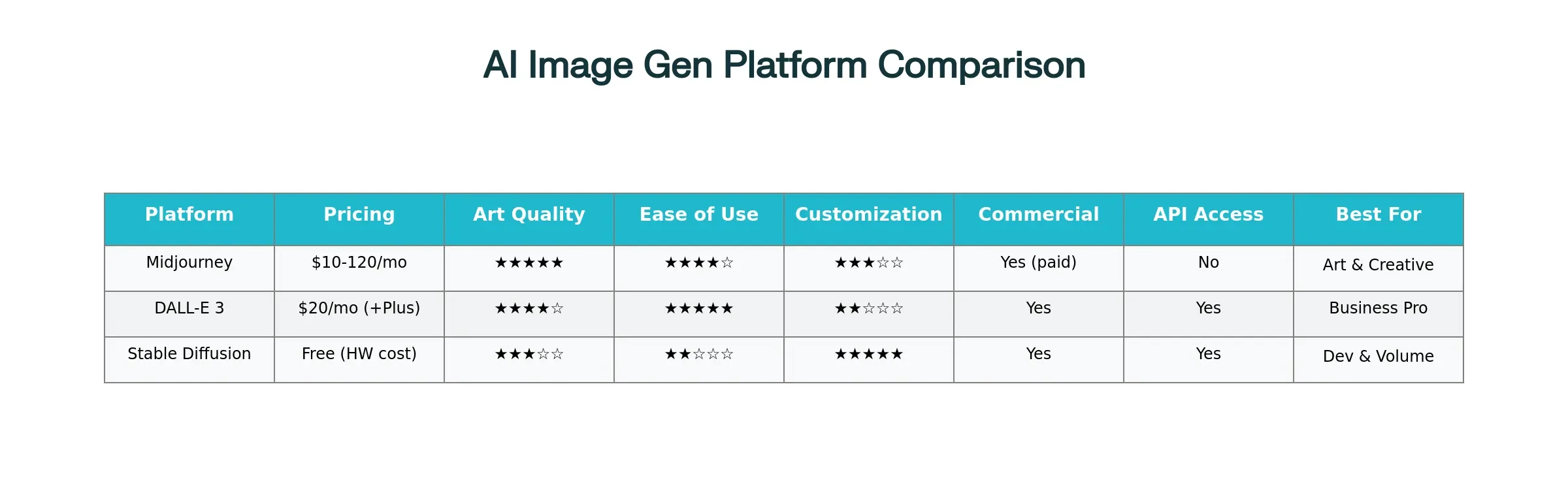
Comparison of features of the best three AI image generators in 2025
North America has the largest market share of more than 42 per cent of the world, with the professional/enterprise segment making up 74 per cent of the usage. What’s driving this growth? Easy: Image generators have improved considerably in quality, and are no longer dependent on hours, frequently taking seconds to interpret a photo as well as a human photographer and artist.
The technology has gone around most of the early limitations. This is the end of mangled hands and incoherent writing. The current AI systems, such as DALL-E 3, reach 95 per cent accuracy in photorealism, and the Midjourney v6.1 provides high-level artistic consistency in a broad spectrum of style selections.
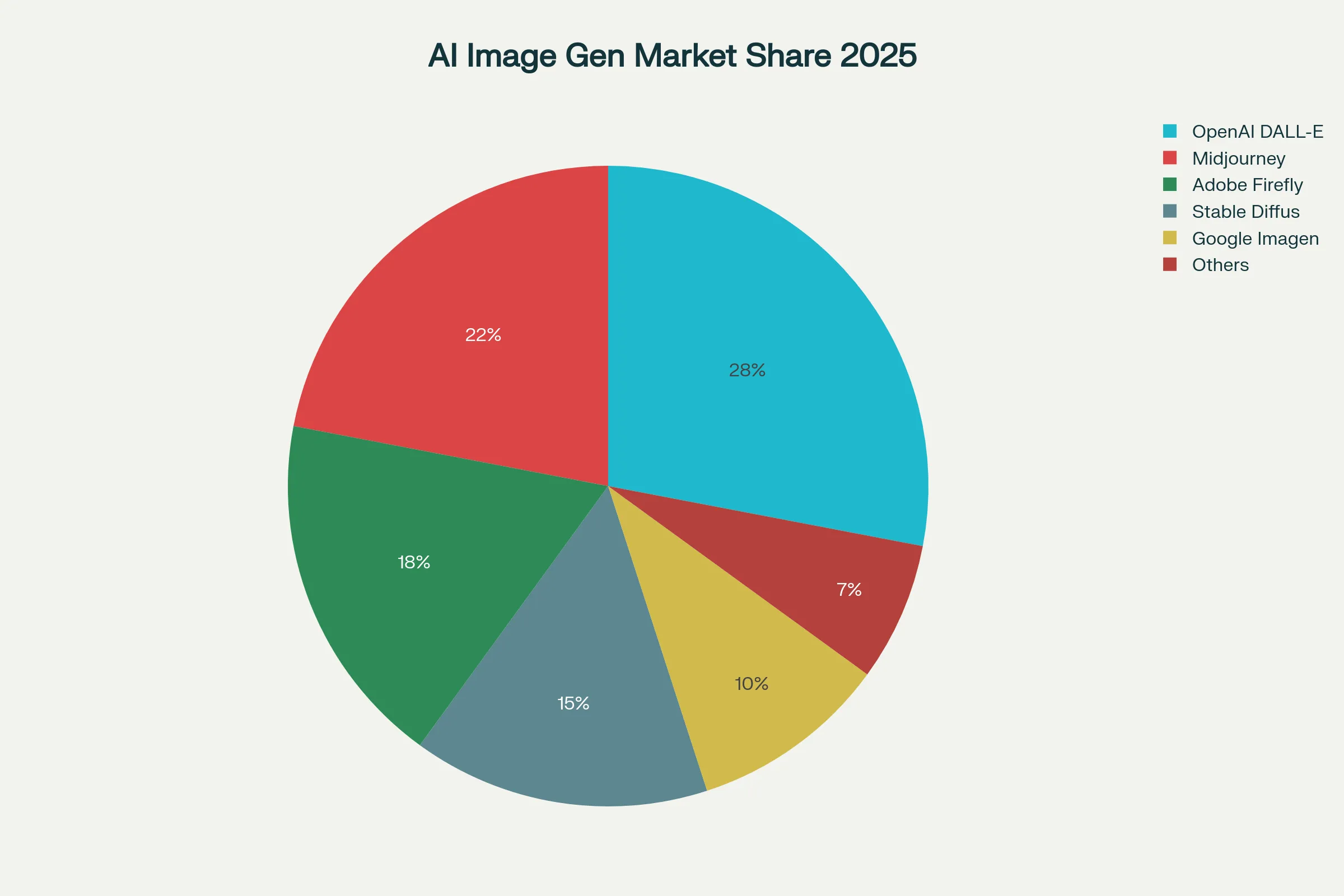
The market share distribution of AI image generators in 2025
Midjourney: The dream tool of the artist.
Midjourney has established a reputation for itself as a hub of artistic excellence. When you have listened to those beautiful, painterly AI images that have been flooding social media, they were probably created by Midjourney.
The Speciality of Midjourney
The advantage that Midjourney has is that it knows artistic styles, colour harmony and balance. The platform is better at developing images that are not only technically accurate but also possess that indefinable quality that will cause you to pause scrolling.
Key Features:
Brand consistency, style reference systems.
Provisions in character reference to support visual identity.
State-of-the-art upscaling algorithms.
Discord interface powered by the community with real-time feedback.
Midjourney Pricing in 2025
The subscription model of Midjourney will be a sign of premium status:
Base Plan: $10 US dollars/month (3.3 GPU hours, approximately 200 pictures)
Standard: $30 a month (15 GPU hours and unrestricted relax mode)
Pro Plan: $60/month (30 GPU hours and stealth mode)
Mega Plan: $120/month (60 GPU hours + everything)
The best is the Standard Plan, which has unlimited generations under relax mode, which is suitable for creators who require a volume of work without time constraints.
When to Choose Midjourney
Pick Midjourney if you’re:
Producing concept art or computer art.
Requiring film, aesthetic images.
Doing creative work where aesthetic appeal is important.
A member of an artistic community (the Discord interface encourages teamwork)
Midjourney’s Limitations
Automation is not restricted by any API access.
The Discord-only interface is not business-friendly.
Not so accurate with photorealistic human beings.
Difficulty with complex text-rendering.
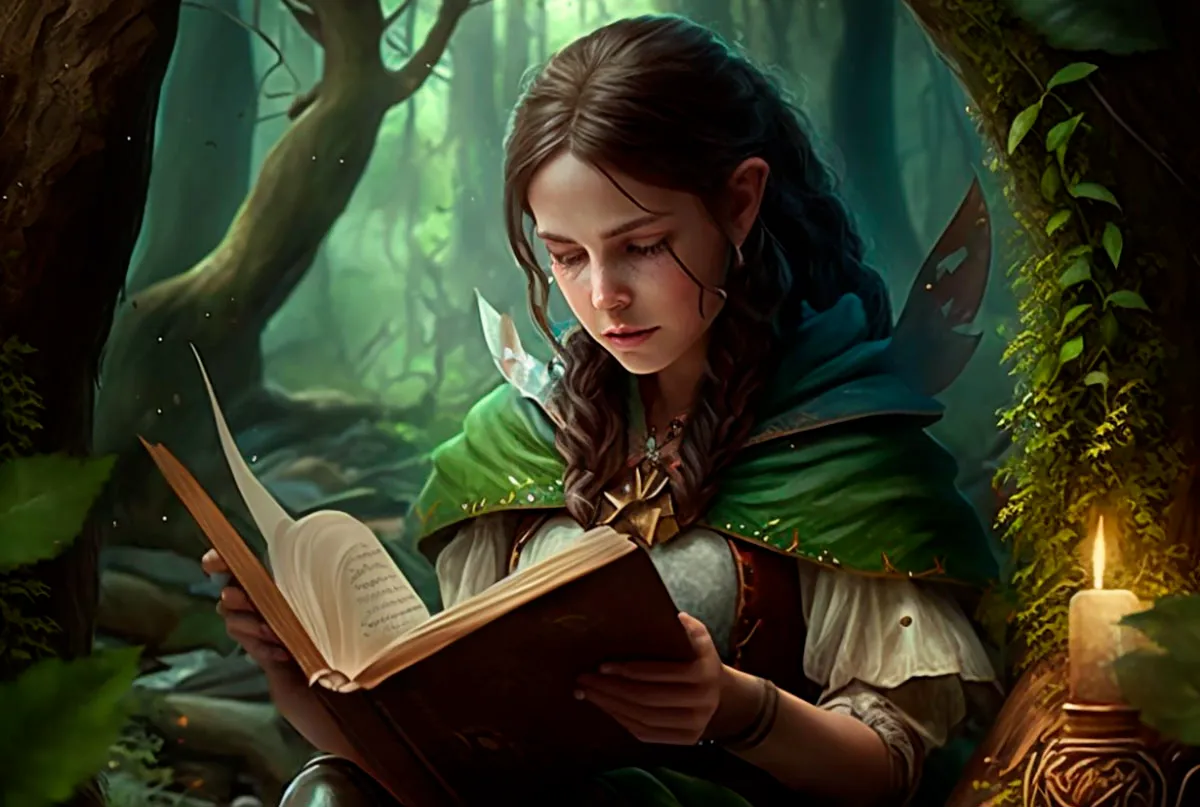
DALL-E 3: The Business Professional Choice.
DALL-E 3 is the surest route to professional business content. As a part of ChatGPT Plus, it is a combination of advanced image generation and conversation refinement.
DALL-E 3’s Strengths
DALL-E 3 is focused on timely compliance and photorealism. When other systems and platforms may interpret your request creatively, DALL-E 3 will provide what you requested.
Standout Features:
92 per cent text rendering accuracy on text inside pictures.
ChatGPT conversation through refinement.
Easy commercial licensing that is legally indemnified.
Enterprise integration API.
Unchanging human anatomy and multi-layered composition of a scene.
DALL-E 3 Pricing Structure
DALL-E 3 features two modes of access:
ChatGPT Plus: $20/month unlimited generations (rate limited)
API Pricing:
Standard quality (1024×1024): $0.04 per image
HD quality (1024×1024): $0.08 per image
Enterprise volume discounts are available.
Perfect Use Cases for DALL-E 3
Choose DALL-E 3 for:
Sales promotion and business lectures.
E-commerce and product visualisation.
Stock photo replacement
Applications in business that demand legal clarity.
Rapid prototyping and iterating.
Where DALL-E 3 Falls Short
Reduced Generation times (45-60 seconds)
Less creative writing than Midjourney.
Poor customisation.
It can give images with contrast problems, and can be made to look flat.
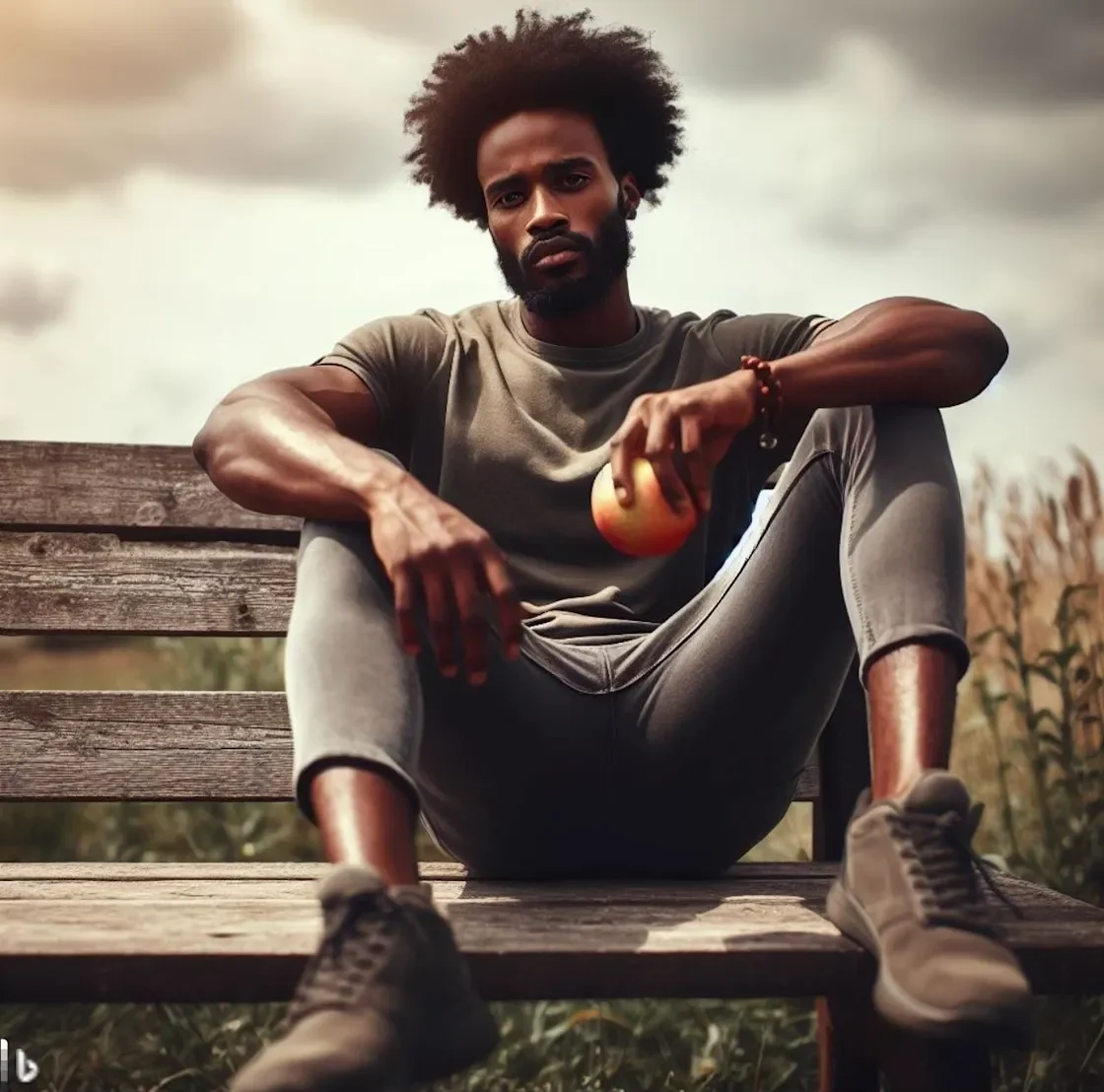
Stable Diffusion: The Petting Zoo.
Stable Diffusion is the most flexible and cost-effective for technically advanced users. It is a democratisation of the AI generation of images as an open-source model.
The Revolutionary Approach at Stable Diffusion.
The open architecture of Stable Diffusion allows for the uncovering of never-before-seen customisation. By using LoRA fine-tuning, ControlNet training, and individual model training, users are able to build highly specialised applications.
Technical Advantages:
Full local control (no cloud-dependence)
ControlNet Precise control is also supported in LoRA.
Bespoke model training features.
8-15 seconds when running locally and 2nd generation or slower when running on a remote host.
Vast community model ecosystem.
Cost Structure
The economics of Stable Diffusion are unusual:
Local Setup:
RTX 4090-class GPU: ~$1,600
Maintenance and electricity charges.
Very low cost when a very high volume (>2000 images/month) is required.
Cloud Services:
RunPod, Replicate: $0.002-0.03 per image
Several hosted plans are available at different prices.
Perfect Stable Diffusion Applications.
Stable Diffusion excels for:
Application integration and custom application.
Commercial projects of high volume.
Style specifications.
Privacy-sensitive applications
Inquiry and experimenting.
Stable Diffusion Challenges.
High technical learning curve.
Local requirements Hardware requirements.
Suboptimal lower base quality.
65% accuracy in text rendering (better but not as DALL-E 3)
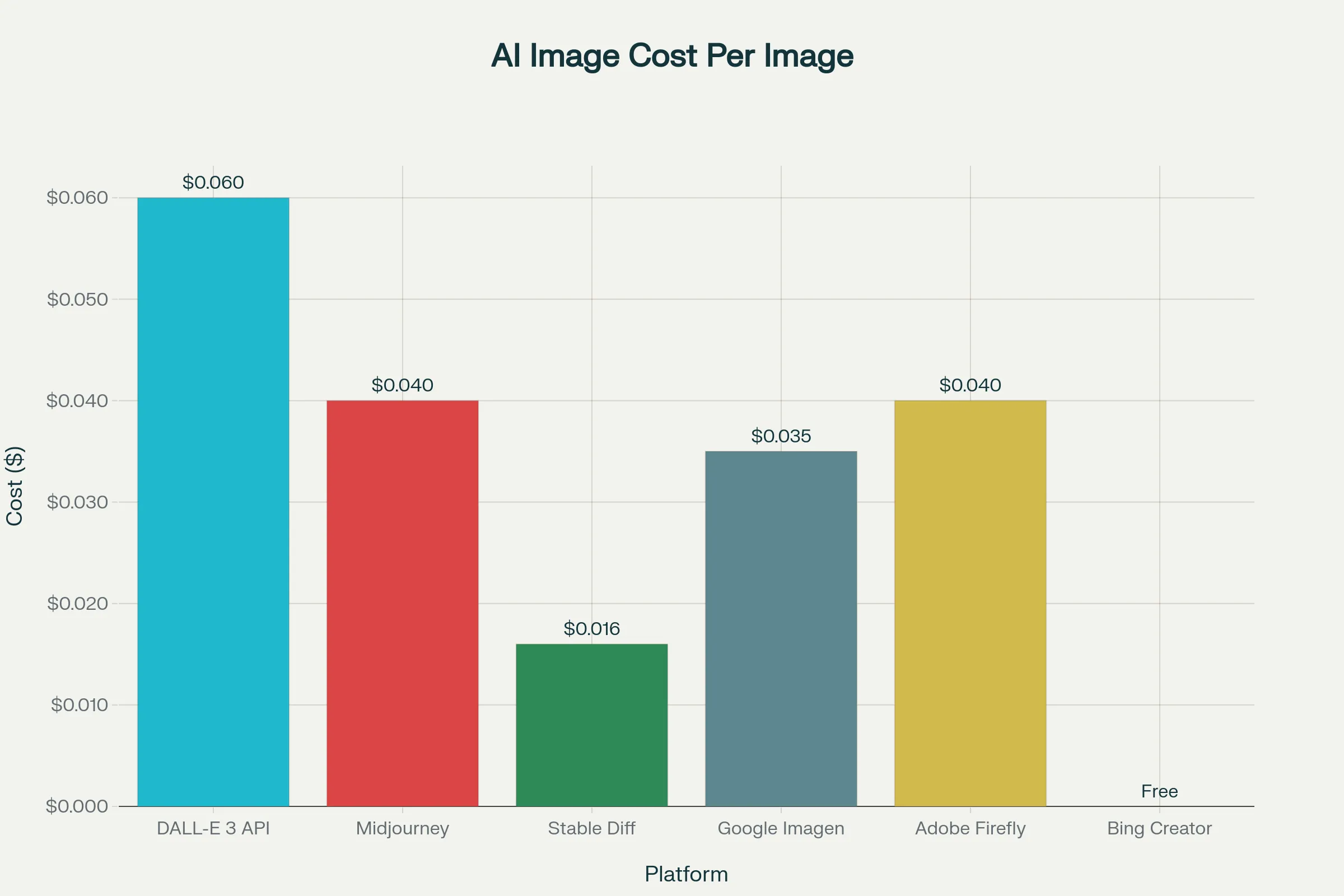
Comparison of cost per image on AI image generation platforms.
Performance Comparison: Head-to-Head.
We can deconstruct the performance of these platforms in key metrics:
Image Quality Benchmarks
Photorealism Rankings:
DALL-E 3: 95% accuracy
Midjourney v6.1: 88% accuracy
Stable Diffusion SDXL: 85% accuracy (base model)
Artistic Coherence:
Midjourney: Excellent in broad style issues.
DALL-E 3: Powerful but weak styles.
Stable Diffusion: Variable (model-dependent).
Speed Comparison
Generation Times:
Stable Diffusion (local): 5-10 seconds.
DALL-E 3: 45-60 seconds
Midjourney: 60-90 seconds (although batch processing can be used)
Prompt Understanding
Text Rendering Accuracy:
DALL-E 3: 92%
Midjourney v6.1: 78%
Stable Diffusion SDXL: 65%
2025: Free AI Image Generation Options
Not yet willing to invest in plans? There are several good free alternatives:
Top Free Platforms
Bing Image Creator: Bing runs on DALL-E 3, and is generating 15 images per day.
Leonardo AI: 150 free generations a month.
Adobe Firefly: 10 credits of generative per month (40 images)
Google Gemini: Imagen 3 is free.
Craiyon: Endless generation using ads and watermark.
Free Tier Limitations
The majority of free platforms are restrictive:
Generation capping either daily or monthly.
Watermarks on images
Restricted rights of commercial use.
Lower priority processing
Reduced resolution options
Commercial Use and licensing: what you should know.
One of the most important things to consider when selecting an AI image generator to use in a business is commercial licensing.
Comparison of Platform licensing.
DALL-E 3: Commercial, OpenAI indemnified.
Midjourney: Paid subscribers were permitted in commercial use.
Stable Diffusion: Free, open-source when an organisation has less than 1M of revenue.
Adobe Firefly: Trained on licensed content, commercial safe.
Legal Considerations
The images created by AI are not provided with copyright, yet the rights to use the images depend on the conditions of the platform. Always verify:
Right of ownership vs. right of license.
Scope of commercial use
Indemnification coverage
No resale or trademark restrictions.
With up to 50,000 dollars indemnification per image, Getty Images and iStock now provide AI tools, which provide an extra level of legal protection to commercial users.
Emerging Trends Shaping 2025
The space of AI image generation is still growing very quickly:
Technical Innovation
Multi-modal capabilities: New models can take text, image, and sketch inputs at the same time.
Real-time editing: The ability to provide instant feedback and iterate.
Newer resolutions: 4K and above generation is coming standard.
More anatomy: Important advances in human depiction.
Market Developments
Enterprise adoption: The use has now shifted to professional applications 74% of usage.
API-first designs: Developers are adding more and more generation to bespoke applications.
Specialised models: architecture, fashion, medical imaging. Industry-specific training.
New Players
Google, Nano Banana (Gemini 2.5 Flash): Viral style transfers and edits.
Seedream 4.0: Ultra-fast 2K rendering based on multi-reference, ByteDance.
Flux 1.1 Ultra: 4-megapixel generation with hyperrealism of the Raw Mode.
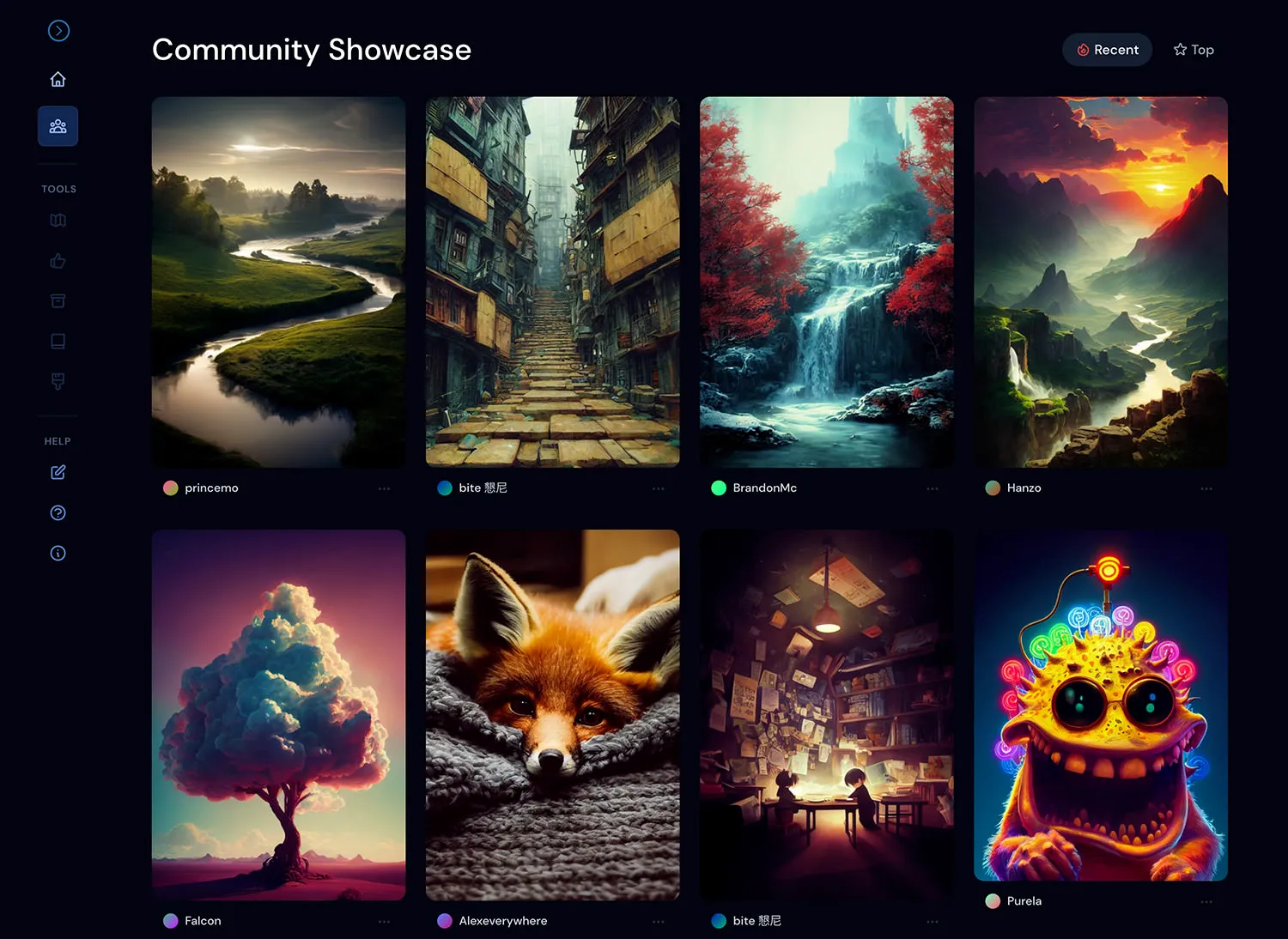
Which AI Image Generator to Choose: Decision Framework.
For Creative Professionals
Choose Midjourney if:
It is all about artistic quality.
You operate within the creative industries (entertaining, advertising, and designing).
Feedback in the community improves your workflow.
Budget will permit investment of $30+/month.
Choose DALL-E 3 if:
You require good, dependable results.
Prompt accuracy is crucial
You need definite business licensing.
It is value-added with integration with ChatGPT.
On the part of Businesses and Enterprises.
Choose DALL-E 3 for:
Marketing and business communications.
Stock photo replacement
Professional presentations
Legal peace of mind
Choose Stable Diffusion for:
Massive production requirements.
Application development.
Privacy-sensitive projects
Scale-based operations at the extreme.
In Developers and Technical Users.
Stable Diffusion prevails when:
There must be custom model training.
Integration of the API is necessary.
It is better to deploy on-site.
Complexity is worth maximum flexibility.
Outlook Future: What is ahead?
The AI image generation market does not have indications of decelerating. It is only the start as projected growth to 1.09 billion by 2032 shows.
Anticipated Developments
Technical advances:
Response time (less than a second)
Anatomical perfection.
Differentiated video generation.
Voice-to-image capabilities
Market evolution:
Greater regulatory control.
Standard licensing systems.
Industry-specific solutions
AR/VR integration.
Preparing for Change
Acute measures to overcome this changing environment:
Expand your arsenal: Do not use one platform.
Keep up with the latest: subscribe to platform changes and releases.
Test often: New features and competitors.
Look at long-term costs: assess the total cost of ownership.
Integration plan: Select platforms that have API access in the future so that they are flexible.
Conclusion
The creative ability provided by AI image generation in 2025 will have power never seen before, although it will require selecting the tool that works best for your needs. Midjourney is best at artistic projects that need the visual appeal, whereas DALL-E 3 is more reliable and legally unambiguous when used in business, and Stable Diffusion is most flexible among technical users.
It does not have to be about what the best platform is, but what tool will fit your objectives, your budget and also in terms of technical capacity. As the market is expanding fast and new innovations are introduced every single month, being flexible and knowledgeable will do you better than adherence to a one-size-fits-all solution.
Regardless of whether you need to develop marketing content, come up with artistic ideas, or develop tailor-made software, AI image generators have become so refined that they are not only decent substitutes to existing processes but can, in many cases, be better. It is the future!

Pingback: The Ethics of Generative Art : Who Owns What AI Creates? - Bing Info