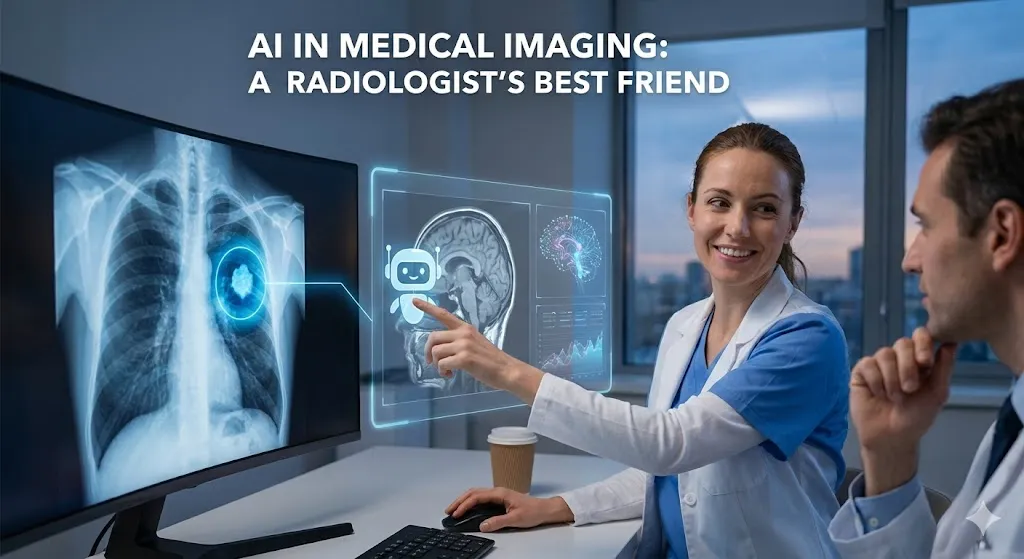
AI in Medical Imaging: How AI is Becoming a Radiologist’s Best Friend
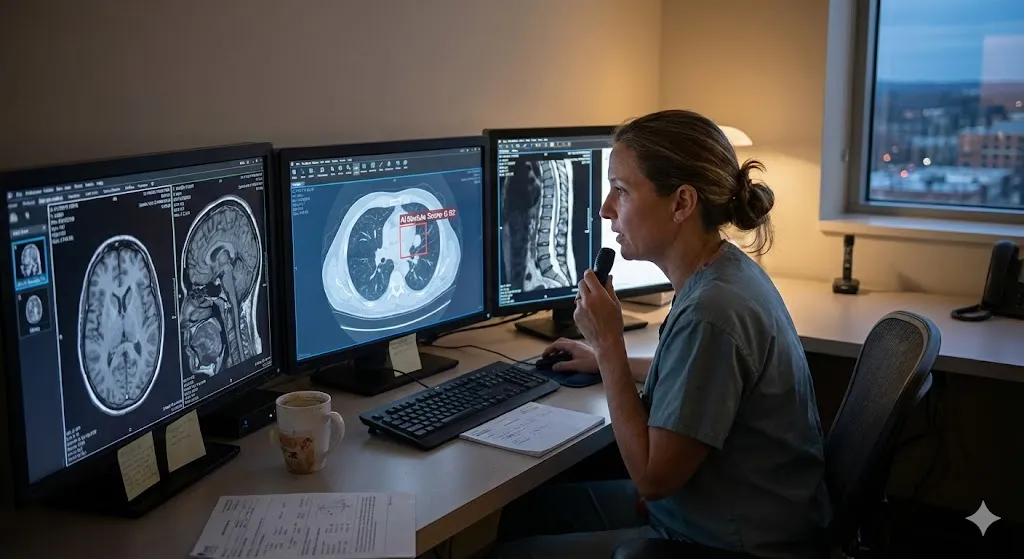
A new era in healthcare is about to begin. AI will not compete with human knowledge in this time; instead, it will be a key partner in the complex field of medical imaging. As radiologists, we see how AI helps us see better every day by going through a lot of data to find things we might not have seen otherwise.
How History Has Changed
For the first time in 1992, early algorithms were used to look at microcalcifications in mammograms. This was the first time that AI was used in radiology. This was the beginning of a new way to find things called computer-aided detection. By the middle of the 2000s, machine learning prototypes were able to look at electronic health records, MRI scans, and CT scans. They could see patterns in the huge amounts of data that were coming in.
We believe that things changed in the middle of the 2010s. Radiomics turned subjective interpretations into numbers, which combined the power of computers with clinical intuition. Around 2017, deep learning became popular because convolutional neural networks could do things like find pneumonia on chest X-rays just as well as people could.
AI’s Current Role in Medical Imaging
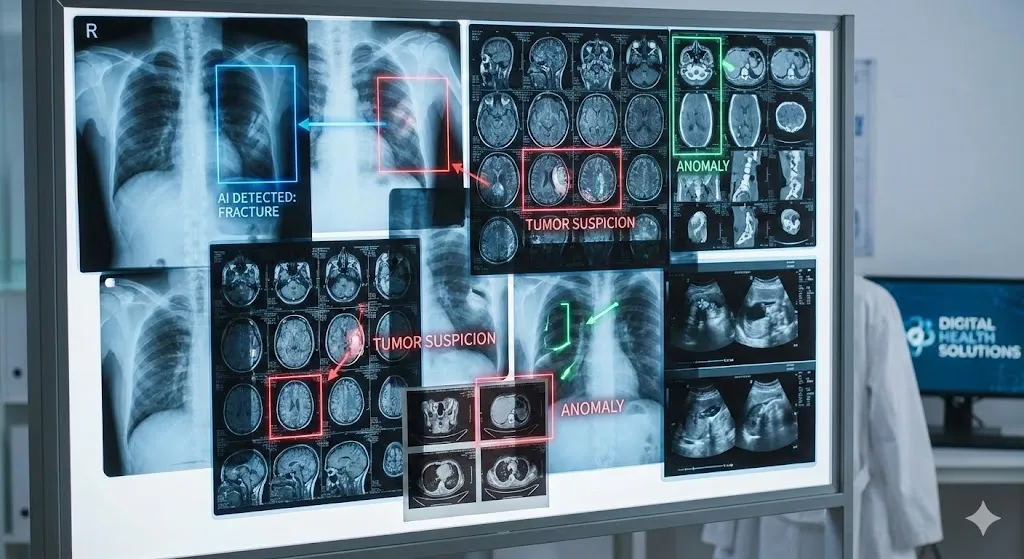
AI is now used in every part of medical imaging, from X-rays that show broken bones to MRIs that show brain tumours. Aidoc and AZmed’s AZtrauma are two tools we use that can find fractures on extremity radiographs with 98.7% accuracy and speed up the process of interpreting them by 27%.
AI is great at looking at CT and MRI scans of the heart and ultrasound pictures of the baby. It also helps automatically grade cancer on pathology slides. Philips’ AI makes it less likely that patients will be in the wrong place when they have a CT scan. This makes the pictures clearer and lowers the amount of radiation. It finds 29% more lesions that were missed and finds lung nodules 26% faster.
Market Growth and Future Projections
This chart shows how much the radiology AI market will grow between 2025 and 2030.
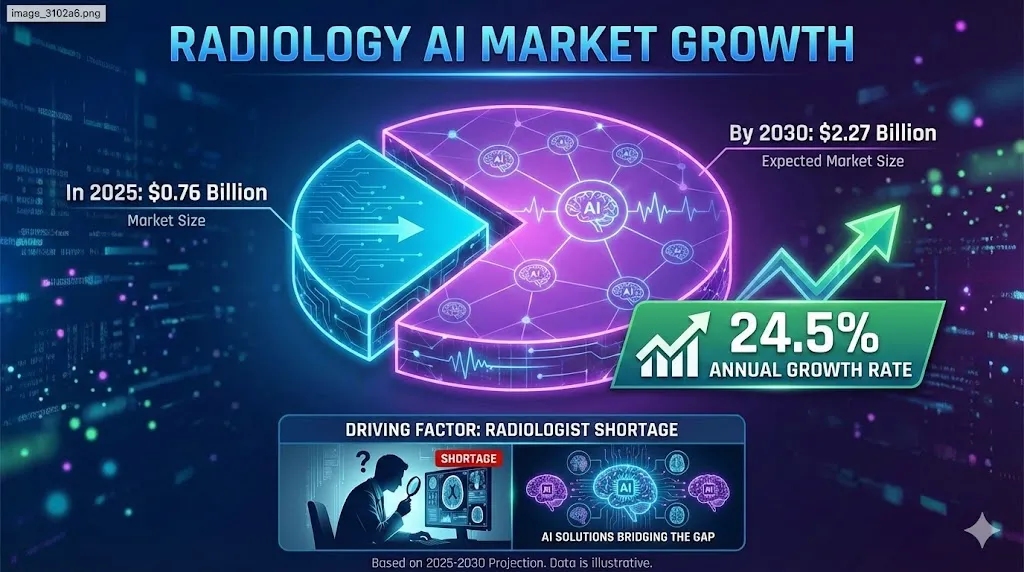
By 2030, the market is expected to be worth $2.27 billion, up from $0.76 billion in 2025. This is a growth rate of 24.5% per year. There aren’t enough radiologists, which is why this is happening.
Real-Life Case Studies
For instance, SimonMed Imaging had AZtrauma in 200 places. AI sensitivity was 98.5%, which made it six times faster to find fractures and helped radiologists get more done. Sean Raj, the Chief Innovation Officer, says that the quality and the way things work have both gotten better at the same time.
Hospitals that used DeepSeek were able to get things done 30% faster and made sure that urgent cases were handled first by using structured reports. Enlitic’s platform, which works with PACS/RIS, sped things up by 25% and helped find things that were missed. These short stories show how AI can be very useful. We radiologists use it to help us decide what to do next, not as a replacement.
The Pros and Cons of Using AI in Radiology
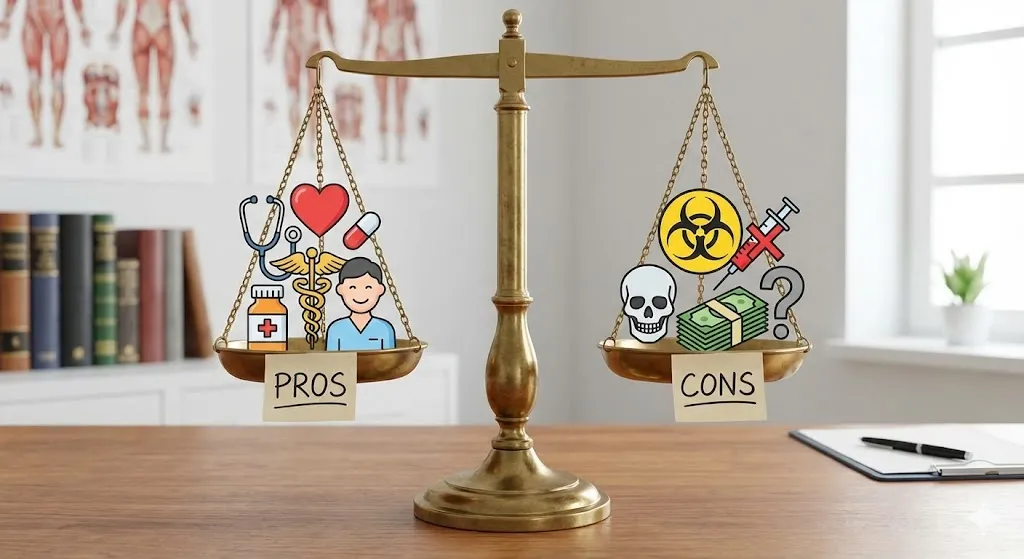
AI has many advantages, including the ability to find patterns that help make diagnoses more accurate, speed up analyses in emergencies, and provide standard interpretations that make it easier for people to agree. We like that it helps with burnout when there are a lot of cases.
But there are still issues. AI doesn’t work well without human judgement, which can cause data to be biassed or lack context. Integration problems and moral issues like privacy are big problems because the training data isn’t very good.
Market Trends and Numbers
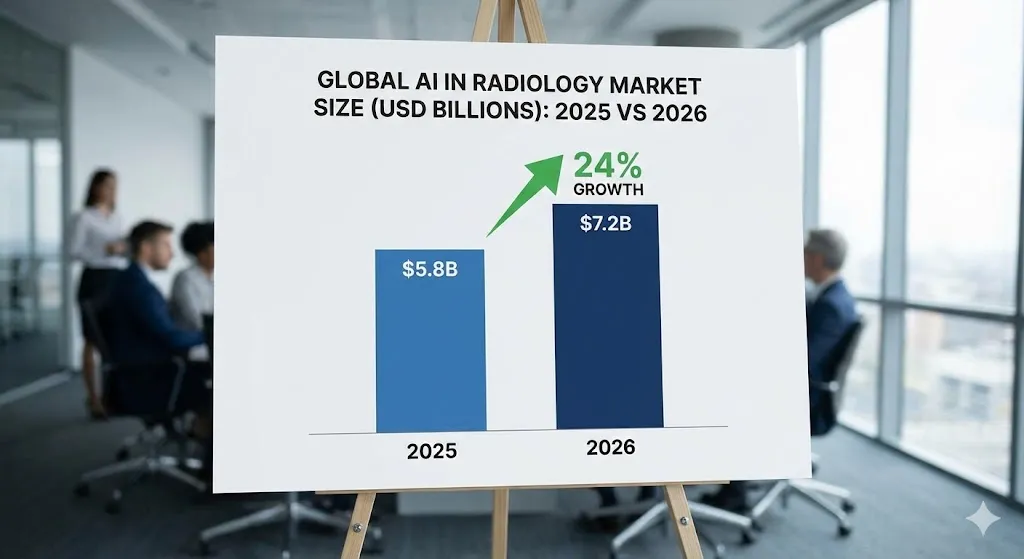
The AI in radiology market is growing quickly, from $794 million in 2025 to $989 million in 2026. The MRI and cardiology parts are growing very quickly thanks to Cloud AI. Diagnostic centres speed up the process of getting new technology by automating CT, MRI, and pathology tests.
AI makes CAD systems 69% less likely to give false positives and 17% faster at reading. Diagnoses are 44% more accurate in MS. We believe that using fake data will help reduce bias and improve AUROC scores.
Problems and Opportunities
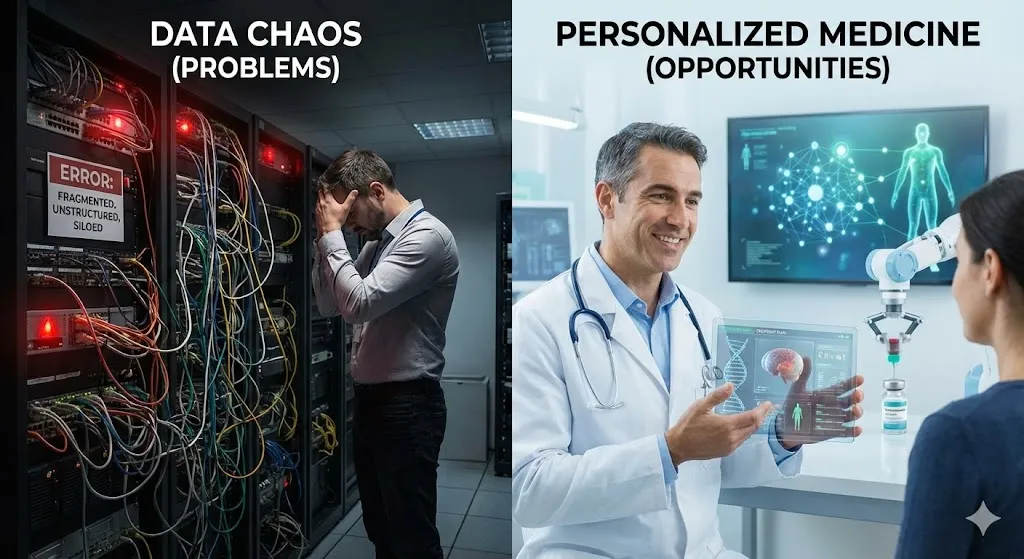
Integration problems, complicated rules, and data silos make things take longer, but personalised medicine and global teleradiology make a lot of things possible. We like models that combine AI and people, with AI looking through data and people making decisions. Using different datasets makes sure that everyone is treated fairly.
Ethical imperatives necessitate transparency; biases in rare pathologies demand synthetic enhancements. AI can help people who don’t have enough resources, which makes things more equal.
The Future of AI in Medical Imaging
In the future, AI will use predictive analytics and combine imaging with genomics to make treatments that are unique to each person. We can see that AI built into PACS works perfectly. It ends burnout while still letting people keep an eye on things. New technologies like AutoML promise to make trauma imaging 94% or more accurate.
Changes in the law and multimodal LLMs will help federated learning grow without putting people’s privacy at risk. Radiology is changing, but AI is always there for us.
[Image: A futuristic concept image of a brain scan integrated with genetic data]
Best Ways to Implement AI
Pilot phased rollouts: Start with a few high-volume modalities, like X-rays, and add more after they have been tested and shown to work.
Different Data Curation: To cut down on bias, use synthetic supplements and datasets from more than one centre.
Human-AI Symbiosis: Let AI help you understand things, but don’t make any choices until you know more.
Validation that never ends: Look at performance from the outside, like SimonMed’s 98.8% NPV.
Ethical Frameworks: Make sure that consent, explainability, and fair access are at the top of your list.
Frequently Asked Questions (FAQ)
Will AI replace radiologists? No, AI doesn’t take away from what people do; it makes it better. Experts say that it makes things more accurate without taking away people’s ability to think for themselves. Radiologists who use AI do well because they find new ways to deal with not having enough.
What are some important ways that AI is used in radiology? AZtrauma finds broken bones with 98.7% accuracy, Aidoc looks for strokes, and Enlitic cuts the time it takes to get results by 25%.
What advantages does AI offer in radiology? Standardisation, higher accuracy (for example, a 44% improvement in MS), and faster speeds (for example, 26% faster nodules) all help to cut down on mistakes and tiredness.
Is AI a danger to radiology? AI does things that we find easy, so we can focus on the hard ones. It isn’t old. Reddit arguments show that it’s better to work together than to fire someone.
What will happen to AI in medical imaging in the years to come? By 2030, the market will be worth $2.27 billion thanks to personalised diagnostics, teleradiology, and synthetic drugs that reduce bias.
Pingback: Drug Discovery at Warp Speed: How AI is Designing New Medicines - Bing Info
Pingback: Surgical Robots: The Role of AI in the Operating Room - Bing Info