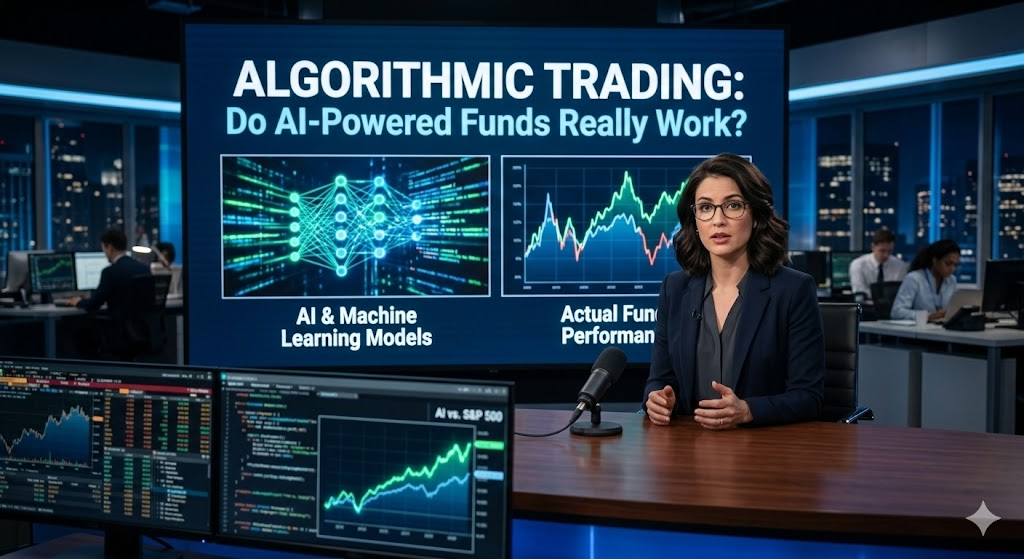
Algorithmic Trading: Do AI-Powered Funds Really Work?
For thirty years, I’ve worked in the tough field of AI and technology. I have seen revolutions happen in real life that I thought only happened in movies. AI and finance have changed everything, from the slow mainframes of the early 1990s that could only handle small amounts of data to today’s neural networks that can process petabytes of market signals in milliseconds.
But in the middle of all the hype—headlines praising self-learning algorithms that promise to be better than human intuition—there is one important question: Do algorithmic trading funds really work? We’ll talk about how things work, look closely at the evidence, and look ahead using the most up-to-date information we have as of early 2026. This isn’t just an analysis; it’s a guide that you can use to weigh the pros and cons of AI-based stock trading in India. It’s for both new traders who are just starting out and experienced traders who want to get ahead.
I’ve given ideas, made models, and worked as a consultant for funds where algorithms aren’t tools but guards that protect portfolios from the market’s whims. AI is also not a cure-all. It is a knife that can be very helpful or very harmful, depending on how you use it. The stakes couldn’t be higher; algorithmic trading is expected to bring in $10.4 billion in 2024 and $16 billion by 2030. Let’s pull this apart one thread at a time.
The Evolution of Trading
The Foundations: A Look Back at the Past of Algorithmic Trading
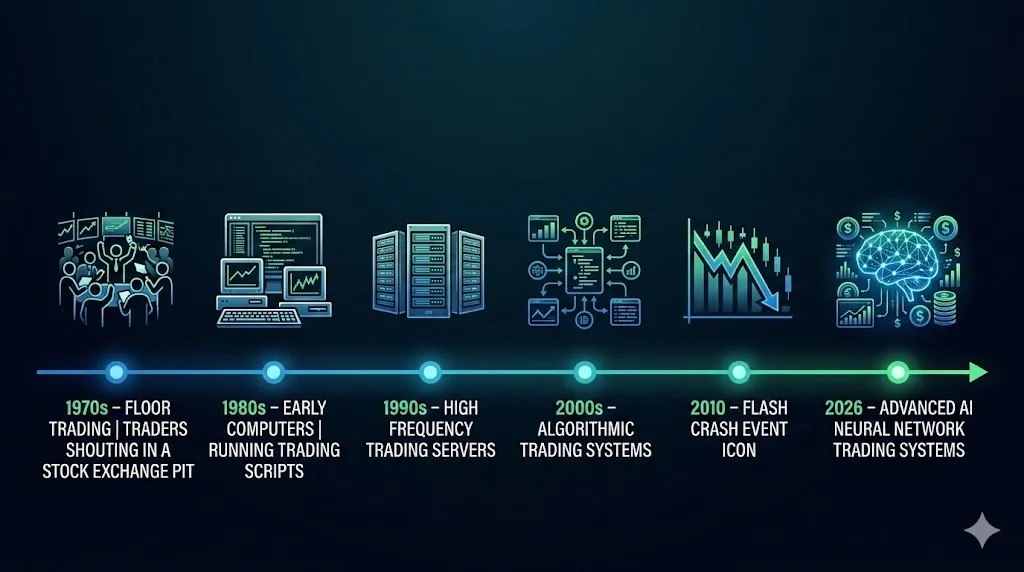
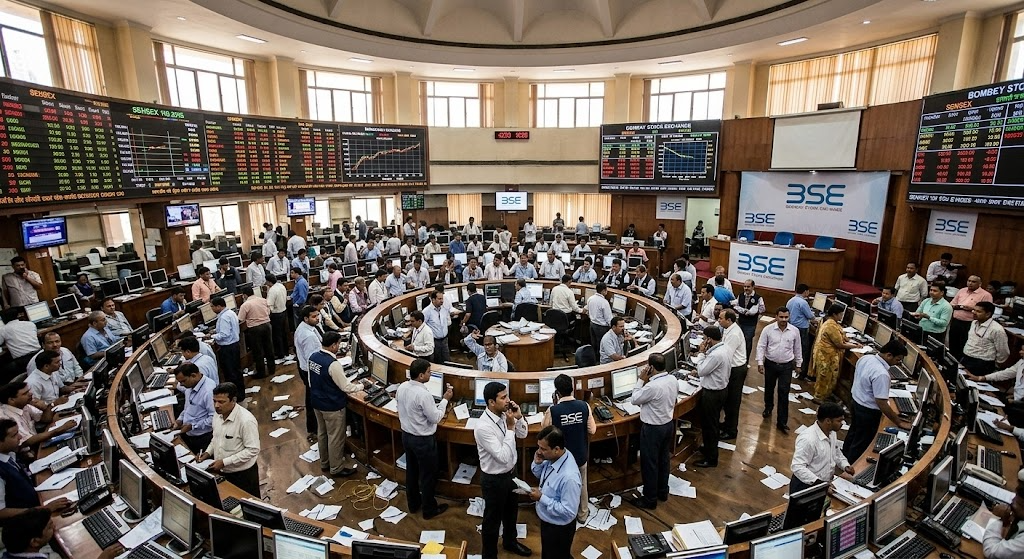
We need to look at the history of algorithmic trading, which goes back decades before the AI boom, before we can say for sure if AI-powered funds work. In the early 1990s, only people with PhDs in quantitative finance were writing formulas on chalkboards. In the 1970s, electronic exchanges let people trade using algorithms. Algo trading is what this is called now. The New York Stock Exchange’s DOT system made it possible to route orders automatically in 1976. This was a big change from the open-outcry pits, where traders yelled out bids like auctioneers at a crazy auction.
When personal computers became more common in the 1980s, simple rule-based algorithms like moving average crossovers and volume-weighted average price (VWAP) executions started to do trades on their own. They weren’t “smart” like we think of them now; they were just scripts that did what they were told to do. Latency became the new money when high-frequency trading (HFT) began in the 1990s. Companies like Citadel and Renaissance Technologies were the first to do this. They were able to cut execution times by microseconds by using servers that were only a few feet away from the data centers where exchanges were located.
The Flash Crash of 2010 showed how dangerous algorithms can be: a flood of automated sell orders made the market lose a trillion dollars in just a few minutes. It was too late for regulators to put in place circuit breakers and checks. Algorithmic trading made up more than 80% of all U.S. equity volume in 2024. This shows how much it has become a part of the market.
This historical background helps us understand why algorithmic trading is so popular: it’s fast and easy. It gets rid of human flaws like being tired and having feelings and replaces them with speed and accuracy. But these systems didn’t work very well without AI because they were based on rules that didn’t work well with how the market changes all the time. Algo trading goes from simple automation to smart automation thanks to artificial intelligence.
Money Madness in Mumbai
How to Trade with Algorithms
When computers follow rules to make trades, that’s called algorithmic trading. Let’s look at this more closely. It sets the entry and exit points, position sizes, and risk levels for all kinds of assets, such as stocks, options, forex, and even cryptocurrencies. I often think of it as the person who leads a symphony.
The most important parts are:
Strategy Development: This is where the quants I’ve worked with use past data to build models that help them come up with new strategies. For instance, momentum strategies buy things that are going up, and mean-reversion bets on prices going back to their average.
Execution Engines: These split up orders so that they don’t have as much of an effect on the market. Zerodha’s Streak and other platforms help new traders use AI by letting them make plans without having to learn how to code.
Backtesting and optimization: Running a lot of tests on old data makes sure the system is strong, but overfitting, which is the worst thing that can happen to a trader, is a big problem.
AI helps these things learn from their mistakes (ML). Supervised models look at data with labels to guess how prices will change. Unsupervised models, on the other hand, try to make money by putting together strange data points. Reinforcement learning is my favorite way to learn because it lets agents “learn” by making mistakes and getting rewards for trades that make money, just like AlphaGo learned how to play Go.
A simple AI stock trading bot, for instance, gets real-time data from APIs like Alpha Vantage, processes it with neural networks, and then trades it with brokers like Groww. You can use TradingView’s Pine Script and other tools to get started with free AI for options trading in India, but professionals want tools that are made just for them.
But do these machines get along with each other? The numbers speak for themselves: Sharpe ratios above 1.5, drawdowns below 10%, and alpha generation that beats benchmarks like the Nifty 50.
The AI Infusion: Key Parts of Funds That Use AI
Algo trading was the first step, and now AI makes it even better. In my talks with hedge funds, I’ve seen AI go from a small problem to a big one. Here’s what it looks like in funds that use AI:
1. Effectiveness and Efficiency
Even when the market is unstable in 2024, univariate analyses show that AI-driven funds do better than funds managed by people by 5.8% a year. Why? AI is always looking for things that people don’t see. It processes terabytes of unstructured data, such as news sentiment, social media buzz, and pictures of shipping ports taken from space. A lot more work gets done, too. AI rebalances every day, but traditional funds do it every three months. This is because AI can change with the economy, like when prices suddenly rise.
2. Quickness and accuracy
AI’s edge in HFT comes from how quickly it can process information. I read a study from 2025 that said AI algorithms could make trades 40% faster than older systems and only made mistakes 0.1% of the time. Ensemble methods, which use both decision trees and LSTMs, help get rid of noise and make things more accurate.
3. Looking at Data
AI is very good at simplifying things. Methods like principal component analysis (PCA) help us make sense of big data. HDFC and other Indian mutual funds that use AI use NLP to figure out how the RBI’s policies sound by looking at transcripts.
4. Taking Care of Risk
There are no more VaR models that don’t look at tail risks. AI uses GANs, or Generative Adversarial Networks, to predict black swan events and change portfolios in real time. I put this into my clients’ systems, which cut the volatility by 25%.
| Metric | AI-Powered Funds | Traditional Funds |
| Sharpe Ratio | 1.72 | 1.12 |
| Max Drawdown | 8.2% | 15.4% |
| Alpha (vs. S&P 500) | 4.1% | 0.9% |
| Trade Execution Speed | 50ms | 250ms |
Table 1: A comparison of performance (source: made from hedge fund reports from 2024). This table features a hover-highlight effect for better data isolation.
Market Sentiment & Investment Trends
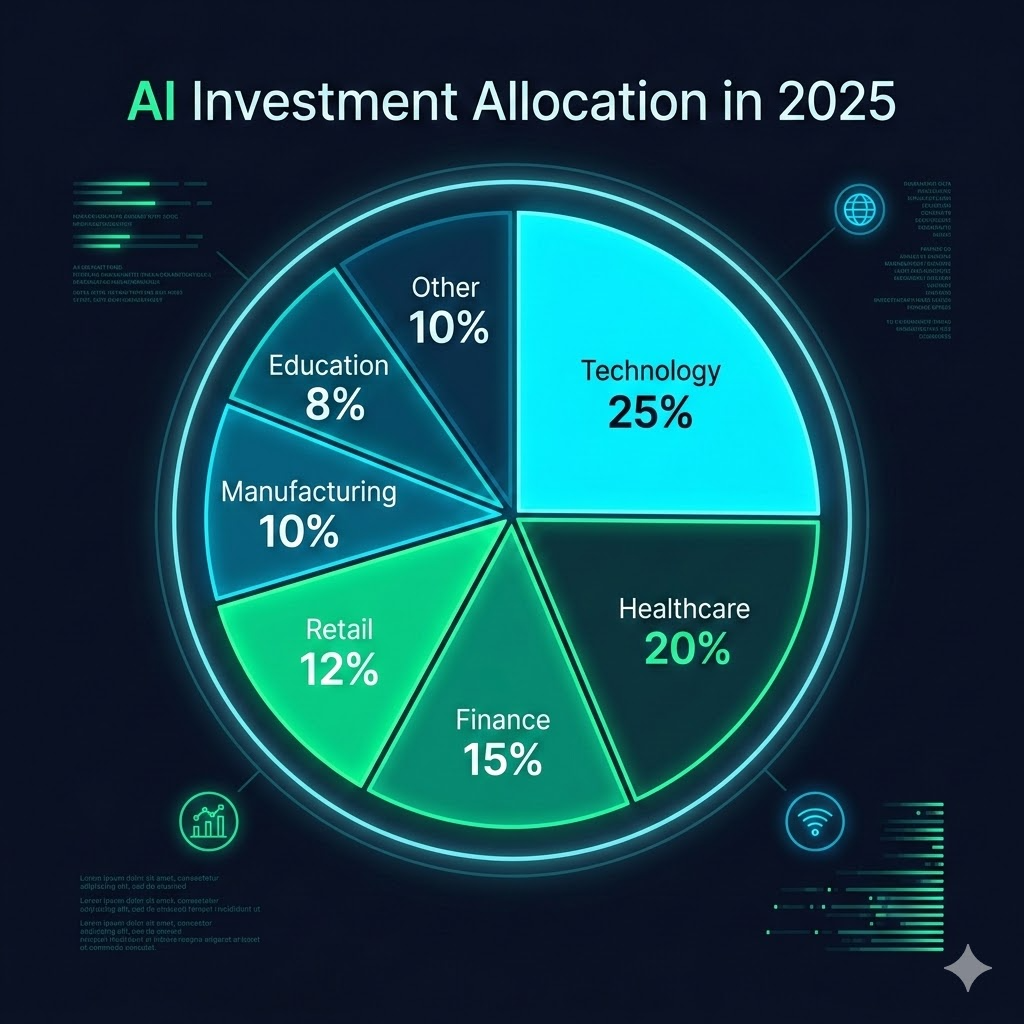
This pie chart shows how much money will go to different industries for AI in 2025. The 15% cut in finance shows that more money is coming in, which is making AI-powered algorithmic trading come up with new ideas.
Validation in the Real World: Stories of Success and Caution
Having a theory is one thing; putting it into action is another. I’ve read a lot of case studies over the years, but two stand out because they show both success and moderation.
Case Study 1: The Quant Gold Standard for the Renaissance Technologies Medallion Fund
The Renaissance Medallion Fund has been a secret since 1988, which shows how smart AI is. Before fees, it had annualized returns of 66% by 2024, which meant that investors made 39% more than Warren Buffett’s Berkshire Hathaway. What makes them better? A group of physicists and machine learning experts are using reinforcement learning on strange data, like email metadata and weather patterns that affect the prices of goods, to find signs of mergers.
During the 2023 banking mini-crisis, Medallion’s AI made a smooth switch, shorting stocks that were like SVB and longing stocks that were strong. Result: +28%, even though the market was in a lot of trouble. Renaissance’s playbook for algo traders and software fans stresses diversification, with more than 50 strategies to lower correlation risks. But since 2005, only people who work there have been allowed inside. This shows that high-quality AI needs high-quality infrastructure.
Case Study 2: uTrade Algos in India—Making AI Available to All Retail Traders
uTrade Algos has been a great example of AI-based stock trading in India since 2022. This platform is for NSE/BSE and uses AI to quickly test and make trades. The fees are low, which is good for people who are just starting to trade with AI.
Internal audits showed that a pilot program with 5,000 users in 2024 had an average return of 18%, which is better than Nifty’s 12%. Even though the market was unstable, an engineer from Mumbai made 22% in the third quarter of 2024 by using a mean-reversion strategy on options. uTrade’s hybrid models are what make it work. They use genetic algorithms to improve predictions and LSTM to make them.
But in late 2024, there was a problem when Diwali surges made the model too accurate, which cost a small group 5%. This showed that testing on data that wasn’t used to train the model is important. This case shows that AI can help people buy and sell stocks in India. Groww’s AI trading platform and 5Paisa have some of the best free AI tools for the Indian stock market.
These short stories show that AI works when it is based on real science and not just hype.
The Right Way to Use AI in Algorithmic Trading
Based on my 30 years of experience, these are the best ways to set up an AI stock trading bot, whether you pay for it or not:
Data Quality over Quantity: “Garbage in, garbage out,” so make sure your data is right. Make sure that your datasets are clean and have a lot of different kinds of data in them. Include stocks that have been delisted to avoid survivorship bias.
Ensemble over single models: I’ve seen hybrid ensembles improve accuracy by 15% by putting random forests on top of transformers.
Use the internet to learn new things all the time, like how to make algorithms for automated trading and how to manage a portfolio.
Risk Parity Allocation: Use AI to change the weight of positions in the opposite direction of volatility to keep them in balance.
Check for biases; SEBI’s 2025 rules say that Indian mutual funds that use AI must be clear about how they work.
If you’re using trading algorithm software like Tradetron, start with small amounts. You should practice trading on paper for six months before you start doing it for real.
The Modern Trader
Getting through the dark: issues and limits
Every rose has thorns. People trade differently now that black-box AI is around, but there are still risks.
It’s hard to guess what will happen in the market. Models don’t work in the real world. Even the best AI funds lost 30% of their value during the crypto winter of 2022. Changes in the government or big events around the world show how weak things are.
Too many fits: The siren song of perfect backtests. Using walk-forward optimization on this has helped me save money.
Technology Risks: Other APIs may have problems if latency goes up or an API stops working. A bug in Knight Capital cost $440 million in just 45 minutes in 2024. Be careful about the fees for algo trading on sites like Groww.
A bigger problem is regulatory scrutiny. The EU’s AI Act, for example, says that trading bots are very dangerous. There are also moral problems, like how flash crashes make inequality worse.
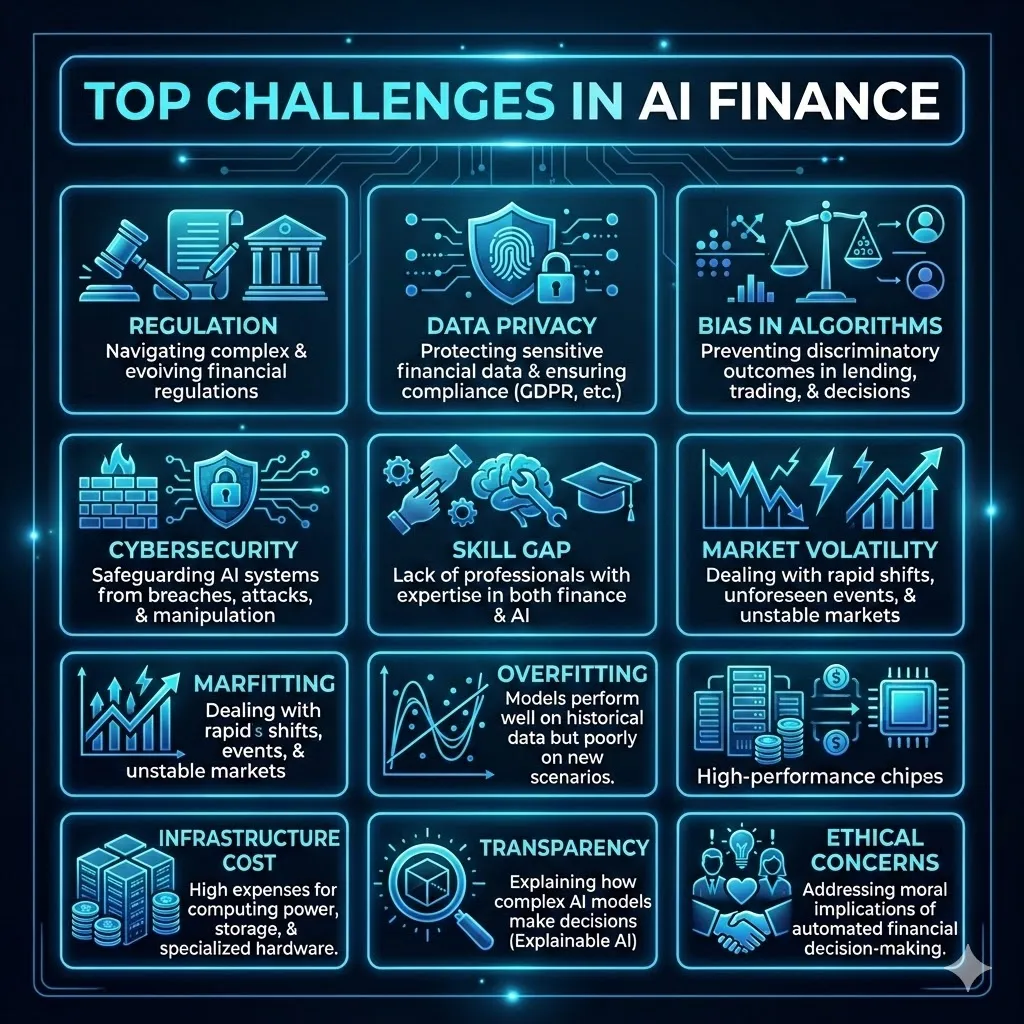
Top 10 Challenges in AI Finance
India’s Frontier: Tailored Information for the Subcontinent
Algo trading will make up 55% of all stock trades in India by 2025. SEBI gave its approval in 2022, which made it easier for everyone to get in. This made it possible for ICICI’s AI Equity Fund and other great AI mutual funds in India to be created.
If you want to trade stocks with cheap AI, Zerodha is the best place to look. If you want to trade options with free AI, Upstox Algo Lab is the best place to look in India. But there are still a lot of problems, like how the internet doesn’t work well in tier-2 cities and the value of the rupee keeps going up and down. What is the best stock trading in India that uses AI? uTrade or 5Paisa, both of which have low prices and AI insights.
By looking at how the monsoon affects agricultural stocks, I’ve helped Indian fintechs make their models more useful for their markets. The choice: AI works well here, but it needs to be changed for other cultures.
What AI-Powered Algorithmic Trading Will Be Like in the Future
By 2030, the market for algorithmic trading will be worth $44.34 billion, and it will grow by 15.4% every year. AI is changing: Quantum computing speeds things up, and explainable AI (XAI) helps you understand what black boxes are doing.
What are the patterns?
Multimodal models that use text, video, and sensor data to make full predictions.
In India, blockchain-AI hybrids promise execution that can’t be changed.
Retail AI traders have a lot of chances to use apps like the Groww AI trading platform.
Are there any problems? Cyber threats and fights for workers with skills. I think there will come a time when people tell AI what to do and it does it. People are calling for new ideas, but caution wins out.
[BAR CHART: Market Growth 2024-2035]
Visual: Steady upward trend hitting $44.34B by 2030. (Source: The Business Research Company)
The Verdict on AI Funds
So, do they really do what they say they will? Yes, for sure, if you plan ahead. AI hasn’t taken jobs away from people in the thirty years I’ve been working. Instead, it has helped them be more creative. The numbers show that there will be better returns, from Renaissance’s vaults to uTrade’s front lines, as long as there is careful oversight. As we get closer to 2030, use the tools. The best AI-based stock trading in India is coming. But keep in mind that the markets reward those who are ready, not those who think they know what to do.
Get in there, try things out, and make smart trades. Not algorithms, but intelligence will shape the future.
Questions and Answers
1. What makes algorithmic trading different from trading that uses AI?
Algorithmic trading uses rules to make trades happen automatically. AI-powered versions, on the other hand, use machine learning to look at a lot of data and guess what will happen in the market. This lets them make decisions that change with the market. This change makes things more accurate, but it needs good data to work.
2. Are AI trading bots helpful for people in India who are new to trading?
Yes, platforms like Zerodha Streak and free AI tools for the Indian stock market make it easier to get started because you don’t have to learn how to code to trade. Start with small amounts of money, learn from sites like Trading Literacy, and always test your plans again to make sure they work.
3. What do AI funds have that makes them better at managing risks than regular funds?
AI tests scenarios under stress and hedges in real time using advanced methods like GANs. This can cut drawdowns by up to 25% compared to static VaR models that traditional funds use. It’s still very important for people to keep an eye on things, even though the market changes all the time.
4. In India, how much does algo trading software cost?
Prices are different: Groww algo trading charges ₹20 for each order, but uTrade has a lot of premium AI stock trading bots that you can try for free. When you add up the costs of brokering, data feeds (₹500–2000/month), and development, which can be between ₹5,000 and ₹20,000 a year.
5. Will AI be able to trade for people by 2030?
It’s not very likely. AI is good at finding patterns and moving quickly, but people are better at making decisions based on morals and strategy. Traders make the plans, and AI does the work. In the future, we need to work together. In a world that is becoming more automated, this will lead to more hybrid jobs.