AI vs. Crime: How Machines Quickly Find Criminals
I still can’t believe that AI is the first line of defence against complicated financial crimes. This is especially true in 2026, when digital transactions are getting faster and faster. AI can now not only keep up with people but also beat them at finding fraud in real time. This turns the game from a reactive battle into a proactive defence.
The past of catching fraud
I remember that in the early 2000s, fraud detection started with simple systems based on rules. Analysts would set limits on things that seemed off, like transactions that were over a certain amount. From the beginning, reports said that banks were losing more than $30 billion a year to fraud by 2015. These basic methods couldn’t handle new threats.
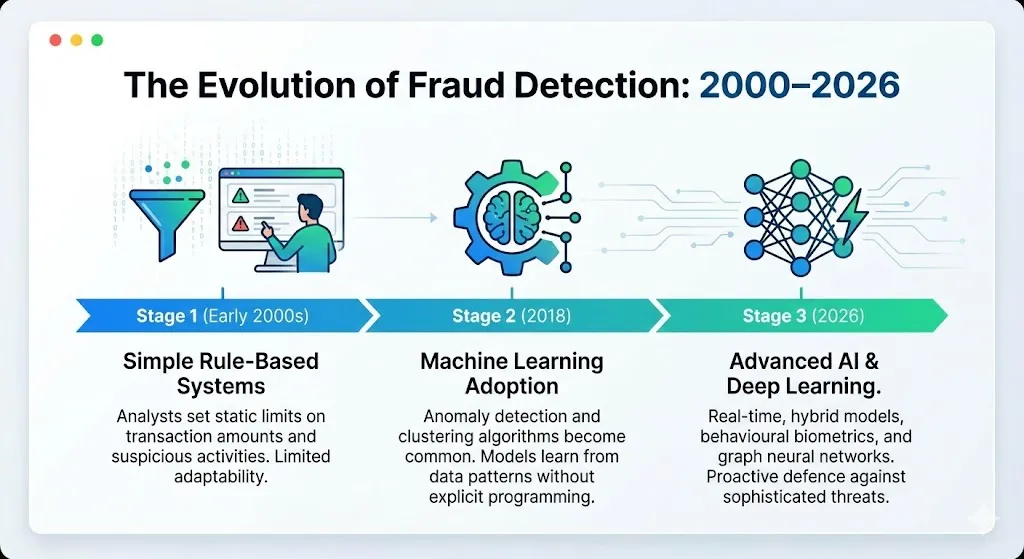 In 2018, the switch to machine learning was a big deal, and algorithms that didn’t need human supervision, like anomaly detection, became more common. We saw banks use clustering methods to find data points that were different from the rest without having to label them. This was needed because fraud is very rare; only 0.1% of transactions are fake. Hybrid models often use deep learning to look at petabytes of data to stop crimes before they happen in 2026.
This change makes a very important point: traditional methods only looked at data after the fact, but AI in fraud detection can look at behavioural biometrics and transactional metadata at the same time in milliseconds.
Key Technologies That Enable Real-Time Detection
AI vs. fraud uses the most advanced algorithms, and I think computers are the best way to use them. Random forests and logistic regression are examples of supervised models that use past patterns to group transactions. They get accuracy rates of over 95% when they are in controlled settings.
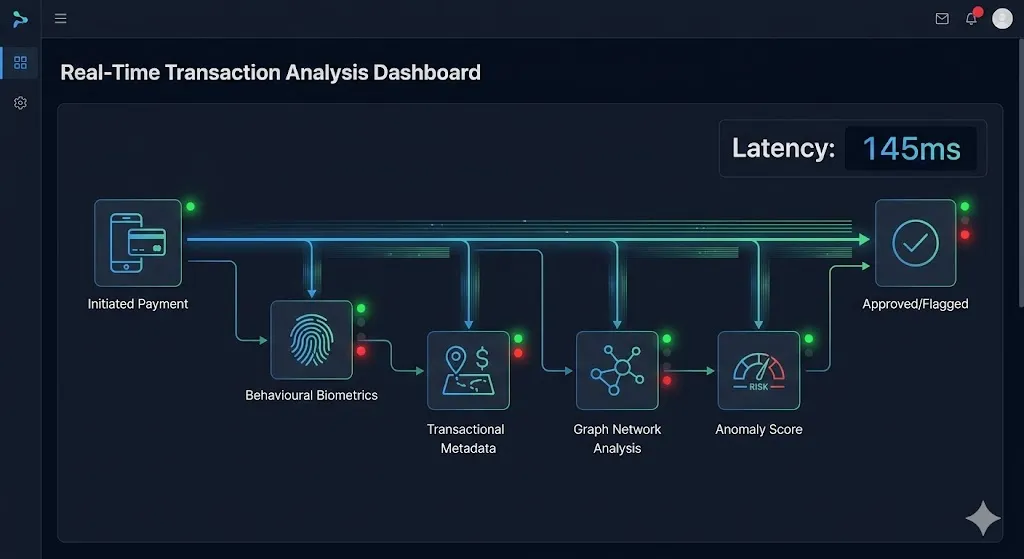 Autoencoders and other unsupervised methods are great for finding new threats, figuring out what normal behaviour looks like, and letting you know when things change. This is very important for zero-day attacks. Neural networks, especially LSTMs, can find patterns in streams of payments that happen one after the other. This helps you figure out what risks there will be at the session level.
You should learn how graph neural networks work because they show how different things are linked. They can even find money laundering rings by showing links that aren’t obvious. These things, along with edge computing that has a latency of less than 200 milliseconds, help banks find fraud right away.
The chart fraud_trends.png was made.
This picture shows how AI fraud usually works, from getting information to making decisions.
Big companies that find AI fraud
A few AI fraud detection companies really stand out to me because their platforms are so advanced. Tookitaki is the best at using the brains of many people to find patterns in transactions all over the world. Its AFC Ecosystem is what makes it so.
ComplyAdvantage and Salv are very close behind. Both of them are focused on real-time monitoring and machine learning models that can be changed to cut false positives by as much as 50%. The analytics tool from Finscore works well with fintech stacks. Decision Intelligence helps big companies like Mastercard look at billions of payments every year. This makes it three times more likely that they will find fraud.
These businesses show how AI can be used to find and stop fraud on a large scale, often by using APIs that are already in place in core banking systems.
| Company: | Key Strength: | Speed of Detection: | Fewer False Positives |
| Tookitaki | Collective AI Intelligence | 40–60% in real time | |
| ComplyAdvantage | Transaction Monitoring | <1s | Half of |
| Salv | Custom ML Models | Milliseconds | High |
| Get the Mastercard | Pro Engine right away | 22% | |
| Stripe (Radar) | Hybrid XGBoost and Neural Nets | 100ms | 0.1% rate |
Real-Life Case Studies
To be more specific, American Express used LSTM models to process a lot of data in real time, which helped them find fraud 6% more often. PayPal, on the other hand, made its global systems 10% better and always kept an eye on what was going on across borders.
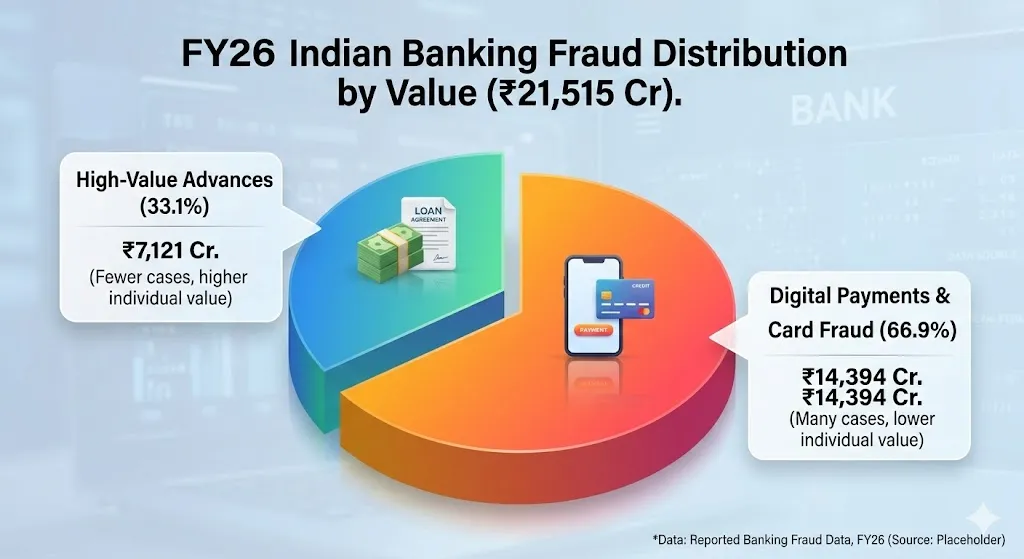
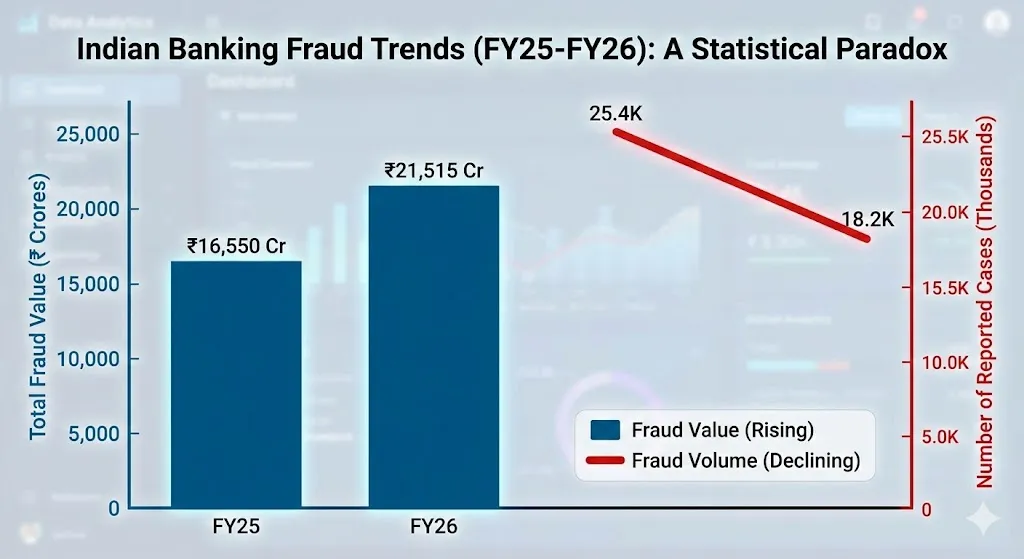
The Commonwealth Bank of Australia is a great example. Their genAI system across channels cut fraud by 30% and sent out 20,000 alerts every day through NameCheck. Every year until September of FY26, banking fraud in India rose by 30%, reaching ₹21,515 crore. But private banks that used AI were able to lessen the effects by using machine learning to find fraud.
Source: Data reflecting the Reserve Bank of India (RBI) Report on Trend and Progress of Banking in India 2024-25
Stripe’s Radar is one way that AI can help banks find fraud. It looks at more than 1,000 things for each transaction and only gets it wrong 0.1% of the time. These AI fraud detection examples really work and often get back billions of dollars, like in the U.S. In 2024, the Treasury saved $4 billion.
Made a graph with the name ai_improvements.png
The benefits of AI for finding fraud
There are many reasons why AI is good at finding fraud, but the main one is that it works quickly. AI-powered tools can quickly look through millions of transactions and find phishing and account takeovers before they happen. On the other hand, rule-based systems can only handle a small number of situations.
The next step is to make it bigger. Feedback loops help machine learning models get better on their own, so they can deal with new threats without having to be retrained all the time. There are also savings: operating costs go down by 30% to 50% when there are fewer manual reviews, and customers trust the company more when there are fewer false positives.
HSBC found 2 to 4 percent more suspicious activities in 1.35 billion transactions. In short, AI changes how we protect ourselves from financial crime by letting us stop it before it happens.
Flagging strange behaviour in real time stops losses while a deal is going on.
Behavioural analysis distinguishes between genuine differences and falsehoods.
Predictive modelling stops money laundering and tells you what the risks are.
A theoretical examination of the utilisation of neural networks in the fight against fraud networks.
Questions and Answers
We have had some successes, but we still have problems like adversarial attacks, in which criminals poison training data to get around models. It’s still hard to understand; black-box decisions make it harder to follow rules like the DPDP Act in India.
Laws like GDPR say that federated learning should be used for training so that private data isn’t kept in one place. This is because it’s very important to keep your information private. Two of the best ways to do things are to use ensemble methods for robustness and AIOps for continuous auditing.
We need workflows that mix people and AI to meet these needs. Experts look at the edges, and machines take care of the volume.
| Problem, Effect, and | Best Way to Do It | |
| Adversarial ML, | Model Evasion, | Ensemble, and Retraining |
| Setting the Threshold, | False Positives, and | Customer Friction |
| Data Silos, | Incomplete Views, and | Graph Integration |
| What Could Happen If You Don’t Follow the Rules: | XAI Tools |
Right now, numbers and trends
It’s shocking how much fraud has gone up: by September of FY26, Indian banking frauds had reached ₹21,515 crore, a 30% increase from the year before. Most of these cases (33.1%) were high-value advances, even though there were fewer of them. More than 20% of schools around the world had lost more than $5 million by 2025.
 AI says the opposite: LTMs and knowledge graphs help you make decisions in less than a millisecond, and behavioural biometrics are becoming more popular. There is more fraud going on right now because more people are using digital payments. But AI can find patterns even faster.
 They made a picture with the name Banking_fraud_types.png.
According to trends, multi-modal AI is becoming more common. This type of AI keeps an eye on everything by using biometrics, networks, and transactions.
What happens next? More ideas are on the way.
I believe that multimodal LLMs will use voice, video, and transaction data to make AI crime detection more accurate than ever in the future. AI and quantum-resistant encryption will work together to keep us safe from new threats by 2030.
Edge AI makes a lot of things possible, like smart cameras that can see robberies and banks that can watch their customers in real time. This is an extension of financial AI to crimes that happen in the real world. If scammers use AI, it will start a race to the bottom. But if we all work together in ecosystems, we will all benefit.
Federated learning banks will share data with everyone, which will get rid of silos. AI will eventually go from being used to catch criminals who steal money to keeping everyone safe.
A picture of how security systems that use AI will look in the future.
The best ways to get things done
You need to set up strong data pipelines and make sure that the labelled datasets include people from a wide range of backgrounds before you can use AI to find financial fraud. Use both supervised and unsupervised models. Use supervised models for threats you already know about and unsupervised models for threats you don’t know about.
Tools like Kafka let you stream data in real time and dashboards let you keep an eye on it. Check your models for drift every few months and retrain them every three months. Companies that use AI to find fraud will give you easy-to-use solutions.
Putting ethics first in AI: bias audits and clear reporting make everyone feel better.
Questions and Answers
What is the best thing about using AI to find fraud in banks right away?
AI can scan transactions in less than a second and flag any problems before they are finished, which stops losses. This is not how transactions are usually done in groups. Because they take this proactive approach, adopters like Commonwealth Bank see a 20–30% drop in fraud.
Which companies are best at spotting AI fraud?
ComplyAdvantage, Salv, Mastercard, and Tookitaki are the best companies for real-time ML platforms that cut down on false positives. In less than a second, their tools can look at billions of transactions.
How does machine learning help banks find fraud more easily?
ML can change when it sees new patterns that don’t fit with rules that are set in stone because it learns from data on its own. This makes it more accurate (95%+), and it can handle a lot of digital payments.
What are the most serious issues with using AI to stop fraud?
Explainability and adversarial attacks are still problems, but ensembles and XAI can help with them. Federated learning helps keep data safe.
What will happen in the future that will change fraud and AI?
Multimodal systems that use biometrics, graphs, and edge AI to catch high-tech criminals quickly will be the most common way to do so by 2027.