How to Prepare for Regulation: How to Stay Ahead of Compliance in 2026
The rules and laws are at a very important point in their history right now. Patterns of compliance that have been around for a while won’t be around in 2026. Instead, it will be a big deal for companies. They will either follow the new rules or fall behind. The rules are harder to follow now, the rules are stricter, and the expectations are higher. Because of stricter data privacy laws, more complex financial crime, and less stable geopolitics, compliance leaders have a very hard time doing their jobs. Our organization’s strength and competitive edge will depend on our ability to see these changes coming instead of just reacting to them.
What can you do to protect your money?
What Sets 2026 Apart in the Regulatory Convergence
Regulators used to work in separate groups, but now they all work together. There are now the same rules for protecting people’s privacy, stopping AI from doing bad things, stopping financial crime, and following environmental laws. This has created a single compliance ecosystem where problems in one area can affect others. Because of this connection, we need to stop thinking of compliance as a series of separate tasks and start using a single compliance strategy.
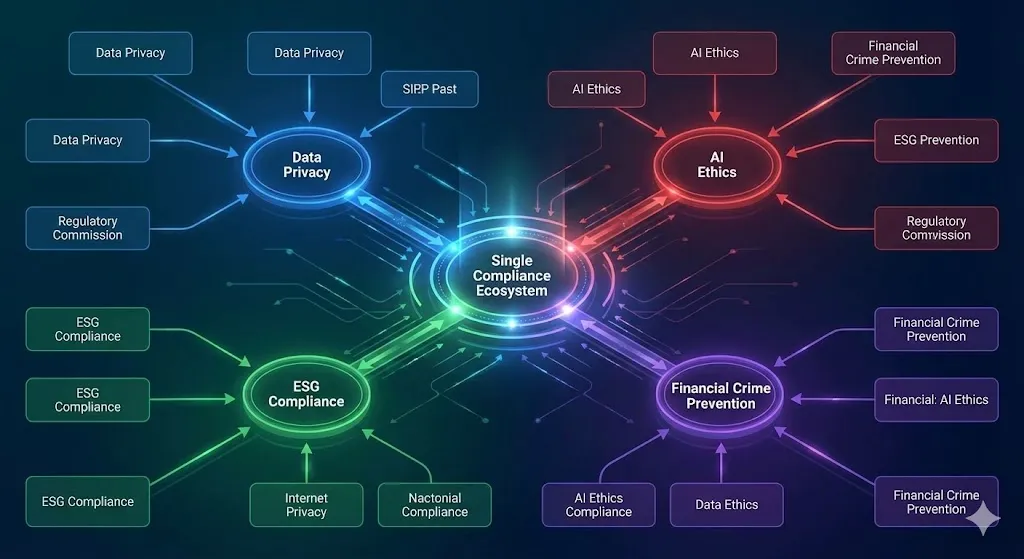
Check out how the rules are set up right now. The European Union’s AI Act is making progress more quickly when it comes to how it will be enforced. It is even harder because privacy laws are different in each state in the US. Cybersecurity requirements are now the most important thing that financial regulators like FINRA and the SEC look for in every test. At the same time, environmental regulators want to see real proof that emissions are being tracked and that things are being run in a way that is good for the environment. For businesses that work across borders, this complexity grows even more.
Keep in mind that businesses that thought compliance was a cost centre in 2025 will have to pay a lot for it in 2026. Companies that use technology, improve their data skills, and make compliance a part of their culture will not only survive, but they will also do well.
Risk Severity Assessment: The 10 Biggest Compliance Risks for 2026
Getting to Know the Ten Biggest Compliance Risks for 2026
We need to know exactly what regulators will be paying close attention to in the next year. Our analysis finds ten specific areas where organisations will face more pressure, based on industry benchmarks and regulatory announcements:
| Risk Area | Key Driver/Deadline | Impact Level |
| 1. AI Oversight | EU AI Act (Aug 2, 2026) | Critical |
| 2. Data Privacy | CCPA/CPRA Enforcement | High |
| 3. Third-Party Risk | Vendor Accountability Rules | High |
| 4. Financial Crime | GenAI-based Fraud | Critical |
| 5. Fragmentation | Divergence in Global Laws | Medium |
| 6. ESG Compliance | CSRD Reporting Requirements | High |
| 7. Whistleblowing | Increased Reporting Volume | Medium |
| 8. Consumer Duty | FCA Outcome Monitoring | High |
| 9. Supply Chain Ethics | Labor and Environmental Laws | High |
| 10. Resilience | Ransomware & Cyber-Fraud | Critical |
The most important thing right now is to keep an eye on and control AI. The EU AI Act says that high-risk AI systems must be ready by August 2, 2026. There is more and more focus on human oversight, explainability, and auditability.
Data Privacy and Cybersecurity: Regulators won’t accept weak controls anymore. The California Privacy Protection Agency is enforcing the new CCPA changes that went into effect on January 1, 2026. If you break the law on purpose, you could be fined up to $7,988.
Third-Party Risk Management: You are still responsible for the work even if you hire someone else to do it. Regulatory bodies are making big companies responsible for the mistakes of their vendors. They need to watch them closely and make sure their contracts have strong protections.
Stopping Financial Crime and Fraud: GenAI-based fraud is a big business, and more than half of all modern fraud uses AI-based methods. Regulatory enforcement is getting tougher, so risks need to be found and added to the system right away.
Divergence and Fragmentation in Regulations: It’s getting harder to follow the rules around the world because there are more and more different ways that countries regulate things.
Environmental, Social, and Governance Compliance: ESG rules are changing from things that companies can choose to do to things that they have to do. For instance, keeping track of carbon emissions is no longer just a formality; it’s now a real cost of business.
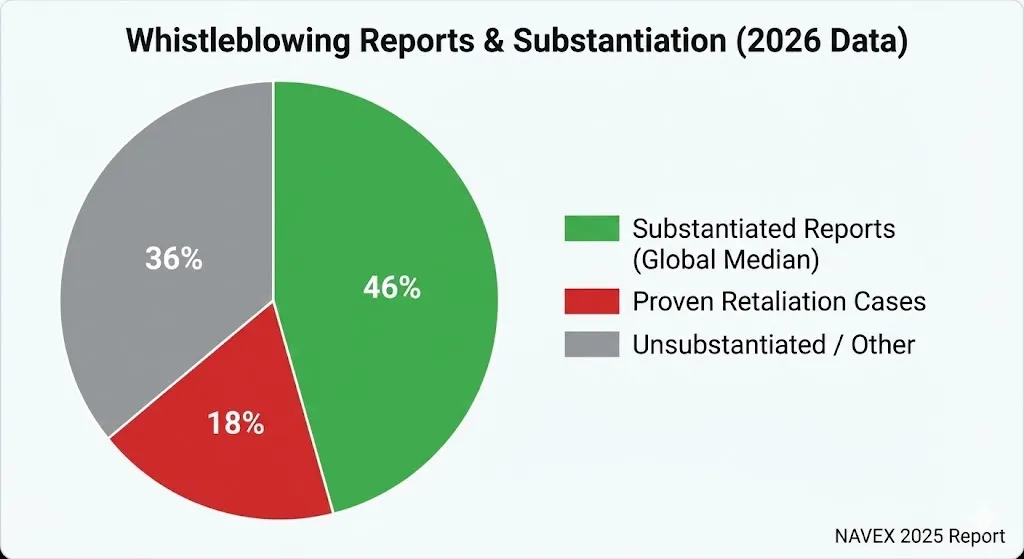
Whistleblowing: The number of employees reporting is at an all-time high (1.57 reports per 100 employees), but only 18% of retaliation cases are proven. This is a big problem that regulators and litigants are working to fix.
Consumer Duty and Customer Outcomes: The FCA’s Consumer Duty rules require full product governance, customer journey design, and outcome monitoring that go far beyond what is normally required for compliance.
Supply Chain Governance: Regulators now want companies to make sure that their supply chains are fair, follow labour laws, and don’t hurt the environment too much.
Cyber-Enabled Fraud and Operational Resilience: Ransomware, account takeovers, and fake identities are all new threats that need real-time response capabilities and fraud-AML operations that work together.
Set a reminder in your calendar for the EU AI Act on August 2, 2026.
We can’t say enough how important this one date is. The EU AI Act says that AI systems that are very risky must be in compliance by August 2, 2026. There are no grandfathering rules for new deployments; this is a strict deadline, not a suggestion.
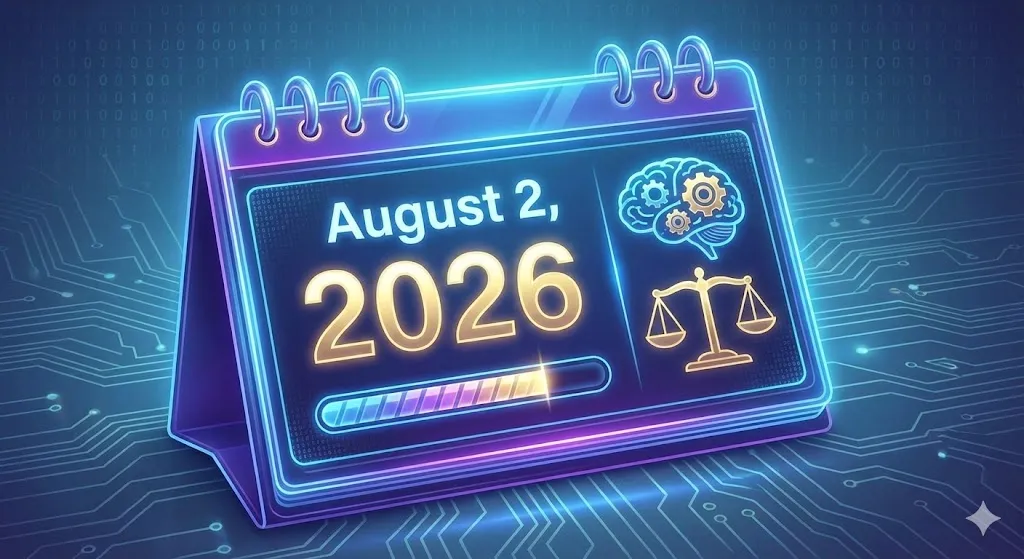
Businesses in Europe that are using or planning to use AI systems need to know what this means for how they work. The EU AI Act says that systems that are used in important areas like jobs, education, public services, and critical infrastructure are high-risk. Conformity assessment includes picking a notified body, testing, and fixing problems. It can take 8 to 16 weeks of hard work. We really only have a year or less to get everyone to follow the rules, starting today. This is because we need time to make decisions about how to govern, implement the rules, and write down what we did.
The European Commission should give clear instructions by February 2, 2026. This means that companies will spend the first two months of the year trying to figure things out before they can fully implement their compliance plans. National regulators will soon start giving their own interpretations, which will make things even more difficult. This will be like the early days of the GDPR, when there was a lot of confusion about the law and rules were not clear. Multinationals had to keep an eye on changes at both the EU and national levels.
Important regulatory deadlines and milestones for following the rules in 2026
Data Privacy: The Growth Continues
There are now more global standards for data privacy than just GDPR. We are now in charge of a complicated ecosystem of overlapping frameworks that we all need to follow at the same time.
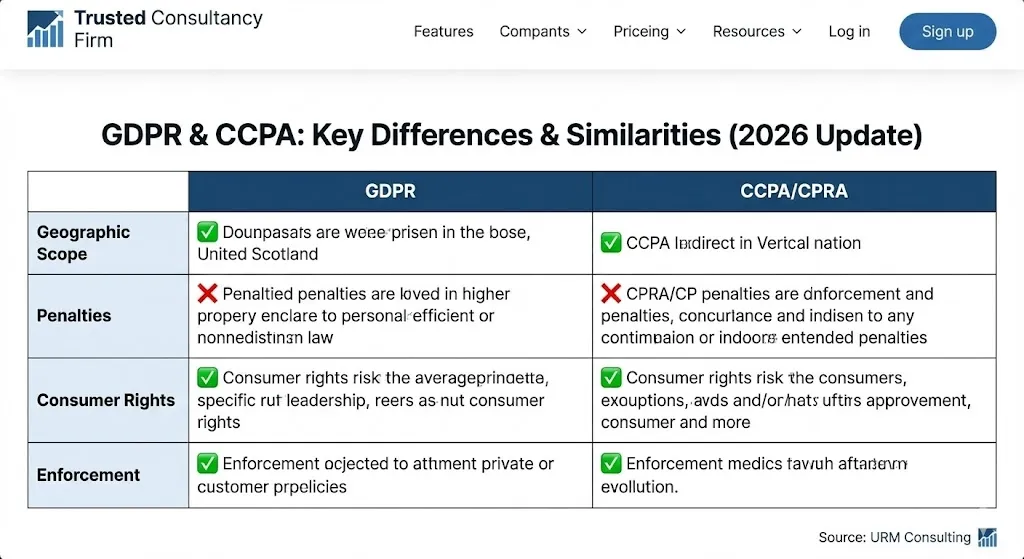
The CCPA’s 2026 Changes: California’s new rules go into effect on January 1, 2026. Companies that get more than half of their money from selling personal information or processing data for more than 250,000 people must have cybersecurity audits. Privacy risk assessments are now required for high-risk processing, and the way penalties work has changed so that there are no longer automatic 30-day cure periods for intentional violations.
Global State Privacy Proliferation: Twenty US states now have full privacy laws, and “second-generation” laws are spreading quickly. The Colorado Division of Privacy and Data Protection, the California Privacy Protection Agency, and new AI bureaus in states like New York and Illinois are all trying to do more than they are allowed to. In the end, there will be obligations that overlap and sometimes conflict, which will change how businesses put privacy programs into action.
UK’s Data Use and Access Act: Makes it easier to deal with EU Data Subject Access Requests (DSARs). Regulators are beginning to connect good DSAR handling to larger ideas about being responsible and running things well. Companies need to write down clear steps and deadlines (30 days under GDPR, but different in different places under new rules) and spend money on automation to handle the volume.
The New Job of Managing Third-Party Risk
Regulators are changing the rules about how businesses can be held responsible for how they treat vendors. It’s no longer okay to say, “We outsourced it, so it’s not our problem.”
Companies are still responsible for the work they outsource, as shown by FINRA’s 2026 Annual Regulatory Oversight Report. You should keep a close eye on cloud hosting, data storage, outsourced marketing, and any other important tasks that you give to other people. According to a survey by the Bank of England and the FCA, one-third of financial services companies use AI through third-party implementation. Most of them use the same three vendors, which makes systemic risk more likely.
Best Practices for TPRM in 2026:
We suggest making a structured framework that includes the whole vendor lifecycle:
Due Diligence: Before you get involved, do thorough risk assessments that look at the company’s financial health, security, regulatory history, and compliance with environmental, social, and governance (ESG) standards.
Risk-Based Categorisation: Group vendors based on how important they are and how much risk they are facing. It’s a good idea to keep a closer eye on important third parties than on vendors with less risk.
Real-Time Monitoring: As part of your ongoing monitoring plans, you should get alerts in real time when vendor risk changes, like when there is bad media coverage, financial problems, cybersecurity incidents, or regulatory actions. The most important thing is that the data is correct and of good quality.
Contractual Safeguards: Contracts are still the best way to make sure that people keep their promises. Make sure that contracts are clear about how data is handled, security, compliance, and audit rights. As the rules say you must, let people know when a fourth party is involved.
Fourth-Party Visibility: Give fourth parties (vendors’ vendors) a better look at what you’re doing. More and more, businesses are finding out that important services are being sub-contracted without their knowledge or control.
Scenario Planning: Add vendor risk scenario planning to your TPRM strategy to go from reactive risk management to proactive risk management.
The AI-Powered Fraud Crisis: Stopping Financial Crime
Criminal groups have used AI to make fraud operations bigger and more accurate than ever before, which is a unique situation for us. AI-powered tools like hyper-realistic deepfakes and automated phishing campaigns are used in more than half of all modern fraud.
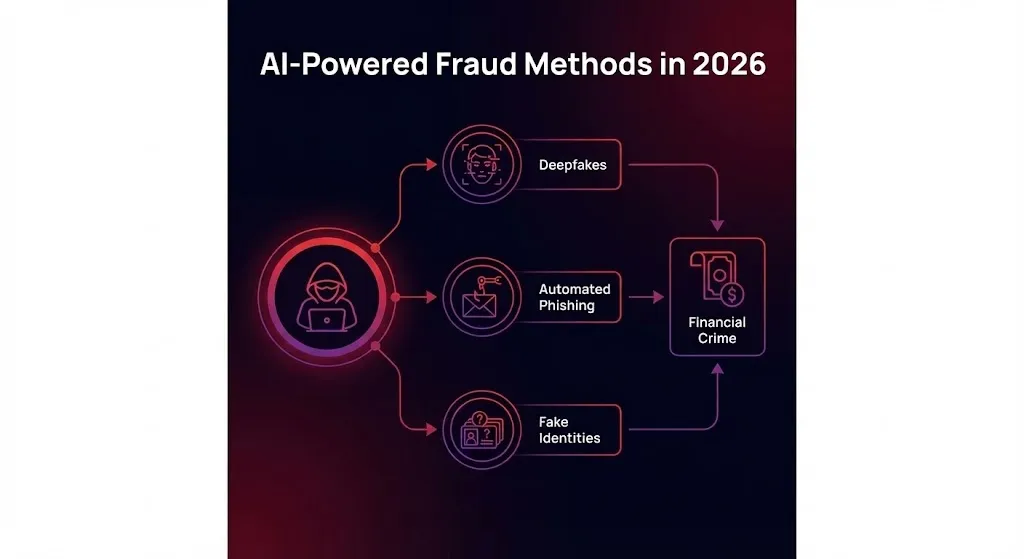
Regulators have also acted quickly. According to FINRA’s 2026 report, the biggest threats are cybercrime and cyber-enabled fraud. People are very worried about fraud that uses GenAI, fake websites, account takeovers, and ransomware. New ways to attack the financial industry are coming out faster than systems can be updated to find them.
Deepfakes and Identity Verification: One of the scariest things about GenAI is that it can make hyper-realistic deepfakes of ID documents that look like they have real shadows and holographic textures that show they are real.
Fake Identities: Criminals use GenAI to mix real and fake information to make people who don’t exist but look like they do, with jobs, credit histories, and social media activity.
The FRAML Convergence: A big trend that is picking up speed is the merging of fraud and anti-money laundering (AML) operations.
ESG Compliance: From Optional to Mandatory
It’s no longer just a marketing story that businesses have to follow environmental, social, and governance rules. It’s now a real limit on how they can work.
Carbon Management as an Operating Cost: In China and the EU, carbon has gone from being something you have to do to something that costs a lot of money to run.
CSRD Implementation: The Corporate Sustainability Reporting Directive (CSRD) says that big European companies must write and publish reports on their environmental impact for the 2025 fiscal year in 2026.
Threshold Changes: The Omnibus Simplification Package, finished in December 2025, raises CSRD thresholds to include big companies with more than 1,000 employees and much higher turnover (€450 million).
The Culture Barometer, Reporting Wrongdoing, and Getting Back at Someone
We’re getting more reports from workers than we ever have before. The 2025 NAVEX Whistleblowing & Incident Management Benchmark Report looked at 2.15 million reports.
| Category | Value |
| Reports per 100 Employees | 1.57 |
| Global Median Substantiation Rate | 46% |
| Retaliation Case Proof Rate | 18% |
| Average Time to Close (Retaliation) | 32 Days |
Compliance Technology: From a Cost Centre to a Helpful Tool
The Compliance Function Is Becoming a Tech Function — Companies all over the world are spending a lot of money on AI-enabled compliance, RegTech platforms, workflow automation, and tools that let them watch things happen in real time.
The 2026 Regulatory Compliance Strategy Framework
You need a disciplined strategic framework to be able to guess what the rules will be. We think the best way is as follows:
Regulatory Intelligence: Keep an eye on all rules and guidance documents.
Risk Assessment: Check how duties fit with long-term goals.
Clear Accountability: Boards must ensure rules are followed.
Policy Development: Turn rules into steps everyone can take.
Training: Use scenario-based training and microlearning.
Data Governance: Ensure data is accurate and checkable.
Technology Implementation: Invest in automation to cut manual work.
Third-Party Ecosystem: Plan for vendor and supply chain risks.
Monitoring: Check turnaround times and costs.
Documentation: Keep thorough records for court or regulators.
Case Studies: Businesses That Work
Case Study 1: A large bank cut false positive alerts by 60% and sped up investigations from 14 days to 3 days using agentic AI.
Case Study 2: A healthcare company cut compliance costs by 35% and raised audit readiness from 72% to 94% by mapping common controls across GDPR, HIPAA, and CCPA.
Case Study 3: A manufacturing company cut emissions and operating costs by 18% by using real-time carbon measurement systems.
People ask these questions a lot (FAQ)
1. What is the most important deadline for compliance in 2026? The EU AI Act says that high-risk systems must be in place by August 2, 2026. This is the most important due date.
2. How should businesses pick which compliance tasks to do first? Set priorities based on likelihood of enforcement, financial loss, stakeholder expectations, and importance to business.
3. What is the best compliance technology investment for 2026? Real-time compliance monitoring platforms that work with current data infrastructure provide the best ROI.
4. How can companies better handle the risk of third-party compliance? Make a structured framework with risk-based categorisation, ongoing monitoring, and contractual protections.
5. What are the most important things for compliance leaders to keep an eye on? Regulatory examination trends, incident resolution time, training completion scores, and whistleblower substantiation rates.