Intoduction
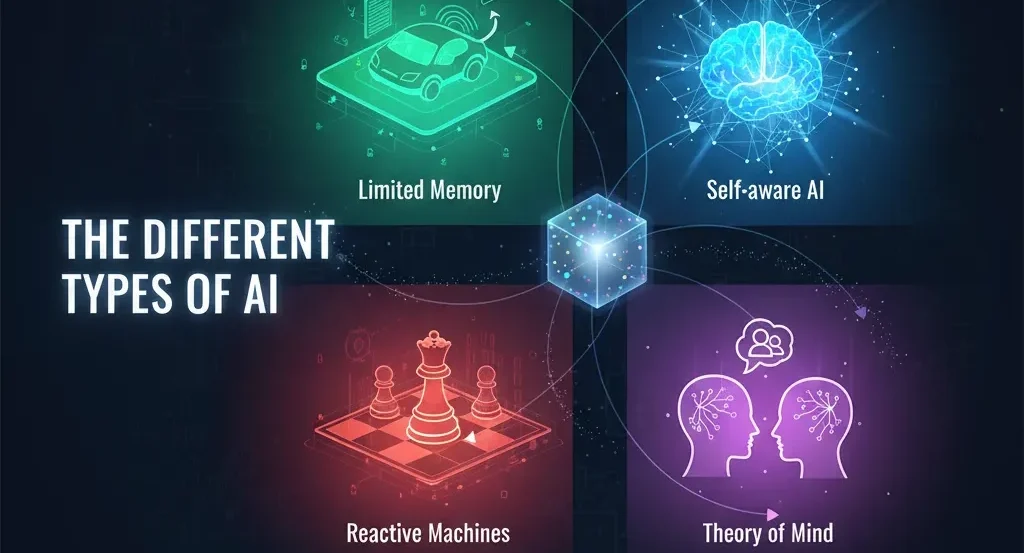
Consider the world where machines not only defeat human beings on the chessboard but can also write poems, find the cure to illnesses, and resolve climate change all within the same afternoon. This is no longer science fiction, but the path we are taking with artificial intelligence.The Different Types of AI Artificial intelligence is also a broad field that is classified according to the potentials and functionalities of the AI systems. We may distinguish two main frameworks of AI, the first is based on the abilities of AI, the second one is based on the functionality of AI.
By the year 2025, the concept of AI has changed to a more advanced technology that is transforming all spheres of our existence after being implemented in the year 2025 as a more advanced technology as compared to the simple rule-based systems. However, the thing that the majority of people are not aware of is that not all AI is created equal. Artificial intelligence is divided into separate types that possess various abilities, uses, and prospects of our future.
Learning these differences is not an academic issue but a necessity to any one who wishes to know the direction we are moving and the way we should be ready to go with it.

History of artificial intelligence (AI): Narrow AI to Artificial Superintelligence.
AI Intelligence Spectrum: The 3 Key Intelligence Types.
Essentially, discussing artificial intelligence, experts tend to divide it into three basic types in terms of capabilities and scope. Both are the levels of different sophistication and possible impact on society.
Narrow AI (ANI): The Specialized Performers.
The only form of artificial intelligence that exists currently is Narrow AI, or Artificial Narrow Intelligence (ANI) or Weak AI. The systems are specialized and are unable to perform in areas beyond their areas of operation. Alexander Narrow AI represents the best specialist–incredibly proficient at one thing but totally incapable outside of it. You get Narrow AI when you ask Siri to play your favorite song or when Netflix suggests a movie that is exactly what you are in the mood to watch.
The use of narrow AI in practical examples of recommendation engines, speech recognition, predictive maintenance, self-driving cars, search engines, voice assistants, robots, and chatbots.
How Narrow AI is Being Used in the Real World.
The Narrow AI applications have gone viral in industrial applications, with 77 percent of devices already in use incorporating some type of AI technology:
- Healthcare Revolution: Medical scans are currently analyzed by AI machines with better accuracy than human physicians, in some cases. Firms such as DeepMind of Google have come up with AI that identifies more than 50 eye diseases with 94 percent accuracy.
- Financial Protection: Banks apply narrow AI to identify fraudulent transactions on the spot, analyzing their spending patterns and reporting suspicious behaviors within milliseconds.
- Transportation Innovation: Tesla and Waymo self-driving cars are among the most advanced narrow AI applications, which process millions of data points each second to resolve a complex traffic situation.
- E-commerce Personalization: Recommendation systems, such as Amazon, Netflix, and Spotify, operate based on the behavior of users to provide recommendations on products and content with unbelievable accuracy.
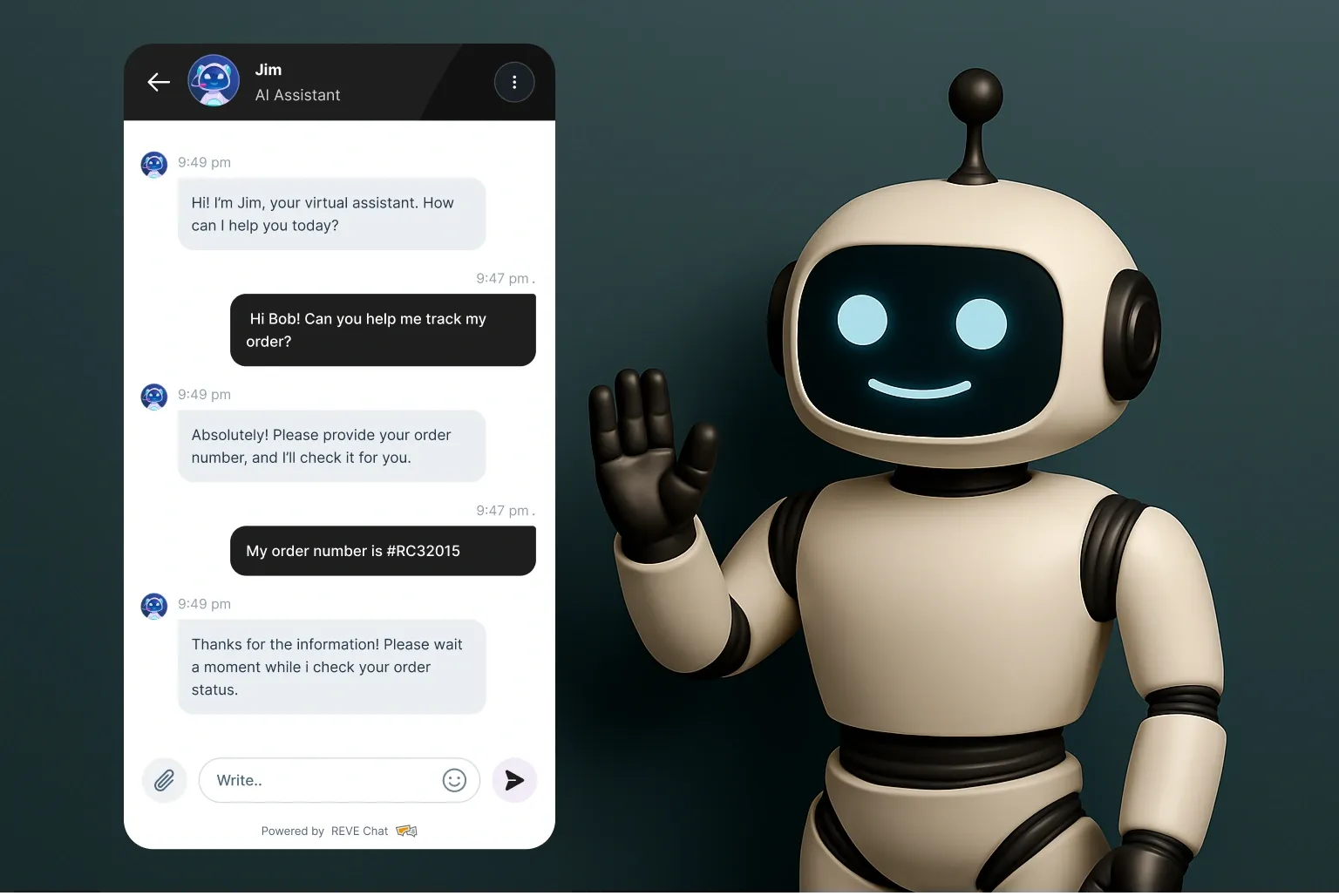 A virtual assistant chatbot example of Narrow AI engaging in an order tracking conversation with a user
The Current Market Reality
The small AI market is growing more than ever. By 2024, the global AI market size is estimated to be $279.22 billion and will rise to $1,811.75 billion by 2030, which is 35.9% as a compound annual growth rate (CAGR).
The following is the way various industries are embracing narrow AI:
- Healthcare AI: Excitement with a 37.5% CAGR, between $15.1 billion in 2024 and $102.7 billion in 2030.
- Retail AI: Garnering 31.8 percent CAGR to hit $31.18 billion by 2030.
- Financial Services: The financial services are likely to increase to $130.1 billion by 2030.
Table Placeholder: Table summarizing AI market growth by industry.
Artificial General: The Holy Grail of AI.
The next phase, Artificial General Intelligence, is AI systems that are capable of comprehending, acquiring, and applying knowledge in any field, as humans do. As opposed to narrow AI, AGI would have the ability to apply learning in one field to the other and to be able to reason about things that are outside of this field and also it would be creative and have emotional awareness.
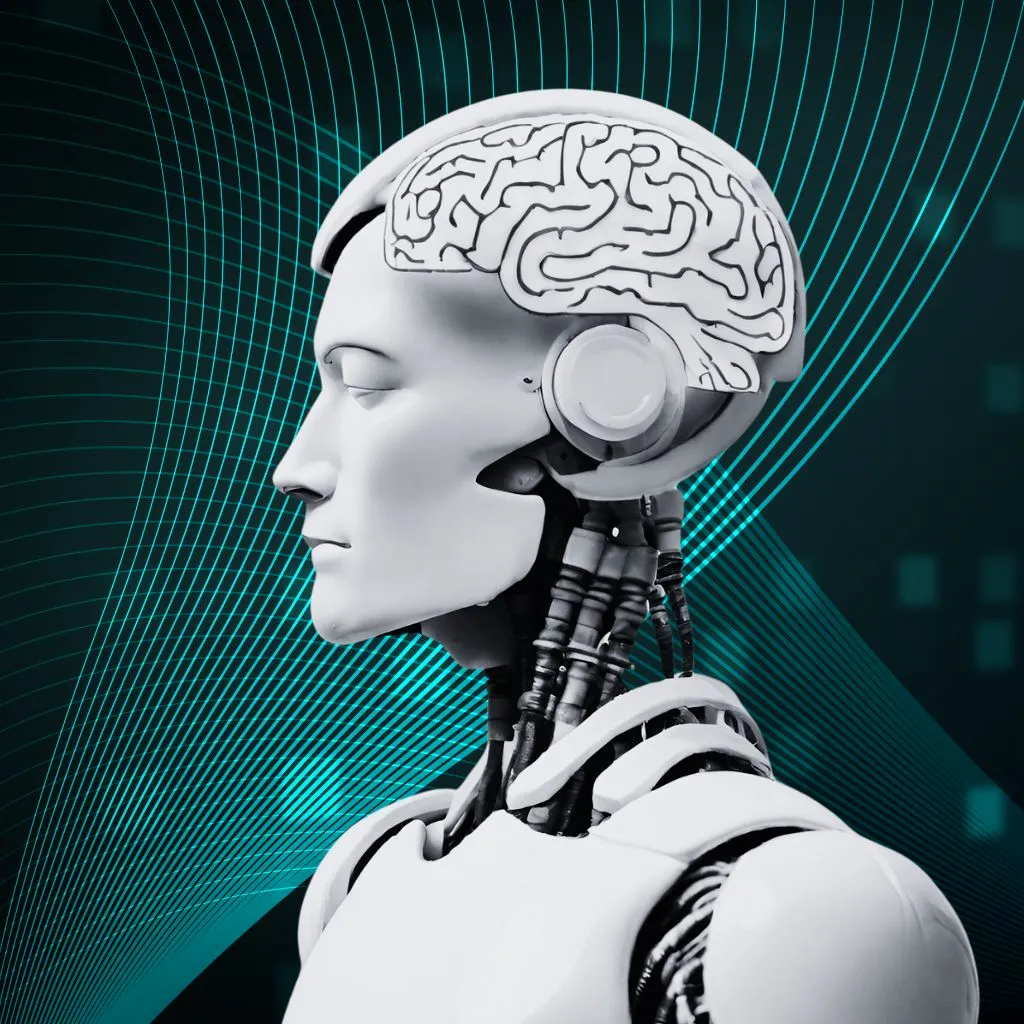
A humanoid robot with a brain-like design, symbolizing artificial general intelligence and a combination of human thinking and AI technology.
The AGI Development Status Quo.
Although AGI is still very hypothetical, good progress is being made. New systems such as GPT-4 and multimodal AI are providing hints of more general intelligence.
Controversial forecasts are all over the place:
- AI company founders: AGI is predicted by some to be in 2026.
- AI scientists: 2032 prediction Median.
- Superforecasters: 2027-2047.
The difference in such predictions is due to the difficulty of the task and the divergent opinion regarding what is perceived as true AGI.
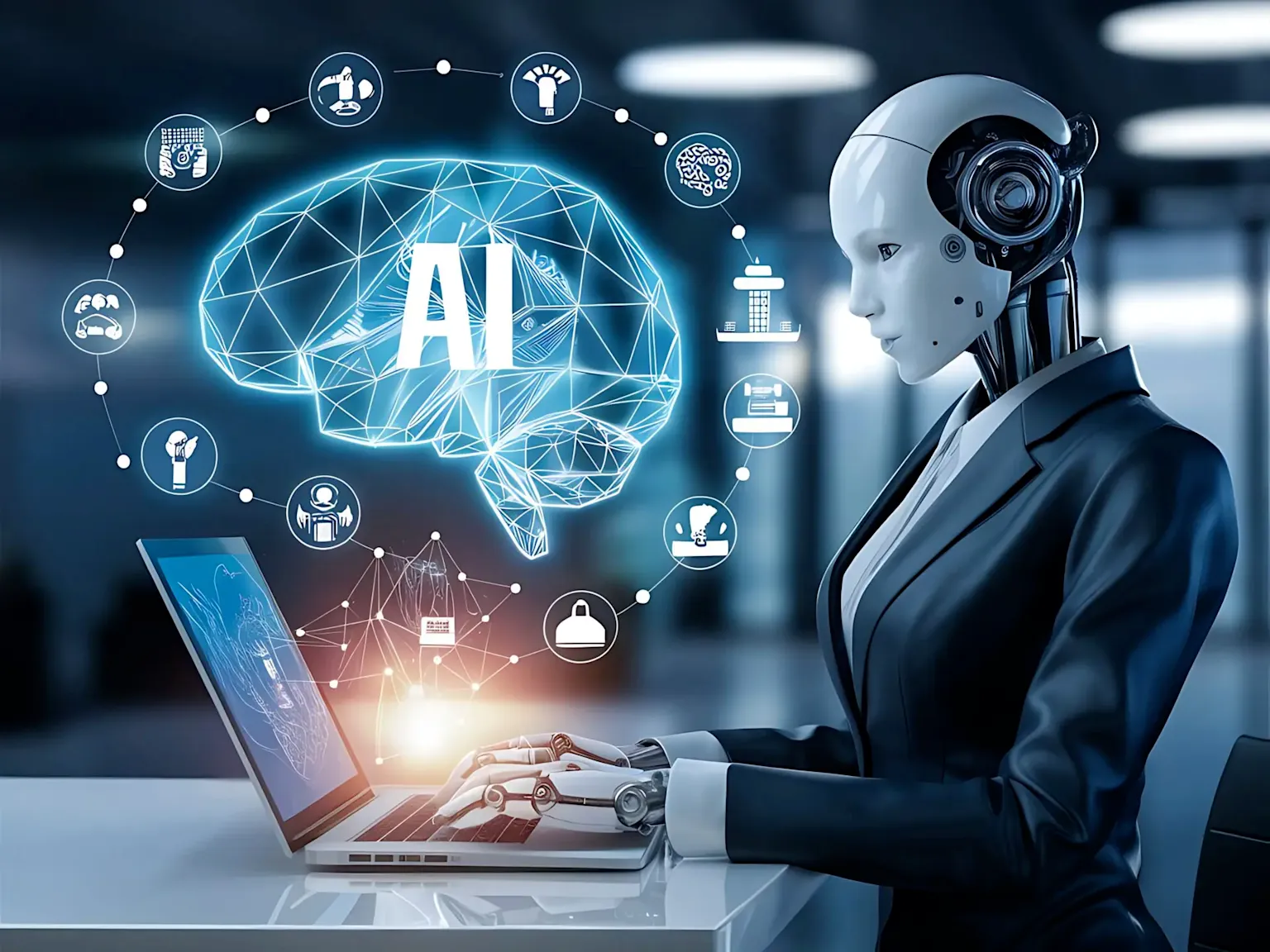
A futuristic robot in a business model on a laptop with a holographic brain of AI and icons representing the different features of artificial intelligence.
The Scaling Debate
Two major directions are followed towards the goal of AGI:
- The Scaling Hypothesis: It is widely thought by many of the top AI laboratories that further scaling of the existing models based on transformers with more compute and data will one day reach AGI.
- The New Architecture Approach: Scholars such as Yann LeCun believe that the world requires new styles and methods of architecture because the existing models do not understand and reason.
According to recent studies, the capabilities of AI to complete tasks are doubling about every seven months, which means that, assuming the current trends remain unchanged, in several years we might witness the systems that will be able to deal with complex and multi-day tasks.
Artificial Superintelligence (ASI):
Artificial Intelligence, Beyond Human Capabilities.
Artificial Superintelligence is a hypothetical scenario in which AI systems will outwit human intelligence in all aspects, measuring it. ASI would not only be comparable to human mental capabilities, but be even more creative, problem-solving, socially intelligent, and wiser.

Human-like robot showcasing attributes of Artificial General Intelligence (AGI) including human-like intelligence, mobility, and dexterity.
Theoretical ASI Capabilities.
- Self-Improvement: ASI systems may use autonomous development of their own algorithms, which may result in exponential development of their capabilities.
- Global Problem-Solving: These systems would address the most pressing needs of the human race, such as climate change, eliminating diseases, etc. in an unprecedented manner and understanding.
- Scientific Breakthroughs: ASI has the potential to speed up the process of scientific discoveries, possibly to resolving issues that have baffled people over the centuries or even discover completely new scientific fields.
Timeline and Implications
Most researchers project it to around the 2040s to 2050s with the assumption of AGI being obtained. Nevertheless, it may occur very quickly as AGI may be transformed into ASI because of the self-enhancing character of these systems.
The possible returns are as great as the risks:
- Medical field: Custom-made cures and remedies to incurable illnesses.
- Climate: Resource management and breakthrough clean technologies.
- Space Exploration: State of the art in mission planning and autonomous exploration.
The Technology of the Modern AI.
To have a clue about the types of AI, the user must have an idea about the technology behind such systems.
Machine Learning: An Introduction.
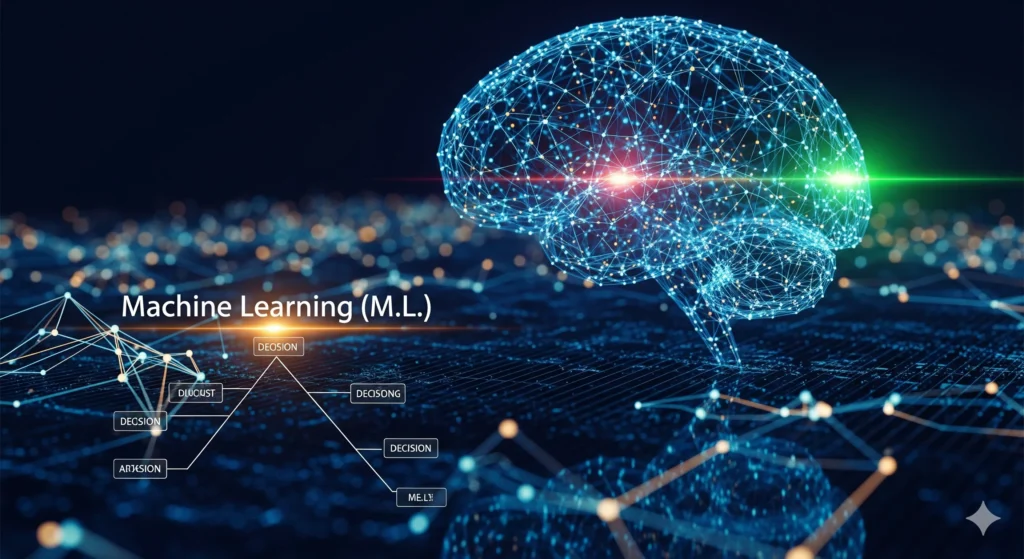
All existing AI systems are based on machine learning. It enables the algorithms to be trained on data and to become more effective with time without being coded to handle each case.
Deep Learning: Replicating the Brain.
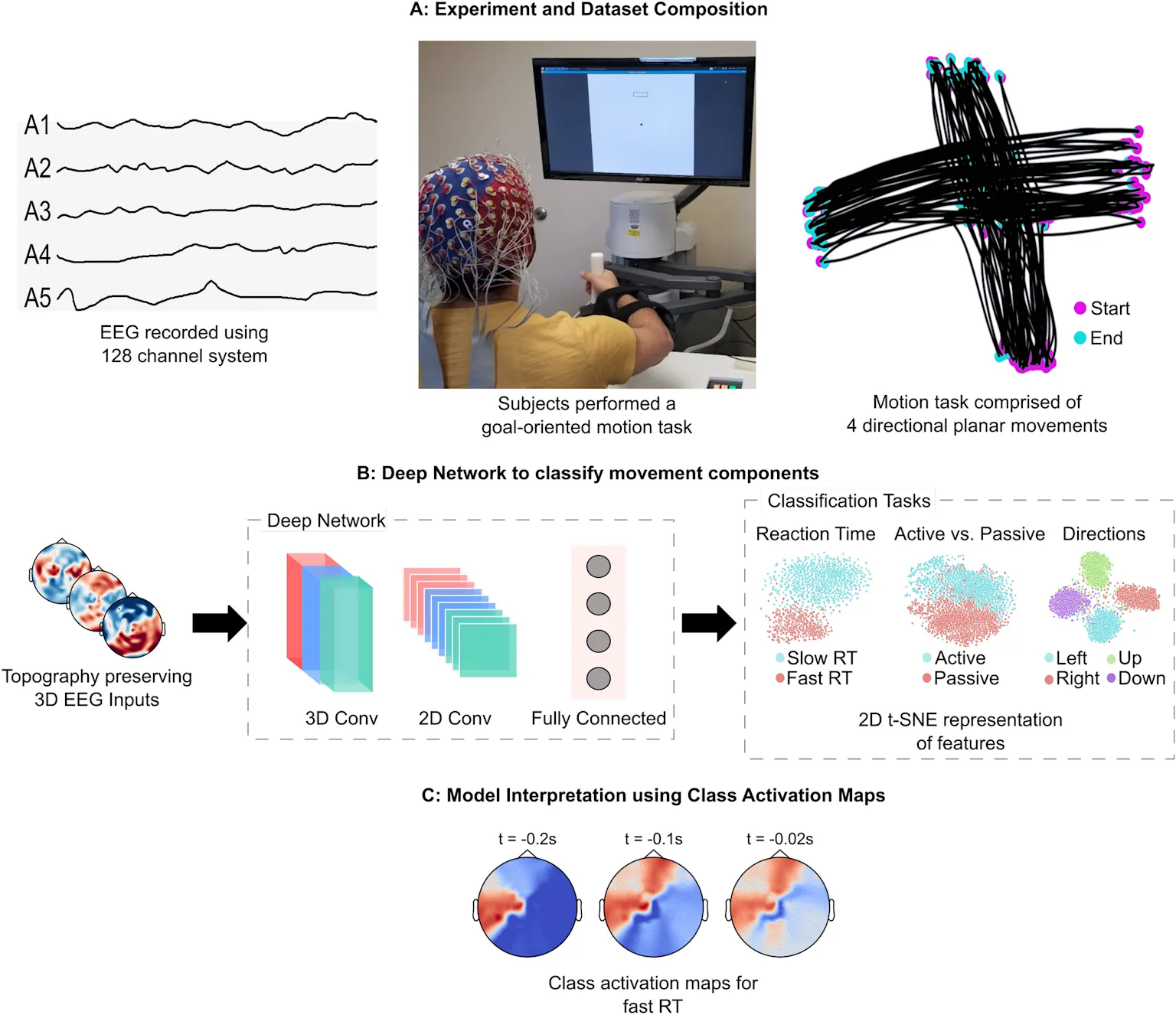
Deep learning involves the use of a serial of layers of artificial neural networks to process sophisticated patterns of data. Some technological breakthroughs made by this technology are:
- Computer Vision: Computer vision can allow machines to observe and comprehend visual data.
- Natural Language Processing: The ability to give AI the power to comprehend and produce human language.
- Speech Recognition: Transformation of spoken words into a text with high accuracy.
A deep neural network that interprets EEG brain signals to classify goal directed movements on topography preserving inputs and class activation maps.
Generation AI: The Creative Era.
Gen AI is an important step in the right direction, and it generates new content according to the patterns learned. Artificial intelligence applications such as ChatGPT, DALL-E, and others show that AI is increasingly becoming creative but these are limited to content AI applications.
Present Industry Uses and Influence.
The adoption of AI in industries is going fast. Recent surveys show that 78 percent of organizations are currently applying AI in any business activity, compared to 72 percent in the initial surveys.
The statistics on business transformation.
- Adoption Rates:
- Three-quarters of businesses either use or are considering AI in their businesses.
- According to 83 percent of businesses, AI is one of the most important aspects of business strategies.
- The percentage of organizations that support AI in achieving competitive advantage is 9 out of 10.
- Economic Impact:
- It is estimated that AI will add $15.7 trillion to the world economy by 2030.
- Generative AI will have the potential to boost annual revenues by 63 applications by $2.6 trillion to $4.4 trillion dollars on its own.
- One-third of the total number of companies across the world indicate they use AI in business.
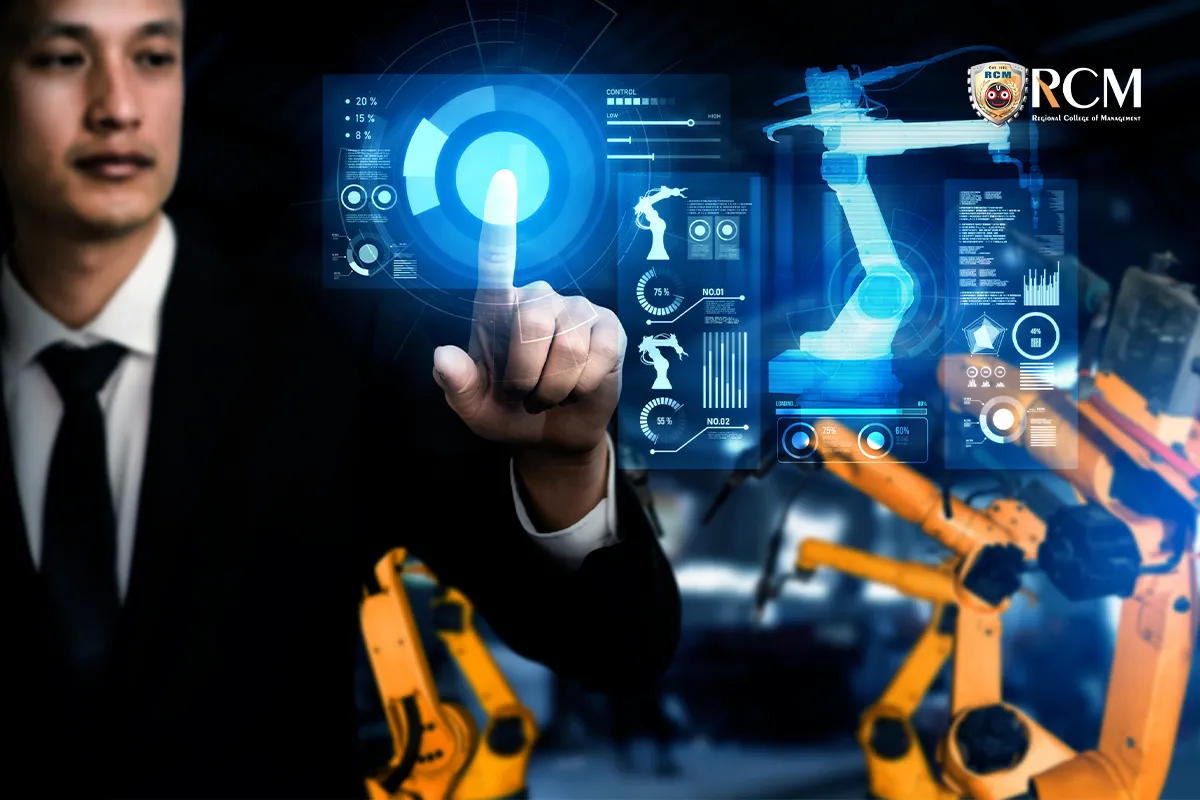
A business person communicating with AI-specific automation and robotic technology in a dystopian digital interface.
Sector-Specific Applications
- Healthcare: AI viewpoints in medical care are transforming the world of healthcare, and currently, AI-based systems can identify diseases at an earlier and with greater precision, compared to conventional means.
- Finance: In addition to being used in fraud detection, AI is being used to optimize trading, automate regulatory compliance, and offer customized financial advice.
- Manufacturing: Predictive maintenance, quality control, and supply chain optimization are becoming the primary source of huge cost reductions and an increase in efficiency.
- Retail: Customer satisfaction and sales conversion levels are going up on the online shopping sites by the use of personalization engines.
The Future: The 2025 and Beyond.
As we move on to 2025, there are a number of major trends that define the future of AI development.
The Optimization Era
The year 2025 is referred to as the year of optimization. Organizations are no longer trying AI but are optimizing its performance to increase their value. Generative AI is already paying off in more than 70 percent of organizations.
AI Model Advancement
Models are becoming more sophisticated and focused:
- More sophisticated reasoning is being developed in models such as OpenAI o1.
- The multimodal AI is expanding the boundaries of the various aspects of AI.
- There is a spectrum of applications that are being based on foundation models.
Scientific Acceleration
Artificial intelligence is speeding up scientific discoveries in fields:
- The discovery times of drugs are now being reduced to years to months.
- AI-based discoveries are helping material science.
- AI is being used to improve climate research through improved modeling and solutions.
How to Manage the AI Landscape: What it Means in Practice.
Learning these various forms of AI is not only an academic matter, but has practical consequences on the organization and individuals in general.
For Businesses
- Strategic Planning: Firms should have a vision of the kind of AI solutions that can satisfy their requirements and capabilities. Narrow AI solutions will be able to deliver instant value, whereas AGI is a long-term deliberation.
- Investment Decisions: As three-quarters of companies have been unable to extract tangible value through AI, it is possible to use AI types to make a more informed investment decision.
- Talent Acquisition: The market of AI expertise is on the rise and the organizations require specialists who are aware of the various functions and constraints of AI.
For Individuals
- Career Preparation: In 2025, AI will have killed 85 million jobs but also created 97 million jobs, or a net of 12 million jobs. Learning about the types of AI will enable people to be ready to this change.
- Digital Literacy: With the greater use of AI, it is now necessary to learn its functions and limitations to interact and make use of it.
- Ethical Considerations: The various types of AI pose various ethical questions, with narrow AI being a matter of privacy and existential questions arising concerning ASI.
The Road Ahead: The Problems and the Opportunities.
It is a long path of both unprecedented opportunities and huge challenges between narrow AI and AGI and possibly ASI.
Technical Challenges
- Data Requirements: Advanced AI systems demand vast quantities of quality data, putting doubts on the availability and privacy of data.
- Computational Requirements: AGI and ASI development may demand breakthrough information technology improvement in hardware and architecture.
- Alignment Issues: The closer AI systems are to human values and intentions, the more complicated it gets to achieve alignment due to the growing capabilities of systems.
Societal Implications
- Economic Disruption: With the shift in the type of AI, the change will result in a lot of economic disruption that must be carefully handled and dealt with through a policy.
- Ethical Governance: With the advancement of AI, the necessity to have strong ethical frameworks and governance structures emerges as a more pressing issue.
- International Cooperation: The creation of AGI and ASI will presumably need the international collaboration that humanity has never seen before in order to achieve positive results.
Recommendation: Adopting AI Evolution.
The transition of Narrow AI to Artificial General Intelligence and possibly Artificial Superintelligence is one of the greatest technological changes ever to happen to human history. We are in an unprecedented place as narrow AI is providing practical value in industries, and the groundwork towards more general intelligence is being established.
The main lessons to be learned on how to survive in this landscape:
- Narrow AI is bringing tangible value to the present day in the fields of healthcare, finance, transportation, and in the list of examples is limitless.
- AGI is evolving rapidly, and professional forecasts indicate that it is coming in the next ten or twenty years.
- ASI is still theoretical, yet it is a tremendous potential and a great challenge to human beings.
These differences are important to know in order to make sound judgments regarding the adoption of technology, career choices, and preparation of society.
As we move on past the year 2025, the various forms of AI will keep on developing and integrating to form novel opportunities that we cannot even imagine yet. The ones that comprehend these variations and prepare to live in such a future will be in the best position to succeed in this AI-driven future.
It is not the question to know whether AI will change our world, but how we will adjust and shape that change to ensure that everybody benefits. Knowing the various forms of AI and their consequences, we will be able to create a future in which artificial intelligence is an effective instrument to have people prosper and not disrupt and inequalities.
FAQ’s:-
1. How is the difference between the Narrow AI and General AI?
Narrow AI functions in a specialized way and is very efficient in performing specific tasks and cannot perform outside the area of its programmed functions. General AI (AGI) would be intelligent in human like fashion in all fields and able to learn and adapt to anything just as human beings can learn one thing and apply it to a different area.
2.When will we have Artificial General Intelligence?
The forecasts given by experts have very different ranges, with the leaders of AI companies estimating the year 2026 and the more cautious ones estimating the period between 2032 and 2047. The ambiguity is due to the fact that the challenge is complicated and there is disagreement as to what is actually true AGI.
3.Is Artificial Superintelligence harmful?
ASI is a tremendous potential and a massive threat at the same time. On the one hand, it will be able to address global issues such as climate change and disease, but on the other hand, it provokes the question of control and orientation to human values. The majority of the experts amend that the ASI development would be conducted in the 2040s-2050s when there would be time to establish safety schemes.
4.Which industries are the most commonly transformed with the existing AI?
The most substantial AI changes are experienced in healthcare, finance, retail, and manufacturing. The AI market in the world is expanding by 35.9 percent each year and the healthcare AI is experiencing an annual rate of 37.5 percent CAGR.
5.What can people do to prepare to the AI-based future?
Practice the skills that AI will not replace, but ones that will help supplement AI: innovation, emotional intelligence, sophisticated problem-solving, and flexibility. Various AI types and their possible power can be understood to make wise career and education decisions. Monitor the trends in AI and their relevance to your sector and profession.

Pingback: How to train an AI Model : The Ultimate Concept of Training Data Explained - Bing Info