Bing Info

Tech Insights & Digital Innovation
Header Mobile Fix

Bing Info

drug-discovery-at-warp-speed

Drug Discovery at Warp Speed: How AI is Designing New Medicines

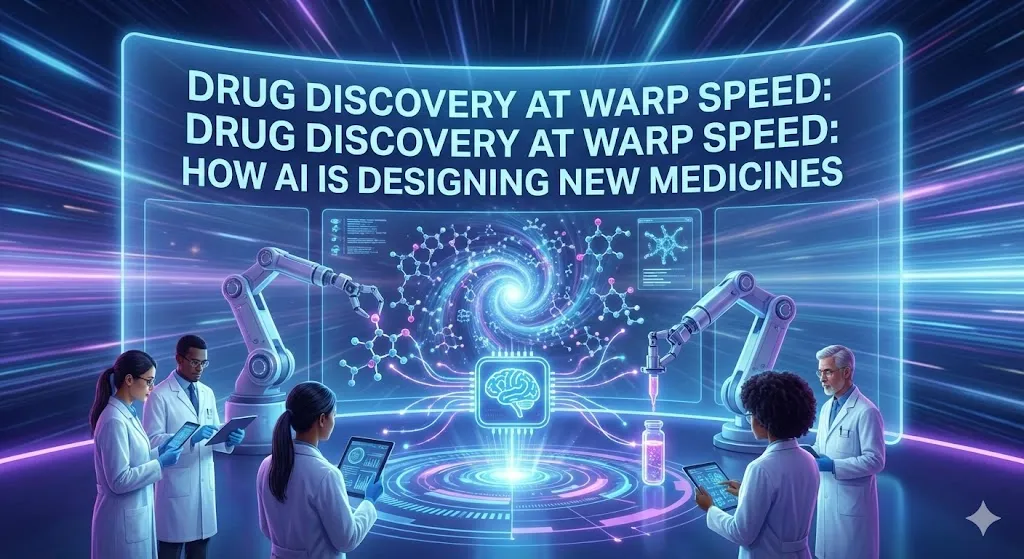
Drug Discovery at Warp Speed: How AI is Designing New Medicines The pharmaceutical industry is about to go through a big change. AI is speeding up drug discovery from a long, slow process to a quick, accurate sprint. AI saves time, money, and the need for new treatments that seemed impossible before by using machine learning, generative models, and huge biomedical datasets. Change as time goes on Some things that happened by chance led to the discovery of drugs. For example, the moldy petri dish that led to the discovery of penicillin in 1928. It has changed over the years, going from high-throughput screening in the 1990s to tools that run on computers in the 2010s. Around 2015, we began to see AI integration. Atomwise and other early adopters used convolutional neural networks for virtual screening. This was a big change from trying things out with brute force to using predictive intelligence. The following infographic illustrates this historical evolution, highlighting key milestones from early discoveries to the integration of AI. Quantitative structure-activity relationship (QSAR) models in the 1960s laid the groundwork for what we know now. But things didn’t really get better until after 2020, when GPUs and cloud infrastructure made computers a lot more powerful. AlphaFold was released in 2020 and solved the problem of protein folding in days instead of years. This was a turning point that led to more than 200 million predictions of structures by 2025. The key technologies that enable AI-driven discovery Variational autoencoders and diffusion models are two examples of generative AI models that are leading the way in this field. They learn how to make new molecules from chemical libraries that contain billions of compounds. Graph neural networks help us understand how proteins and ligands work together. We can now predict how well things will bind together with 50% more accuracy than before. This diagram visualizes the stack of AI technologies that power modern drug discovery, from data to models. Reinforcement learning improves lead compounds over time by rewarding structures that work, dissolve, and are safe. These are what make the platforms of Insilico Medicine and Exscientia stand out. AlphaFold 3, which came out in 2024, takes things even further by working with DNA, RNA, and ligands in multi-modal complexes. This cuts the time it takes to find a structure from months to minutes. These tools use omics data, such as genomics and proteomics, to find disease mechanisms that aren’t easy to see. Natural language processing, on the other hand, looks for new ways to use literature, just like BenevolentAI’s knowledge graphs do. Benefits that matter AI cuts the time it takes to make a drug by 30–40%, and the early discovery phases go from years to months. This could save each drug an average of $2.8 billion. Market predictions back this up: the AI drug discovery industry will grow from $2.9 billion in 2025 to $13.4 billion by 2035, with a compound annual growth rate (CAGR) of 11.3%. The infographic below shows how AI can significantly reduce the time required at different stages of the drug discovery pipeline. AI gets rid of candidates who aren’t useful before the lab, which makes it more likely that they will succeed and less likely that they will drop out, from 90% to less than 70% in the early stages. We believe that the market value will reach $16 billion by 2034 because there are so many chronic diseases and a need for research and development. Here is a comparison table summarizing the key differences between traditional and AI-driven drug discovery. We tested millions of real compounds and billions of virtual compounds at a scale of 1000x. Case Study: ISM001-055 from Insilico Medicine We look at Insilico Medicine’s successes with ISM001-055 (INS018_055), a generative AI-designed pan-fibrotic inhibitor for idiopathic pulmonary fibrosis (IPF). The platform produced 15 million virtual compounds, but only 60 of them were tested in a lab. It usually takes four to five years to go from finding a target to filing an IND, but this time it only took 18 months. As of 2026, a candidate that can get into the brain is now in Phase II trials. This “moonshot” proves that end-to-end AI works: reinforcement learning made the molecule stronger and better at its ADME properties, which sped up a field that had been stuck for decades. The first data show that the treatments work well, which means they are the best in their class. The following image illustrates how AI generative design and reinforcement learning optimize a molecule from a basic structure to a clinical candidate A Case Study of Exscientia’s OCD Treatment In 2020, Exscientia became the first company to make a drug that was designed by AI and tested on people with obsessive-compulsive disorder (OCD). They were partners with Sumitomo Pharma. They used deep learning to improve multiple targets on their platform, which helped them create the candidate in 12 months, which is 75% faster than the average in the industry. By 2026, several Exscientia molecules will be undergoing Phase I/II clinical trials for cancer and immune system research. Automated chemistry will be right 75% of the time. This shows how good AI is at making exact plans for tough jobs. Below is a summary table of key AI drug candidates and their milestones as of 2026. Look at the Case Study: The Benefits of Combining Recursion and AlphaFold Recursion Pharmaceuticals uses AI for phenotypic screening, which shows how cells respond to different drugs. This helps them find new places to look for cerebral cavernous malformation (CCM). Nvidia is helping them finish Phase II of their AI platform by 2026. It looks for diseases that are hard to find with normal methods. Adding AlphaFold structures to predictions makes them more accurate, which leads to treatments that are six times more common than cystic fibrosis treatments. The following image depicts a modern, high-tech pharmaceutical lab where AI and robotics are integrated into the discovery workflow. What’s happening now and

Drug Discovery at Warp Speed: How AI is Designing New Medicines Read More »

ai-in-medical-imaging

AI in Medical Imaging: How AI is Becoming a Radiologist’s Best Friend

AI in Medical Imaging: How AI is Becoming a Radiologist’s Best Friend A new era in healthcare is about to begin. AI will not compete with human knowledge in this time; instead, it will be a key partner in the complex field of medical imaging. As radiologists, we see how AI helps us see better every day by going through a lot of data to find things we might not have seen otherwise. How History Has Changed For the first time in 1992, early algorithms were used to look at microcalcifications in mammograms. This was the first time that AI was used in radiology. This was the beginning of a new way to find things called computer-aided detection. By the middle of the 2000s, machine learning prototypes were able to look at electronic health records, MRI scans, and CT scans. They could see patterns in the huge amounts of data that were coming in. We believe that things changed in the middle of the 2010s. Radiomics turned subjective interpretations into numbers, which combined the power of computers with clinical intuition. Around 2017, deep learning became popular because convolutional neural networks could do things like find pneumonia on chest X-rays just as well as people could. AI’s Current Role in Medical Imaging AI is now used in every part of medical imaging, from X-rays that show broken bones to MRIs that show brain tumours. Aidoc and AZmed’s AZtrauma are two tools we use that can find fractures on extremity radiographs with 98.7% accuracy and speed up the process of interpreting them by 27%. AI is great at looking at CT and MRI scans of the heart and ultrasound pictures of the baby. It also helps automatically grade cancer on pathology slides. Philips’ AI makes it less likely that patients will be in the wrong place when they have a CT scan. This makes the pictures clearer and lowers the amount of radiation. It finds 29% more lesions that were missed and finds lung nodules 26% faster. Market Growth and Future Projections This chart shows how much the radiology AI market will grow between 2025 and 2030. By 2030, the market is expected to be worth $2.27 billion, up from $0.76 billion in 2025. This is a growth rate of 24.5% per year. There aren’t enough radiologists, which is why this is happening. Real-Life Case Studies For instance, SimonMed Imaging had AZtrauma in 200 places. AI sensitivity was 98.5%, which made it six times faster to find fractures and helped radiologists get more done. Sean Raj, the Chief Innovation Officer, says that the quality and the way things work have both gotten better at the same time. Hospitals that used DeepSeek were able to get things done 30% faster and made sure that urgent cases were handled first by using structured reports. Enlitic’s platform, which works with PACS/RIS, sped things up by 25% and helped find things that were missed. These short stories show how AI can be very useful. We radiologists use it to help us decide what to do next, not as a replacement. The Pros and Cons of Using AI in Radiology AI has many advantages, including the ability to find patterns that help make diagnoses more accurate, speed up analyses in emergencies, and provide standard interpretations that make it easier for people to agree. We like that it helps with burnout when there are a lot of cases. But there are still issues. AI doesn’t work well without human judgement, which can cause data to be biassed or lack context. Integration problems and moral issues like privacy are big problems because the training data isn’t very good. Market Trends and Numbers The AI in radiology market is growing quickly, from $794 million in 2025 to $989 million in 2026. The MRI and cardiology parts are growing very quickly thanks to Cloud AI. Diagnostic centres speed up the process of getting new technology by automating CT, MRI, and pathology tests. AI makes CAD systems 69% less likely to give false positives and 17% faster at reading. Diagnoses are 44% more accurate in MS. We believe that using fake data will help reduce bias and improve AUROC scores. Problems and Opportunities Integration problems, complicated rules, and data silos make things take longer, but personalised medicine and global teleradiology make a lot of things possible. We like models that combine AI and people, with AI looking through data and people making decisions. Using different datasets makes sure that everyone is treated fairly. Ethical imperatives necessitate transparency; biases in rare pathologies demand synthetic enhancements. AI can help people who don’t have enough resources, which makes things more equal. The Future of AI in Medical Imaging In the future, AI will use predictive analytics and combine imaging with genomics to make treatments that are unique to each person. We can see that AI built into PACS works perfectly. It ends burnout while still letting people keep an eye on things. New technologies like AutoML promise to make trauma imaging 94% or more accurate. Changes in the law and multimodal LLMs will help federated learning grow without putting people’s privacy at risk. Radiology is changing, but AI is always there for us. [Image: A futuristic concept image of a brain scan integrated with genetic data] Best Ways to Implement AI Pilot phased rollouts: Start with a few high-volume modalities, like X-rays, and add more after they have been tested and shown to work. Different Data Curation: To cut down on bias, use synthetic supplements and datasets from more than one centre. Human-AI Symbiosis: Let AI help you understand things, but don’t make any choices until you know more. Validation that never ends: Look at performance from the outside, like SimonMed’s 98.8% NPV. Ethical Frameworks: Make sure that consent, explainability, and fair access are at the top of your list. Frequently Asked Questions (FAQ) Will AI replace radiologists? No, AI doesn’t take away from what people do; it makes it better. Experts say that

AI in Medical Imaging: How AI is Becoming a Radiologist’s Best Friend Read More »

long-term-bets

Long-Term Bets: Predictions for AI in 2030 and 2040

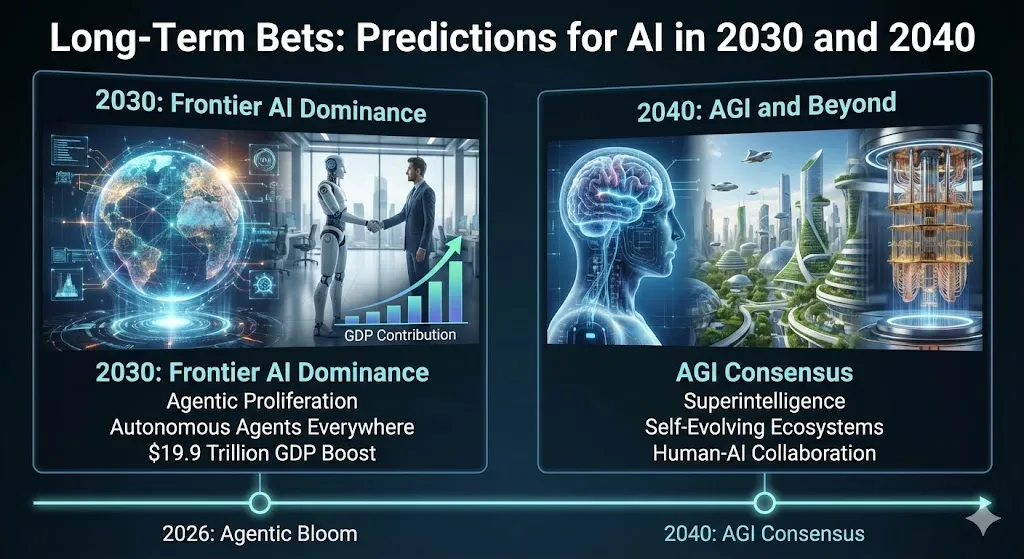
Long-Term Bets: Predictions for AI in 2030 and 2040 We are about to enter an age ruled by AI, and the rapid changes make us question what we thought we knew about intelligence and progress. These long-term bets show that a lot will have changed in both technology and society by 2030 and 2040. Setting in the Past AI has come a long way since the 1950s, when it was just simple systems that followed rules. Now it can combine text, pictures, and code into one big system. Deep learning became the most important field in the 2010s because of the rise of big datasets and GPUs. This is how transformers were made, which are the basic parts of models like the GPT series. Agentic AI will be a big change in 2025. This kind of AI can do more than one thing by itself. For example, Google Cloud AI has helped Toyota factories save more than 10,000 hours of work every year. This path grows 4 to 5 times faster than computers do each year. It gets us ready for the frontier models of 2030, when people can do twice as much every seven months. The year 2030 and AI We believe that AI will be in everything by 2030. PwC says it will add $15.7 trillion to the world’s GDP, while IDC says it will add $19.9 trillion through better business practices and new ways to make money. Frontier AI will be in charge because it can do some things much better than people can. But most experts still can’t find real AGI. It has a 50% chance of happening around 2031. Trusted Site Data: Economic Impact & Efficiency Source Projected Economic Impact / Efficiency Key Metric IDC $19.9 Trillion Global GDP Increase PwC $15.7 Trillion Global GDP Increase Mass General Brigham 60% Reduction Healthcare Paperwork Darktrace 92% Reduction Financial Fraud Breaches They will change jobs and pay close attention to the little things. For instance, AI agents at Mass General Brigham cut paperwork by 60% for healthcare diagnostics, and Darktrace stops fraud in real time, cutting breaches by 92% in finance. A List of Important Predictions What the Expert Average Says About How Likely a Prediction Source Is By 2030, 25% to 50% of jobs will need people to think like people. Economic Boost: $19.9 trillion more in GDP. Likelihood: High. Agentic Proliferation: Autonomous multi-step agents are everywhere. Experts agree that there is a very high chance of losing your job, but a moderate chance for white-collar jobs. This demonstrates that AI possesses dual aspects. BenevolentAI and AstraZeneca are two good examples. AI agents and BenevolentAI worked together in a new way to make the process of treating chronic kidney disease go faster. They did this by going through a lot of biomedical data to find new targets in weeks instead of years. This cut research and development costs by 70%, just like Insilico Medicine. This is a great example of the 2030 paradigm, which is that AI speeds up the process of discovery. Generative models can predict a lot of personalised drugs by copying how molecules interact. These kinds of examples show that it will only take a few months to make drugs, which will make people even more creative. Things that will happen before the year 2030 The Change in Health Care AI will do robotic surgeries and guess what health problems will come up. Models like those from Google DeepMind will tell us about threats to our lives, but they will also protect us from them with safeguards against misalignment. AI tutors will be able to make lessons that are perfect for each student, and they will be better at it than people. Alteration in the Labour Force Agentic AI is good at things that don’t have a clear end point. For example, Uber’s AI agents already help workers get more done by putting conversations in the right context. But people are losing their jobs, which is why “agent orchestrators” are becoming more common as people move up to management. Plans for the year 2040 After AGI, the next step is superintelligence. According to polls, AGI will be here by 2040 and ASI will be here by 2050 because cognition can be scaled. Epoch AI says that automating coding will boost GDP by 10%, but many people aren’t sure about this. We will need to rethink our purpose when we have economies that don’t have any scarcity because of hybrid architectures that combine reasoning and probabilistic inference. Quantum-enhanced edge AI is everywhere, from smart cities and metaverses to IoT swarms. This makes a lot of people smart. What risks are there and how to lower them Demis Hassabis from DeepMind says that the UN should keep an eye on existential risks like misuse and misalignment. The World Economic Forum says that structural risks can break up societies if people don’t learn new skills fast enough. Timeline Infographic: AI Evolution (2026-2040) Year Phase Key Characteristic 2026 Agentic Bloom Rapid growth of autonomous agents. 2030 Frontier Dominance AI systems lead across major industries. 2040 AGI Consensus Broad agreement on General Intelligence reach. A Look at Walmart’s AI Inventory Agents Walmart’s self-driving robots are a good example of scalable AI because they can watch shelves in real time and get 99.9% of orders right at Ocado scale. In 2040, this means that supply chains will be thin and able to deal with problems. This will cut delays by 35%, just like DHL’s Resilience360 does. Siemens’ edge agents cut factory downtime by 30%, which is a step towards factories that can run themselves. These show that AI is getting closer to ecosystems that can take care of themselves. Things will be hard in the future. When agents don’t have to answer for their actions, they can change people’s minds, which makes ethical problems worse. When adoption isn’t fair, it makes things even less fair. We need proactive frameworks because governance isn’t keeping up with how fast things

Long-Term Bets: Predictions for AI in 2030 and 2040 Read More »

Vinci Spin Casino : les stratégies gagnantes des joueurs

Vinci Spin Casino, une plateforme de jeux en ligne innovante, se démarque par son expérience utilisateur unique et ses nombreuses options de divertissement. Avec des jeux variés et une interface intuitive, vincispin attire les joueurs en quête de sensations fortes et de gain. Dans cet article, nous explorerons les stratégies gagnantes que les joueurs utilisent sur cette plateforme pour maximiser leurs chances de succès. Comprendre le catalogue de jeux Le catalogue de Vinci Spin Casino est l’un des points forts de la plateforme, offrant une large gamme de jeux allant des machines à sous aux jeux de table. Les joueurs peuvent choisir parmi des titres développés par des fournisseurs de choix réputés, garantissant une expérience de jeu de haute qualité. Les nouvelles sorties et les classiques sont régulièrement mis à jour, permettant aux joueurs de toujours trouver quelque chose d’attrayant. Les principales catégories de jeux incluent : Machines à sous vidéo Jeux de table (roulette, blackjack, poker) Jeux en direct avec des croupiers réels Jeux à jackpots progressifs Jeux de cartes à gratter Stratégies pour maximiser les gains Pour augmenter les chances de gains, il est essentiel d’adopter des stratégies adaptées. Voici quelques conseils pratiques que les joueurs expérimentés recommandent : Gestion de bankroll : Établir un budget strict et s’y tenir est crucial. Cela aide à éviter des pertes excessives et à prolonger le temps de jeu. Profiter des bonus : Les promotions et bonus de bienvenue sont des atouts importants. Lire les conditions des bonus peut offrir des opportunités intéressantes pour gagner sans trop risquer. Choisir des jeux à haut RTP : Sélectionner des jeux avec un taux de retour au joueur (RTP) élevé augmente les chances de gains sur le long terme. Utilisation de stratégies de mise : Appliquer des systèmes de mise, comme la Martingale, peut être bénéfique dans certains jeux de table. Bonus et fidélité des joueurs Vinci Spin Casino propose une excellente écosystème de bonus et de récompenses pour ses joueurs. Ces incitations sont conçues pour attirer et fidéliser les utilisateurs. La plateforme offre des bonus de bienvenue attrayants pour les nouveaux inscrits ainsi que des promotions régulières pour les joueurs existants. La fidélité des joueurs est également récompensée par des programmes VIP, offrant des avantages exclusifs tels que des limites de dépôt plus élevées et des retraits prioritaires. Type de Bonus Montant Conditions Bonus de bienvenue 100% jusqu’à 200€ 35x mise Bonus de recharge 50% jusqu’à 100€ 30x mise Cashback hebdomadaire 10% Pas de condition de mise Questions fréquemment posées Vinci Spin Casino est-il sûr et fiable ? Oui, la plateforme est licenciée et utilise des technologies de cryptage avancées pour protéger les données personnelles et financières des joueurs. Comment déposer et retirer des fonds ? Vinci Spin Casino propose plusieurs méthodes de paiement incluant les cartes de crédit, les portefeuilles électroniques et les virements bancaires, facilitant ainsi les transactions. Quels jeux sont les plus rentables ? Les machines à sous avec des jackpots progressifs et les jeux de table comme le blackjack sont souvent considérés comme les plus rentables par les joueurs.

Vinci Spin Casino : les stratégies gagnantes des joueurs Read More »

things-you-need-to-know-to-stay-up-to-date-in-2026

Things you need to know to stay up to date in 2026

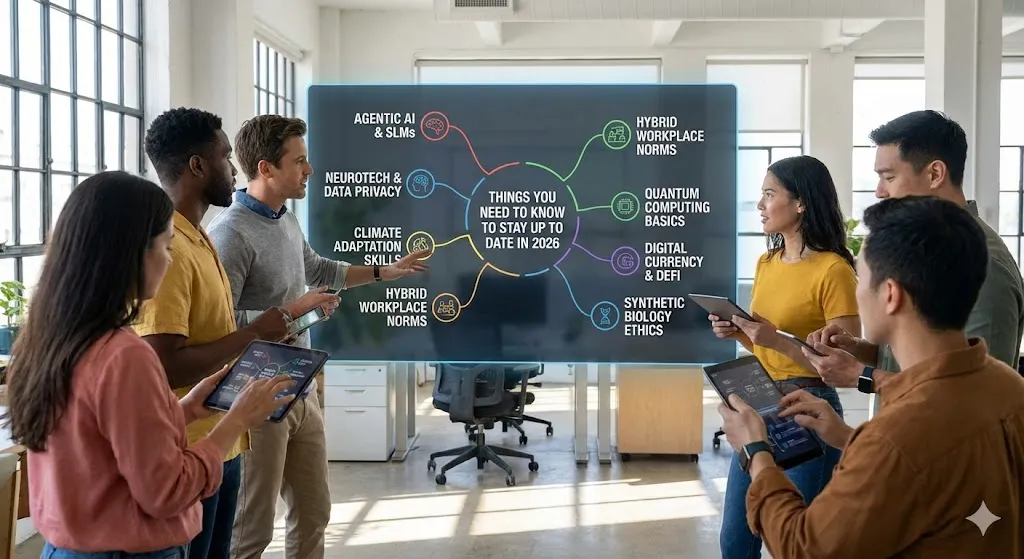
Things you need to know to stay up to date in 2026 In 2026, technology changes faster and faster. I keep thinking about what people need to do to be successful over time. Artificial intelligence, climate change, and shifts in the economy are all happening at once. We need to focus on skills that are in high demand and mix technical skills with creative ones. Because of this, these skills will be useful for a long time. Why Skills Will Matter More Than Ever in 2026 The World Economic Forum’s Future of Jobs Report 2025 says that a lot will be different. By 2030, there will be 78 million new jobs around the world, but 22% of the jobs that are there now will be gone. But 63% of employers are having trouble making changes because their workers don’t have the right skills. India’s digital economies are growing quickly. The demand for AI, data analytics, and cloud skills has grown 42% year over year, which is faster than the demand for traditional degrees. We see professionals making a lot of money—often without formal credentials—by learning these skills at home on platforms that are easy to use. This change will be good for people who want to keep learning as they get older. You need to be able to change, bounce back, and use technology if you want to have a successful career. The 11+ most important skills that will be in high demand between 2026 and 2030 Based on recent research, I made this list of skills that will be very useful. These skills, which include both hard and soft skills, will last. They are made for the growing tech scene in India and the job market all over the world. AI and machine learning: People who know how to use AI and machine learning are needed for agentic AI and generative models. The most common languages for this are Python, TensorFlow, and LLMs. Data Analysis and Visualization: In any field, SQL, Python (Pandas), and Tableau are all important tools for getting information from data. Cybersecurity: Penetration testing and ethical hacking are two examples of cybersecurity skills. More and more people want these skills as the Internet of Things grows. Cloud Computing: Cloud computing, DevOps, AWS, Azure, and Kubernetes are the main parts that make up infrastructures that can grow. Software Development: People make software and websites with full-stack programming, JavaScript, and React. They also let you build tools that do things on their own. Generative AI and Prompt Engineering: A well-paying job that makes AI better at working with people. UI/UX Design: Figma is a tool for UX and UI design that links technology to what users need. Digital Marketing and SEO: Online stores grow with the help of digital marketing and SEO, which include analytics and content strategy. Project Management: Using Agile and Scrum to run projects isn’t always easy. Creative Thinking and Systems Analysis: The World Economic Forum believes that innovation and systems analysis are very important. Emotional Intelligence: AI has made people today strong and smart about their feelings. Skills in Green Tech and Sustainability: modelling renewable energy; fits with what’s going on in the world. Data Insights: The Skill Shift How the need for skills changes over time The World Economic Forum and the industry say that this bar chart shows that the need for important skills will grow from 2026 to 2030. It tells you how quickly it is going. AI is the field that is growing the fastest, with a growth rate of over 40%. Next, we’ll talk about data analysis and cybersecurity. Skill Distribution in India (2026) A pie chart shows that 55% of jobs in India will be held by people with tech skills, 25% by people with human skills, and 20% by people with green or digital skills. Table of Salaries: Skills That Pay Well in India Below is a table detailing the average salaries for key skills in India, along with their US equivalents and projected demand increase. These numbers are based on guesses for 2026, and getting a certification does not mean you get a degree. Case Studies: Things That Actually Happened I have learnt a lot from hearing about people who have made big changes in their lives. Ritika (Mumbai): An engineering student who took a class in machine learning to learn Python and deep learning. She got an internship in fraud detection in the FinTech field within six months. After that, she became a full-time engineer for machine learning. Abhishek Mehta: A BPO analyst with a degree in statistics. He spent his weekends learning how to use Scikit-learn and TensorFlow. He made a portfolio that helped him get a job as a Data Scientist in risk analytics at a bank in another country. Bangalore Analyst: An AI program helped a data analyst in Bangalore make reports without having to do anything. By 2025, she was an international consultant and was making three times as much money as she had been. These stories show that having a mentor, working on real projects, and having a portfolio are more important than having a degree. The best ways to use these skills at home We can learn these things at home using free or cheap tools. Foundations: You can learn Python for free by taking the AI Fundamentals course at freeCodeCamp or DataCamp. After that, you can sign up for a Google Data Analytics course on Coursera. Daily Practice: Every day, code for one to two hours using data sets from Kaggle and LeetCode. Build Portfolios: GitHub repositories with real projects, like dashboards or AI chatbots. Certifications: I have two certifications: AWS Certified Cloud Practitioner and Google Cybersecurity (₹0–5000). Community: There are India-specific tips on LinkedIn groups and Reddit (r/MachineLearningIndia). AI Acceleration: Use ChatGPT and other tools to improve your skills in prompt engineering. Indians can learn new things for free by taking Udemy’s many free courses. Try to get a certificate every three months to see how

Things you need to know to stay up to date in 2026 Read More »

how to-prepare-for-regulation

How to Prepare for Regulation: How to Stay Ahead of Compliance in 2026

How to Prepare for Regulation: How to Stay Ahead of Compliance in 2026 The rules and laws are at a very important point in their history right now. Patterns of compliance that have been around for a while won’t be around in 2026. Instead, it will be a big deal for companies. They will either follow the new rules or fall behind. The rules are harder to follow now, the rules are stricter, and the expectations are higher. Because of stricter data privacy laws, more complex financial crime, and less stable geopolitics, compliance leaders have a very hard time doing their jobs. Our organization’s strength and competitive edge will depend on our ability to see these changes coming instead of just reacting to them. What can you do to protect your money? What Sets 2026 Apart in the Regulatory Convergence Regulators used to work in separate groups, but now they all work together. There are now the same rules for protecting people’s privacy, stopping AI from doing bad things, stopping financial crime, and following environmental laws. This has created a single compliance ecosystem where problems in one area can affect others. Because of this connection, we need to stop thinking of compliance as a series of separate tasks and start using a single compliance strategy. Check out how the rules are set up right now. The European Union’s AI Act is making progress more quickly when it comes to how it will be enforced. It is even harder because privacy laws are different in each state in the US. Cybersecurity requirements are now the most important thing that financial regulators like FINRA and the SEC look for in every test. At the same time, environmental regulators want to see real proof that emissions are being tracked and that things are being run in a way that is good for the environment. For businesses that work across borders, this complexity grows even more. Keep in mind that businesses that thought compliance was a cost centre in 2025 will have to pay a lot for it in 2026. Companies that use technology, improve their data skills, and make compliance a part of their culture will not only survive, but they will also do well. Risk Severity Assessment: The 10 Biggest Compliance Risks for 2026 Getting to Know the Ten Biggest Compliance Risks for 2026 We need to know exactly what regulators will be paying close attention to in the next year. Our analysis finds ten specific areas where organisations will face more pressure, based on industry benchmarks and regulatory announcements: Risk Area Key Driver/Deadline Impact Level 1. AI Oversight EU AI Act (Aug 2, 2026) Critical 2. Data Privacy CCPA/CPRA Enforcement High 3. Third-Party Risk Vendor Accountability Rules High 4. Financial Crime GenAI-based Fraud Critical 5. Fragmentation Divergence in Global Laws Medium 6. ESG Compliance CSRD Reporting Requirements High 7. Whistleblowing Increased Reporting Volume Medium 8. Consumer Duty FCA Outcome Monitoring High 9. Supply Chain Ethics Labor and Environmental Laws High 10. Resilience Ransomware & Cyber-Fraud Critical The most important thing right now is to keep an eye on and control AI. The EU AI Act says that high-risk AI systems must be ready by August 2, 2026. There is more and more focus on human oversight, explainability, and auditability. Data Privacy and Cybersecurity: Regulators won’t accept weak controls anymore. The California Privacy Protection Agency is enforcing the new CCPA changes that went into effect on January 1, 2026. If you break the law on purpose, you could be fined up to $7,988. Third-Party Risk Management: You are still responsible for the work even if you hire someone else to do it. Regulatory bodies are making big companies responsible for the mistakes of their vendors. They need to watch them closely and make sure their contracts have strong protections. Stopping Financial Crime and Fraud: GenAI-based fraud is a big business, and more than half of all modern fraud uses AI-based methods. Regulatory enforcement is getting tougher, so risks need to be found and added to the system right away. Divergence and Fragmentation in Regulations: It’s getting harder to follow the rules around the world because there are more and more different ways that countries regulate things. Environmental, Social, and Governance Compliance: ESG rules are changing from things that companies can choose to do to things that they have to do. For instance, keeping track of carbon emissions is no longer just a formality; it’s now a real cost of business. Whistleblowing: The number of employees reporting is at an all-time high (1.57 reports per 100 employees), but only 18% of retaliation cases are proven. This is a big problem that regulators and litigants are working to fix. Consumer Duty and Customer Outcomes: The FCA’s Consumer Duty rules require full product governance, customer journey design, and outcome monitoring that go far beyond what is normally required for compliance. Supply Chain Governance: Regulators now want companies to make sure that their supply chains are fair, follow labour laws, and don’t hurt the environment too much. Cyber-Enabled Fraud and Operational Resilience: Ransomware, account takeovers, and fake identities are all new threats that need real-time response capabilities and fraud-AML operations that work together. Set a reminder in your calendar for the EU AI Act on August 2, 2026. We can’t say enough how important this one date is. The EU AI Act says that AI systems that are very risky must be in compliance by August 2, 2026. There are no grandfathering rules for new deployments; this is a strict deadline, not a suggestion. Businesses in Europe that are using or planning to use AI systems need to know what this means for how they work. The EU AI Act says that systems that are used in important areas like jobs, education, public services, and critical infrastructure are high-risk. Conformity assessment includes picking a notified body, testing, and fixing problems. It can take 8 to 16 weeks of hard work. We really only have a

How to Prepare for Regulation: How to Stay Ahead of Compliance in 2026 Read More »

Fgfox Casino est-il le bon choix pour votre bankroll?

Le casino fgfox est une plateforme en ligne qui attire l’attention des joueurs avec son interface conviviale et une large gamme de jeux. Il est essentiel d’examiner ses caractéristiques pour déterminer si ce casino est le bon choix pour votre bankroll. Variété et qualité des jeux Le catalogue de jeux d’un casino est souvent le facteur déterminant pour les nouveaux joueurs. Fgfox Casino offre une sélection impressionnante qui comprend des machines à sous, des jeux de table, et des options de casino en direct. Des fournisseurs réputés comme NetEnt et Evolution Gaming se trouvent parmi les partenaires, ce qui garantit des graphismes de haute qualité et des expériences de jeu dynamiques. Les jeux sont régulièrement mis à jour, et les nouvelles sorties sont facilement accessibles. Cela permet aux joueurs de découvrir constamment de nouveaux titres, enrichissant leur expérience globale. De plus, les options de jackpot progressif ajoutent un élément d’excitation supplémentaire, attirant ceux qui cherchent à gagner gros. Sécurité et confiance Un aspect primordial lorsqu’on choisit un casino en ligne est la sécurité. Fgfox Casino opère sous une licence adéquate, ce qui assure des pratiques de jeu équitables et une protection des données personnelles. La plateforme utilise le cryptage SSL pour sécuriser les transactions, ce qui offre une tranquillité d’esprit aux joueurs lors de leurs dépôts et retraits. De plus, des politiques de jeu responsable sont mises en place pour promouvoir un environnement de jeu sûr. Cela inclut des limites de dépôt et des options d’auto-exclusion, permettant aux joueurs de gérer leur bankroll de manière responsable. Offres de bonus et promotions Le casino fgfox se distingue également par sa politique de bonus généreuse. Les nouveaux joueurs sont accueillis avec un bonus de bienvenue attrayant, tandis que les promotions régulières maintiennent l’engagement des joueurs existants. Les types de bonus incluent des tours gratuits, des bonus de dépôt et des programmes de fidélité qui récompensent la loyauté. Les conditions de mise sont clairement définies, ce qui facilite la compréhension pour les joueurs. Voici un aperçu des bonus offerts : Bonus de bienvenue de 100% sur le premier dépôt Tours gratuits sur des machines à sous sélectionnées Promotions hebdomadaires sur les dépôts Programme de fidélité avec des récompenses exclusives Type de bonus Montant Conditions Bonus de bienvenue 100% jusqu’à 200€ Dépôt minimal de 20€ Tours gratuits 50 tours Valables sur certaines machines Bonus de dépôt 50% jusqu’à 100€ Limite d’éligibilité sur le choix des jeux FAQ sur fgfox Casino Est-ce que fgfox Casino est fiable? Oui, il est licencié et utilise des mesures de sécurité modernes. Quels types de jeux sont disponibles? Le casino propose des machines à sous, jeux de table et des jeux avec croupiers en direct. Quelles sont les options de retrait? Les joueurs peuvent retirer via des virements bancaires, cartes de crédit, et des solutions de paiement numériques.

Fgfox Casino est-il le bon choix pour votre bankroll? Read More »

the-skills-you-need to-learn-in-2026-to-stay-relevant

The Skills You Need to Learn in 2026 to Stay Relevant

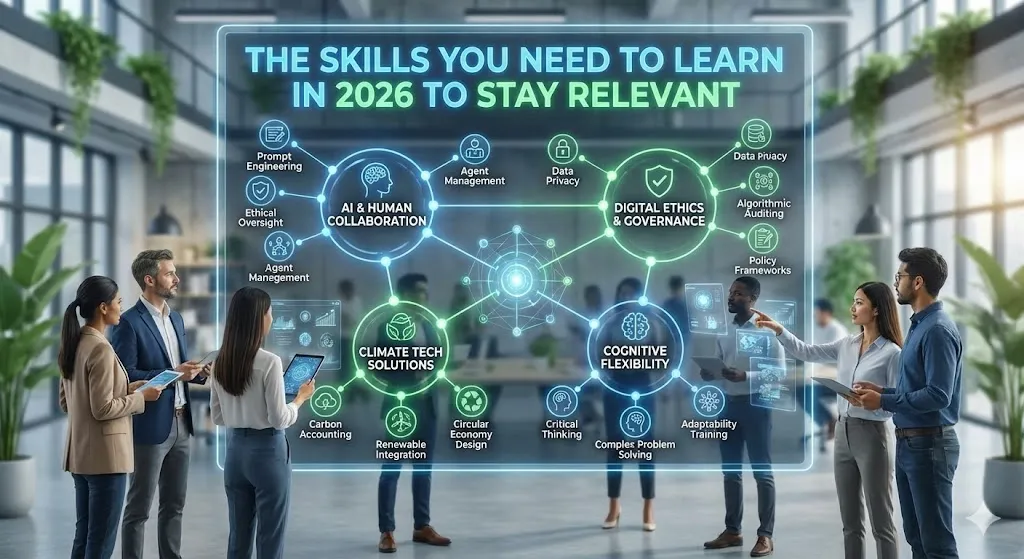
The Skills You Need to Learn in 2026 to Stay Relevant Introduction: Welcome to the Future You Predicted If you are reading this in January 2026, take a moment to open your LinkedIn feed or browse your company’s internal job board. Notice the silence? The frantic, desperate calls for “React Developers” and “SEO Copywriters” that defined the noise of 2023 and 2024 have largely vanished In their place is a new lexicon that would have seemed alien just three years ago: “Agentic Fleet Commanders,” “Circular Economy Analysts,” and “Trust Architects.” The future has arrived, but it didn’t bring the Terminator. Instead, it brought an army of highly capable digital interns that are rapidly being promoted. The robots didn’t come to destroy us; they came to do our rote work—faster, cheaper, and increasingly, better than we ever could. This shift has fundamentally rewritten the definition of “employable.” We are no longer in an economy where “good enough” is acceptable; “good enough” is now automated. The only standard left for high-value human labor is “exceptional.” This guide is your blueprint for becoming exceptional in the 2026 landscape. The Technical Reality: The “Agentic” Tectonic Shift To understand what skills matter right now, we must accept the technical reality of 2026. We used to live in the “Generative AI” era, where we treated AI like a talented parrot—we asked it to write an email or generate an image, and it complied. We are now firmly in the “Agentic AI” era. We no longer just talk to AI; we manage it. Agentic systems are autonomous software entities capable of planning, executing, and self-correcting complex workflows without constant human hand-holding. They don’t just write the marketing copy; they identify the target audience, buy the ad space, publish the campaign, and analyze the ROI. This shift has inverted the value of technical skills. As shown in recent market analyses, the demand for rote technical execution (syntax coding) is plateauing, while the demand for high-level oversight and complex system architecture is skyrocketing. Skill Pillar 1: The New Technical Backbone — Orchestration Over Creation When young professionals ask me today if they should learn C++ or Java to ensure their future, I tell them to study Agentic Orchestration. The ability to write syntax is becoming a commodity; the ability to direct digital labor is the new premium. 1. Management and Evaluation of Agentic AI Swarms In 2026, being a “senior developer” or “project lead” often means managing a team of silicon workers rather than carbon ones. You need the skills to architect a solution where multiple specialized AI agents collaborate to solve a wicked problem. The core skill is setting rigid ethical boundaries, defining success metrics, and auditing the output of autonomous swarms to prevent “agent drift.” Companies are terrified of liability and pay a premium for humans who can prove they have these powerful systems under strict control. 2. Advanced Data Storytelling and Narrative Integration Data analysis used to be a high-value skill. Today, an AI agent can clean and analyze a million-row spreadsheet in seconds. The bottleneck has moved from analysis to interpretation. The critical skill now is taking that AI-generated dashboard and translating it into a compelling narrative that a CEO can use to make a billion-dollar decision. You must bridge the gap between raw intelligence and human strategy. 3. Quantum-Ready Cybersecurity As quantum computing pilot programs gain traction in late 2025, traditional encryption standards like RSA are showing cracks. You don’t need a Ph.D. in physics, but you must understand the fundamentals of “post-quantum cryptography.” The demand for security professionals who can shield data from both AI-driven social engineering and future quantum decryption is immense. Skill Pillar 2: The Human Premium — Skills Machines Can’t Replicate As the cost of artificial intelligence drops toward zero, the value of genuine human judgment, connection, and trust skyrockets. In 2026, the highest-paid skills are those that integrate technology with uniquely human traits. 1. Radical Cognitive Flexibility The ability to unlearn what was vital yesterday and rapidly absorb what is necessary today is no longer an elective; it is survival. The tools change every quarter. The skill isn’t mastering the tool; the skill is the speed at which you can master new paradigms. 2. High-Fidelity Emotional Intelligence (EQ) and Negotiation We are seeing a resurgence in high-paying roles that require zero coding but immense amounts of human empathy. Sales, high-stakes negotiation, and conflict resolution are premium skills. Why? Because when a $10 million B2B deal is on the line and something goes wrong, nobody wants to talk to an empathetic chatbot. They want a human who understands nuance, face-saving, and trust. Skill Category 2026 Salary Premium vs. Average The Human Requirement High-Stakes Negotiation +45% Trust arbitrage in B2B deals. Crisis Communication +38% Managing public perception when AI fails. Elite Mentorship +22% Developing human talent and loyalty. Rote Administration -15% Scheduling and basic data entry (Automated). Skill Pillar 3: The Green Economy — The Regulatory Growth Engine If you want to know where the safe money is in 2026, look at global regulations. The “Green Economy” is no longer a PR side project. Thanks to strict global carbon taxation frameworks implemented around 2025, sustainability is now a central finance and operations issue. 1. ESG Reporting and Carbon Accounting Just as every business needs a financial accountant to stop them from going broke, every business in 2026 needs a “Carbon Accountant” to stop them from getting taxed into oblivion. This is a prime area for high-income, remote-friendly work accessible through certification rather than four-year degrees. 2. Circular Supply Chain Management The era of “Just-in-Time” efficiency is giving way to “Just-in-Case-Sustainable” resilience. Companies need experts who can redesign supply chains to be circular—reducing waste, reusing materials, and verifying ethical sourcing via blockchain. The Definitive List: 14 High-ROI Skills for 2026-2030 Based on market analysis and salary trajectories, here is the consolidated list of skills that offer the highest return on investment in the current economy. Agentic AI Supervision & Orchestration (The

The Skills You Need to Learn in 2026 to Stay Relevant Read More »

how-your-business-should-prepare-for-ai-trends-in-2026

How Your Business Should Prepare for AI Trends in 2026: A Comprehensive Transformation Roadmap

How Your Business Should Prepare for AI Trends in 2026: A Comprehensive Transformation Roadmap The AI Tipping Point Has Arrived We are at a critical juncture. The era of isolated AI pilots and test projects is drawing to a close. In 2026, the defining shift will be from “should we invest in AI?” to “how quickly can we deploy it at scale?” The numbers are stark: by 2026, 40% of business applications will use task-specific AI agents, up from less than 5% just a year ago. This isn’t mere growth; it’s an acceleration that will distinguish market leaders from those left behind. For the last two years, most companies viewed AI as a long-term strategic goal. Today, it’s a survival imperative. Organizations that delayed investment are now facing a harsh reality: competitors have already integrated agentic AI into their core operations, and the productivity gaps are widening rapidly. The question is no longer if your business needs AI, but how fast you can move to stay ahead. I’ve analyzed the most recent trends from PwC, Deloitte, Google Cloud, Microsoft, and industry-specific research firms. The data paints a clear picture of what successful businesses will be doing differently in 2026. This article translates that information into a practical roadmap for business leaders. Part 1: Getting to Know the AI World in 2026—Beyond the Hype The AI market has matured significantly by 2026. We’ve moved past the initial excitement of ChatGPT to a practical, measurable phase of business deployment. Three key shifts define this new landscape. The Need for Productivity-at-Scale 53% of businesses report that AI agents make them more productive, and crucially, 38% say they save money. This indicates that the challenge isn’t just about adopting technology; it’s about re-engineering workflows to extract value. The companies achieving real results aren’t just buying the best AI tools; they’re fundamentally changing how they operate to leverage AI’s capabilities. The numbers are compelling. AI can reduce the time required for knowledge work by 50 to 60%. In finance, invoice processing that once took days now takes hours. In customer service, AI handles issues that humans might miss, boosting resolution rates. In supply chain management, demand forecasting shifts from reactive to proactive. The most critical takeaway is that the 15% of organizations achieving massive ROI all share a common trait: they started by redesigning their processes, not by selecting new technology. They mapped out where manual work created bottlenecks, where errors incurred costs, and where speed could provide a competitive edge. Only then did they introduce AI. Part 2: The Growth of Agentic AI and Self-Directed Workflows In 2026, agentic AI represents the next evolutionary step. These systems do far more than provide suggestions or summaries. They make decisions, execute workflows, and learn from outcomes. What Agentic AI Really Does Agentic systems differ from traditional automation in key ways: Know the context: They don’t just follow rigid rules; they use business logic to process unstructured data. Make decisions autonomously: They evaluate situations, operate within set boundaries, and choose actions without constant human intervention. Adapt continuously: They learn from their actions, improving their performance over time. Coordinate with other systems: Multiple agents can collaborate, breaking down complex workflows into smaller, manageable tasks. Industry-Specific Apps That Make Money Deloitte’s 2026 study shows manufacturers are doubling their use of physical AI, from 9% to 22% in two years. Leading businesses use agentic systems for predictive maintenance, using algorithms to foresee equipment failures. Siemens’ Industrial Copilot reduced maintenance time by 25% in pilots, translating to thousands of saved hours annually for mid-sized operations. In financial services, JPMorgan Chase’s AI systems analyze contracts 85% faster than humans. This speed is a cumulative advantage. While competitors take days for due diligence, they are closing deals. Repeated hundreds of times a quarter, this speed becomes a life-or-death competitive edge. In supply chain, DHL uses AI to find the best delivery routes in real time, saving 15% on fuel. Unilever’s “digital twin” of its supply chain cut inventory by 20% and improved service. These aren’t incremental gains; they are structural advantages that compound over time. In healthcare, AI agents are accelerating appointment scheduling, patient communications, and coordination between clinical and billing systems. The result is fewer hours on paperwork and more time on patient care. The Reality of Implementation: Where Most Projects Go Wrong Executives often ask why their expensive AI pilots fail to reach production. The answer is rarely technical. It’s organizational. 70% of companies lack the infrastructure to connect AI agents to their legacy systems—a massive, often underestimated hurdle. Old ERP systems, disconnected data sources, and fragmented workflows make scaling impossible. The solution? Organizations need a disciplined approach: Find high-value, scoped workflows where AI provides a clear advantage. Ensure data is ready before deploying agents (this is non-negotiable). Start with low-risk automation in support functions before tackling core revenue processes. Be disciplined about measurement from day one. You cannot improve what you do not measure. Companies that skip these steps and jump straight to core process automation without the necessary data foundation almost always end up in “pilot purgatory”—their systems work in controlled tests but fail in production when faced with real-world data complexity. Part 3: Cybersecurity as a Way to Stay Alive, Not Just a Box to Check Agentic AI introduces security challenges that previous AI systems did not. Autonomous systems with access to sensitive data, databases, and financial systems are targets in ways chatbots never were. The New Threat Landscape Adversaries have discovered a worrying reality: hacking an AI agent provides them with an autonomous insider. A single, well-crafted prompt injection attack could allow bad actors to weaponize your organization’s most powerful system to execute unauthorized trades, delete backups, or steal customer data. In the near future, 33% of enterprise-level apps will use agentic AI, significantly expanding the attack surface. Threat actors are adapting, shifting their focus from targeting people to targeting agents. The AI-Powered Defense Need The good news is that the technology creating new risks also

How Your Business Should Prepare for AI Trends in 2026: A Comprehensive Transformation Roadmap Read More »