Introduction – AI for Music and Audio: The AI is Writing, Cloning, and Inventing the Future Soundtrack.
Artificial intelligence (AI) is not merely transforming the music world, but it is re-mixing the music world. More than a trend, in 2025, AI for Music and Audio is a reality. It is the base of contemporary composition, production and even voice – a compositional marriage between code and soul. So, we can go all the way to see how the technology is inspiring artistic fires, where it is going intimate (and provocative), and what it all spells out to musicians, audience, and the future of music.
A New Rhythm: AI Is Redefining the Way Music Is Made.
The influence of AI on music is blistering. Beats in your bedroom, scoring a movie, running a label, the influence of AI, power, and puzzle-driven cannot be overlooked.
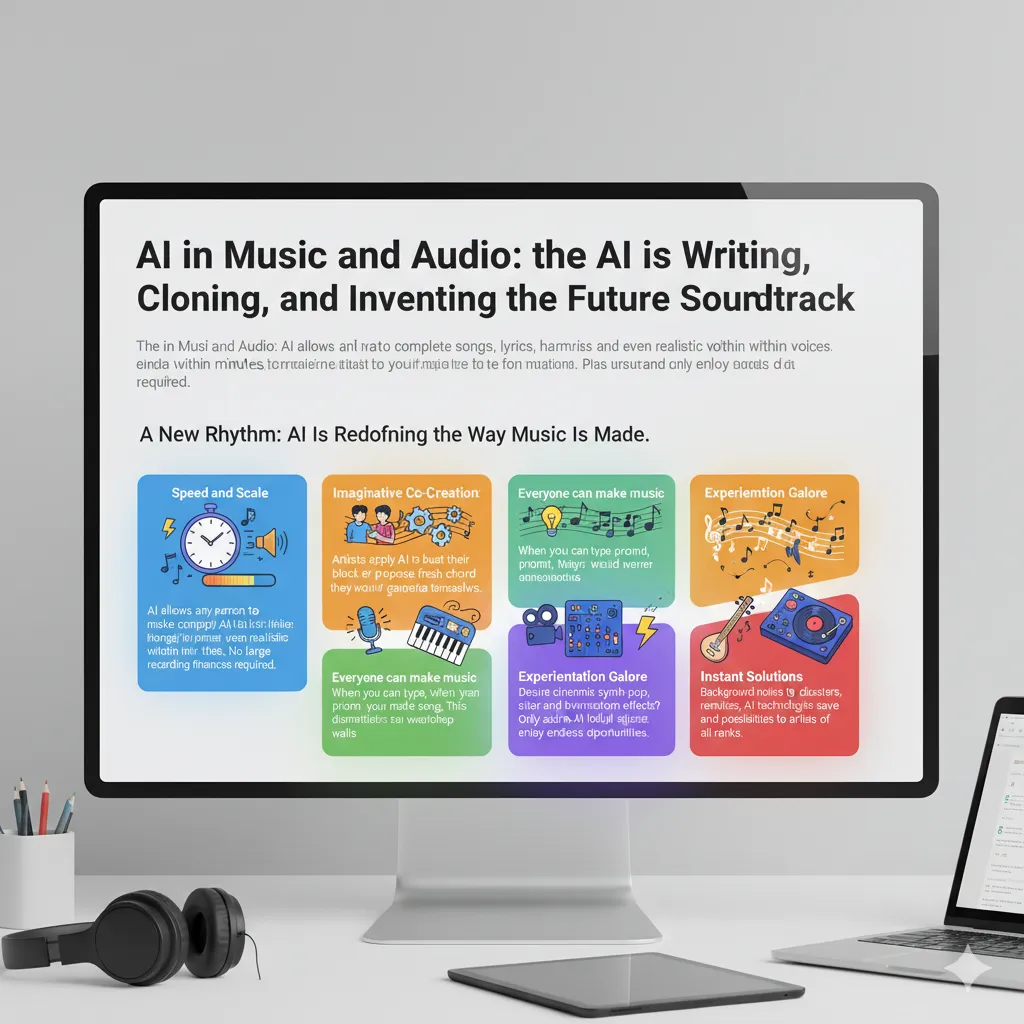
Speed and Scale: AI allows any person to make complete songs, lyrics, harmonies and even realistic voices within minutes. No large recording finances required.Imaginative Co-Creation: Artists apply AI to bust their creative block or propose fresh chord development or create layers that they would never generate themselves.Everyone can make music: When you can type a mood, when you can type a prompt, you can make a song. This dismantles competence and workshop walls.Experimentation Galore: Desire cinematic synth-pop, sitar and thunderstorm effects? Only ask an AI tool, adjust and enjoy endless opportunities.Instant Solutions: Background noise remover to podcasters, remixing classics, AI technologies save time and possibilities to artists of all ranks.
Human Stories: A feel of AI in the Studio.
Musical artists, record producers and ordinary creators are finding not only the new music, but also the new work processes and new narratives. The following are some of my 2025 personal experiences:
Breaking Creative Walls: One indie artist noted that Loudly enabled him to complete an album by completing missing sections using AI, “it is like having an editing picture app that knows what I need to do next or the machine is doing the rest of the song for me). Even someone who was not a musician could bring out a vision through genre selection and tempo tuning.
Accessible Innovation: The intuitive workflow of Suno is making music creation accessible to thousands of new storytellers. The user-friendly interface of the platform has made it as easy as text messaging to create a song. You are able to mix styles, create uniquely personalised lyrics and the output sounds polished as a large-label record.
Collaboration, Not Replacement: Soundverse and other tools of this type have adopted the role of co-producers in the studio. Artists create unfinished material, test and subsequently apply their own voices and flair, which is simple to repeat many times before they decide to pick the best one.
Efficiency Pros: Big manufacturers accelerate their demos with Udio and AIVA, the depth of orchestra, and AI plug-ins in their Digital Audio Workstations (DAWs) to master and finalize a track more quickly than ever.
Making the Independent Huge: AI will render professional-quality production affordable to indie musicians, reducing the costs and making the playing field equal to the big labels.
The operation of AI Music Tools -And Why it Matters.
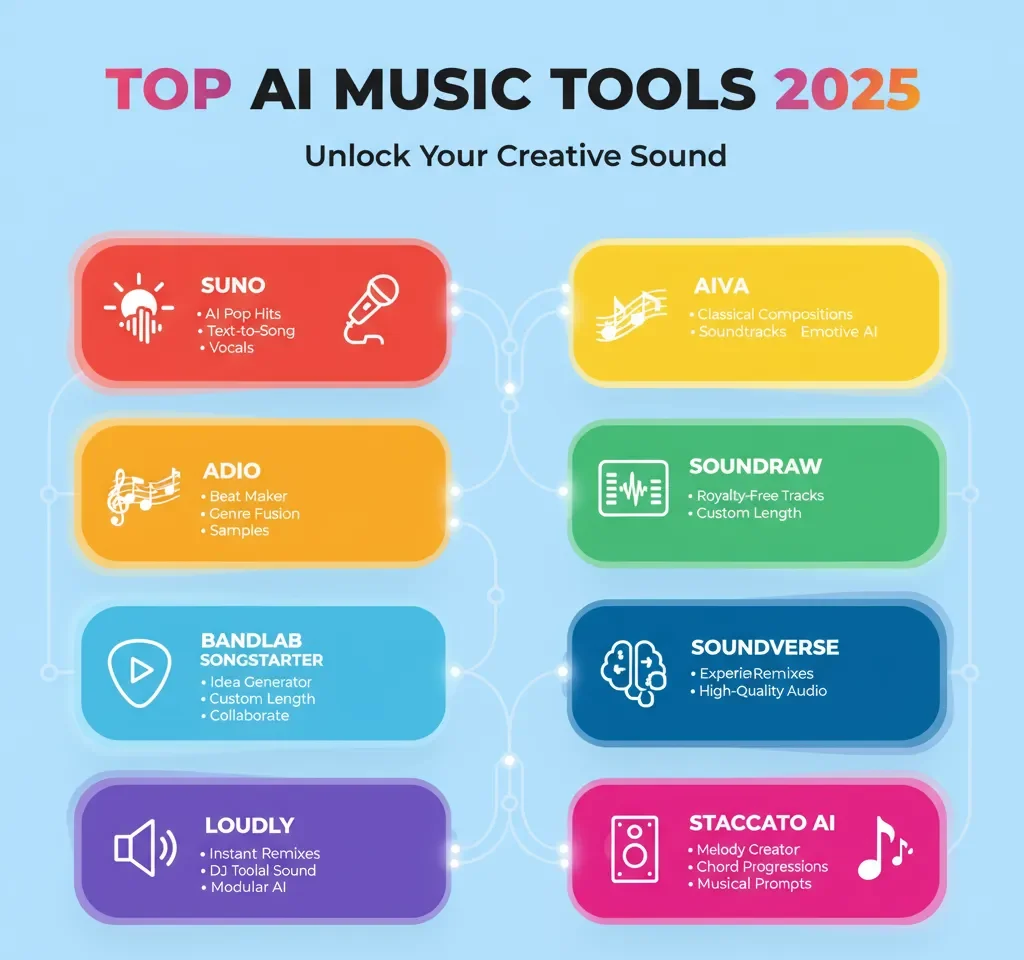
Top AI Music Tools 2025:
Suno: Plays radio-ready songs with vocals, custom genres, and rapidly reads from basic text interaction.
Udio: Is unique in song generation in totality.
AIVA: popular in film, game, and orchestra music.
Soundraw: Podcast, YouTube and TikTok flexible, drag and drop editing.
BandLab SongStarter: Motivates amateurs, brainstorms ideas, and is free.
LALAL.AI: Stem separation and vocal isolation.
Staccato AI: Deep DAW connectivity of high-end composers and producers.
Very noisy: Top graded on the availability of high-quality music and easy user interface.
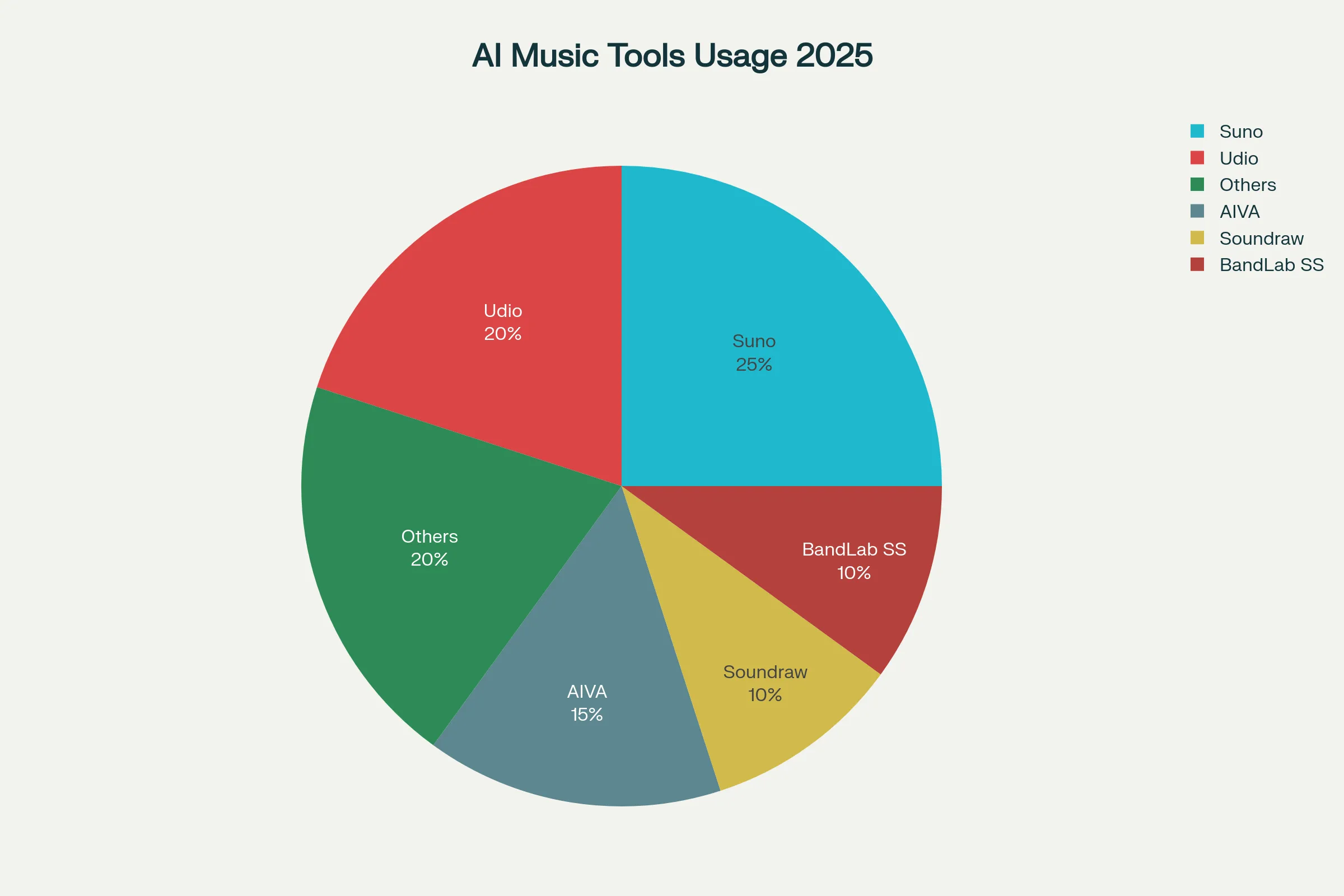
Tool Usage in 2025:
How an AI-Powered Music Workflow Would Look Like: Idea to Hit.
Prompting: Type in an idea (Upbeat Bollywood fusion or Chill study beats with rain).
Generation: AI offers beats, melodies, lyrics, or even whole songs.
Refinement: The painter also adjusts style, tempo, length or mood with each alteration shown in real-time.
Production: add or remove vocals, instruments or effects, with AI-driven stem splitters or voice changers.
Collaboration: Share feedback, swap versions and even have AI suggestions on how things can be improved.
Mastering: Mastering is a fast, crisp and streaming-quality mastering.
Distribution: Export to Spotify, YouTube or TikTok, label as AI-assisted as necessary.
Visual Workflow:
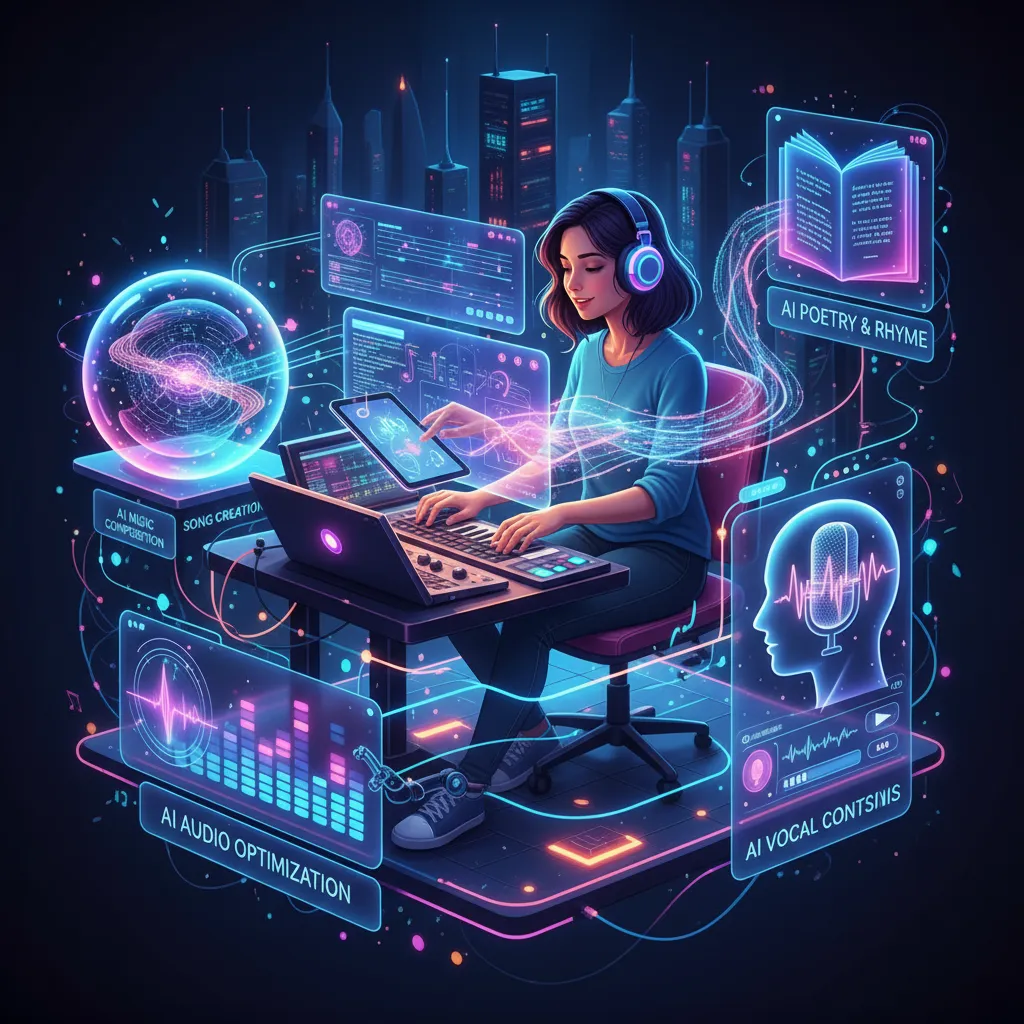
Human artist collaborates with AI for song creation, mastering, and voice cloning
Voice Cloning: Voice of a New Voice–and a New Voice.
AI voice cloning allows anybody, in a few minutes of recorded audio, to reproduce a realistic singing voice (including that of a celebrity). This is transforming demos, covers and even the production of duets with the voices of the dead icons. But:
Quick Demo Magic: Producers and songwriters create high-quality demo recordings, have songs sung by celebrities, or internationalise songs into other languages.
Ethical Dilemmas: Who owns or receives payment on a cloned performance? What of the use of voices or likenesses without express consent?
Scandals in the law: Trying to claim their ownership, Bollywood and international celebrities have prevailed (and won) landmark cases to demand consent, fair compensation and labelling of the cloned voices. Illegal use is becoming a widespread crime that is being monitored and punished in India and elsewhere around the world.
AI vs. Human: Gravity, Richness, and Effectiveness.
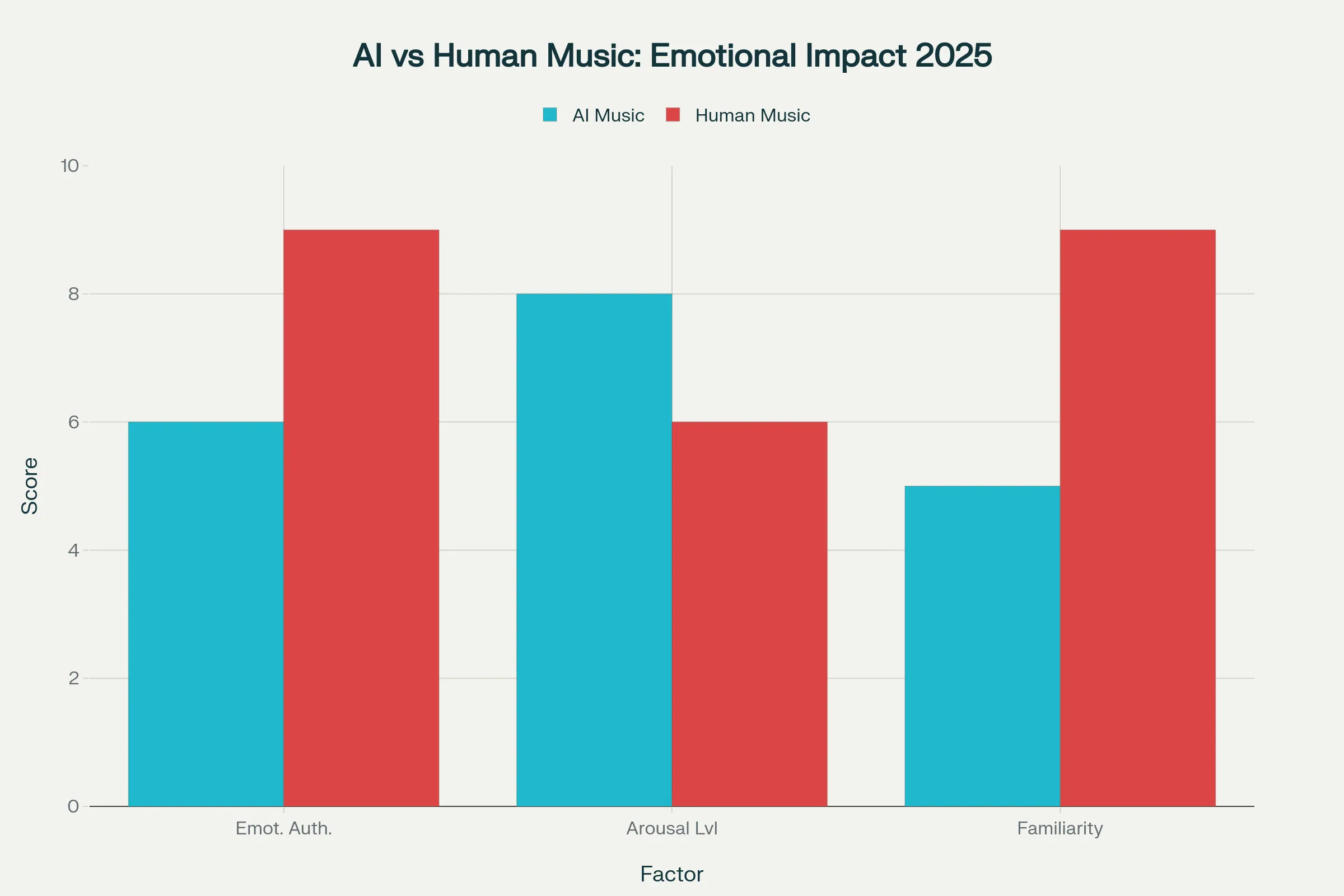
In 2025, this is a subtle image with survey data and user responses:
AI Surprises listeners: When people do a blind test of AI vs. human music, approximately 82 per cent are unable to distinguish between the two. AI is particularly deemed to be good at utility music – study music, game soundtracks, and advertising jingles.
Humans Win on Emotion: When the audience is aware that a song is created by AI, they become more doubtful about genuineness and emotional appeal. The folk, soul, and singer-songwriter genres, which are based on real-life experience, still prefer human beings.
The Audiences of the Younger Age are Going AI: Gen Z and TikTok users appreciate novelty, remix potential, and always fresh music more than authenticity of the old-school.
Makers go Hybrid: Experts are categorical: AI can do the boring or the technical stuff, but human beings provide music with its soul, meaning, and story. Speed is currently combined with human curation and storytelling in most successful projects that involve AI.
| Factor | Human-Composed | AI-Generated |
| Emotional Authenticity | 6/10 | 9/10 |
| Arousal Level | 8/10 | 6/10 |
| Familiarity | 5/10 | 9/10 |
Bar Chart:
The Music Making: What is changing to the Artist and the Industry?
Shorter Development Times, Reduced Barriers AI reduces production time by half. Artists are concerned with innovation, as opposed to technical rhetoric and more concepts are brought to the market.
Streaming Revolution: Approximately three-quarters of the leading platforms rely on AI to create personalised recommendations and recommend tracks. Interaction on AI-powered playlists is 40% ahead of traditional ones.
Mainstream and Niche: In the whole world, approximately 40% of the listeners engage with AI-created songs on a regular basis; by 2030, almost 80% of music projects might involve the cooperation of AI.
Commercial Impact: In the coming five years, approximately 30 percent of songs created by AI will have demonstrated considerable commercial success in 2025.
New Genres and Sound Palettes: AI is driving invention: Hybrid genres, algorithmic sound design, experimental machine-native music mushroom, hybrids. Artists now upsample the errors of AI into deliberate artistic utterances.
The Moral Frontier: Who owns the Song?
Copyright Headaches: The legal world is playing catch-up. AI output that has been curated by humans is copyrightable; rarely are AI-only music outputs. The legal battle is hot on the training of copyrighted data.
Fair Pay: Labels, songwriters, and icons are demanding royalty and credit for the use of their data or voice by AIs. By 2025, several platforms identify AI music and pay royalties to the original artists in case their styles or voices are duplicated.
Transparency: Lots of specialists believe that all AI-created materials must be labelled correctly in order that fans would know what is synthetic and what is real. It gives power to the listeners to make decisions and helps them to trust the creative process.
Worldwide Discussion: India to the U.S., the law is moving faster than ever before as artists, fans, and businesses theorise on how to make trade-offs between being innovative, compensating and honouring the original creators.
Real-Life Application: AI Tidal Wave and Independent Artists.
Opportunities: Learners and producers of indie music are able to experiment, sound professional, and find new audiences without mega-budgets with the help of AI. Working with people on the other side of the world has become as simple as a Google Doc.
Difficulties: Artificial intelligence may flood music stores and playlists, leading to a danger of homogeneity. The authenticity and lived-experience music experience is valued as fans are interested in stories and personalities, not only soundtracks.
Call for Balance: Indie labels want people should call, not prohibit–use AI as a kick-starter and a boost of productivity, but never neglect authenticity, trust in artists, and reasonable rules. When artists combine profound narrative with streamlined, pushing-the-boundary production, artist prosperity is forthcoming.
The Future Future Trends and Predictions: Next-Gen.
By 2025, the AI-generated music market will reach its full potential at 6 billion dollars, and 38 billion in 2033.
In the future, 80 per cent of all new music can touch AI at some stage.
They will be able to receive hyper-personalised songs depending on their mood, location, or even health.
Live AI music experiences, at concerts, games, or in AR/VR, will be the new normal.
The next decade will be marked by regulation and transparency that will see society discussing the way of valuing, crediting, and managing creativity in the machine era.
Conclusion
The most promising, provocative, and thought-provoking change in the field of music creation since the invention of the synthesiser is AI in Music and Audio. Design, perform, or simply listen, 2025 has a soundtrack that is driven by human and artificial, mingled. Look into the future: discover new products, safeguard creators, and make the next big thing begin with both a spark of code and a spark of soul.
Call to Action
Like this deep AI-driven Music and Audio?
Get your experience online, comment to share it with, or contact us to get additional tips. Any artist, storyteller or tech fan–become part of the next generation of sound. Together we will create the future.
“What is more with AI is that music is a thing that you no longer listen to. It’s something you co-create.”
FAQ’s
1. The way music generators using AI actually compose music?
Generators of AI music analyse millions of structures and melodies, harmonies and rhythms of songs. Upon a prompt by a user, the AI will put these elements together in a new music, guessing at which ones will sound good together. Neural networks are used by some to create melodies, and others recombine existing phrases into new forms. Human has a chance to further modify, discard or overprint the output of the AI to be more creative.
2. Am I not a real musician by using AI music?
No. The majority of professionals consider AI as a sophisticated tool or collaborator- similar to a drum machine or synthesiser. Whatever you choose to do, edit, and what you intend is what defines your art. Most of the contemporary hits combine AI-generated layers and human voices or guitar, and it becomes clear that authenticity is not a tool but its usage.
3. What can independent artists do to compete with large record labels with the help of AI?
AI will allow indie musicians to make quality music on a shoestring and spend time on stories, branding, and engagement. They are capable of fast demos, genre testing, sound clean-up, and even video-making on a fraction of the previous budget. The key? Go big and use AI, but never forget that your personal sound should be kept.
4. What are the legal risks for creators in 2025 involving AI music and voice cloning?
You need to verify local legal regulations regarding copyright in your area – particularly in India, the U.S and the EU. As a guideline: obtain the correct licensing of samples, voices, or information in your tracks. Illegal cloning of the voice or style of another person, particularly in order to make money, is becoming a more acceptable infringement. A large number of platforms (such as Beatoven.ai) are currently paying royalties to human artists in case the voice or data is utilised.
5. What is going to be the trends in the AI music world in five years?
Anticipate further integrations of AI and live performance, video and VR/AR. More interactive concerts, soundtracks that give the audience a chance to make their own choices, and wellness-centred music therapies will emerge. Search categories: unusual AI errors that have created hyper-niche genres that are adored by internet fans, and an ever-increasing demand to clearly and equally enforce copyright laws and labels.