Bing Info

Tech Insights & Digital Innovation
Header Mobile Fix

Bing Info

implementing-responsible-ai-from-day-one

Implementing Responsible AI from Day One: A Comprehensive Framework for Building Trustworthy AI Systems

Implementing Responsible AI from Day One: A Comprehensive Framework for Building Trustworthy AI Systems A lot of companies want to employ AI solutions right soon, but they do it in a way that makes them uneasy: they build up AI systems first and then decide who is in control. We know this way of doing things is bad because it has cost us money, caused consumers lose faith in us, and gotten us in trouble with the police. The second choice is to employ AI properly from the beginning. This is the correct thing to do, and it also gives you an edge over your competition that speeds up deployment, decreases risk, and adds actual economic value. This shift is a huge step forward in how we construct AI. Smart organizations know that being responsible doesn’t stop them from moving forward. They don’t see it that way; they see it as the base for AI that will last and flourish. Building ethical AI from the bottom up can help you gain cleaner architectures, faster approvals, better alignment with stakeholders, and solutions that operate better in the real world. What does it mean for AI to be responsible? Not Just Following Orders Responsible AI includes creating, using, and running AI systems in ways that are in conformity with laws, morals, and social norms. It also means lowering the chance of getting hurt or having an accident. It’s not the same as compliance, although one possible outcome is compliance. When we talk about responsible AI, we mean that there are eight primary areas that work together to develop systems that people can trust: 1. Fairness Fairness makes guarantee that AI doesn’t make decisions that affect one group more than another. This entails looking at the training data to make sure it has a healthy mix of people from different backgrounds. It also requires utilizing statistical fairness criteria like demographic parity and equal opportunity, and evaluating models across different demographic groups on a regular basis to make sure they don’t discriminate. 2. Explainability Explainability is figuring out how AI systems make choices. Shapley values and LIME (Local Interpretable Model-agnostic Explanations) are two techniques to teach humans how AI makes choices. This provides them an opportunity to look over, fix, and make models better before they are used. 3. Privacy and Security Privacy and Security make ensuring that AI models and data are kept, used, and managed in the right way. This isn’t simply about writing code to save data. It also provides rules for who can access it, a safe place to keep models, and security from attacks that could destroy the system’s integrity. 4. Safety Safety is highly important when it comes to keeping people, communities, and the environment safe from things that shouldn’t happen. This involves having strong protections, comprehensive testing, rules for how to handle problems, and measures to make sure that people are in charge of making crucial decisions. 5. Human-in-the-Loop AI systems can make decisions that are far different from what people want. This keeps people in charge and stops AI from doing things that people can’t understand or control. 6. Veracity and Robustness Veracity and Robustness are adjectives that inform you how strong, accurate, and dependable a system is. This entails verifying sure the model is correct, dealing with edge circumstances, searching for model drift in production environments, and keeping an eye on performance to make sure it stays in line with what was planned. 7. Governance Governance makes sure that AI is produced and utilized in a way that is both legal and moral by setting rules, norms, and checks. Governance is anything that has to do with keeping records, making decisions, and addressing problems. 8. Transparency AI systems should be open about how they were built, where they acquired their data, how they work, and what they can and can’t do. When AI systems are open, people who care about them can choose whether or not to use them and how to do so. Key Takeaway: The Responsible AI Framework has eight basic parts. The Business Case for Responsibility: Why This Is Important Right Now We recognize that acting fast is vital. It’s really crucial to get goods to market promptly. Every day you wait could cost you money and offer your competitors an edge. Companies that apply ethical AI methods from the beginning, on the other hand, say they actually progress faster, not slower. They make better choices and have models that are ready for production and can be readily expanded. ROI and Performance Statistics The figures convey a powerful story. Companies who adopt advanced responsible AI methods claim they get a lot out of them: Benefit Category Percentage of Companies Reporting Gain Innovation & New Ideas 81% Efficiency & Less Rework 79% Worker Satisfaction 56% System Reliability & Customer Experience 55% Market Growth & Sales 54% Compliance Cost Savings 48% The most significant point is that research from the MIT Sloan Management Review and the Boston Consulting Group reveals that organizations who employ AI properly are three times more likely to see big benefits. those who have effective responsible AI governance say their profits have increased compared to those that don’t have it. It’s easy to understand how the ROI works: To avoid fees, you need to remain out of trouble with the law. The EU AI Act says that fines might be as high as €35 million or 7% of a company’s global yearly revenues. It also keeps you from having to recall models, go to court, or deal with problems at work. When systems are ready for an audit, it’s easier to make adjustments swiftly. This speeds things up and lowers the amount of rework, failures, and technical debt. Time-to-Market Acceleration speeds up deployment by cutting down on the number of approval loops, getting everyone on the same page faster, and making sure systems are ready for governance from the start. Brand and Trust Capital keep your business robust and


Implementing Responsible AI from Day One: A Comprehensive Framework for Building Trustworthy AI Systems Read More »

Quels jeux incontournables sur Banzai Slot à essayer ?

Banzai Slot est une plateforme de jeux en ligne qui attire l’attention par sa diversité de machines à sous et ses caractéristiques uniques. Pour explorer cette fantastique destination de divertissement, il est conseillé de consulter le site banzai casino en ligne. Parmi l’immense catalogue de jeux, certains titres se démarquent et méritent d’être essayés. Les jeux à ne pas manquer sur Banzai Slot Le catalogue de Banzai Slot offre une sélection variée de jeux captivants, allant des machines à sous classiques aux dernières nouveautés. Chaque jeu présente des graphismes de haute qualité et des mécanismes de jeu innovants. Starburst : Un classique intemporel qui promet une expérience de jeu immersive avec ses symboles éclatants et ses gains fréquents. Book of Dead : Cette machine à sous aventureuse permet aux joueurs de plonger dans l’univers des anciens Égyptiens, offrant des fonctionnalités de bonus excitantes. Gonzo’s Quest : Avec son approche innovante des rouleaux en cascade, ce jeu accompagne les joueurs dans une quête épique à la recherche de trésors perdus. Dead or Alive 2 : Une suite très attendue qui ravira les amateurs de l’Ouest sauvage avec ses opportunités de gains massifs. Mega Moolah : Connue pour ses jackpots progressifs, cette machine est un choix incontournable pour ceux qui rêvent de gains énormes. Les caractéristiques uniques des jeux Chaque jeu sur Banzai Slot ne se contente pas d’offrir du divertissement, mais propose également des fonctionnalités qui enrichissent l’expérience de jeu. Cela inclut des tours gratuits, des multiplicateurs et des symboles spéciaux qui peuvent augmenter les gains. Jeu Type de Bonus Taux de Retour au Joueur (RTP) Starburst Respins 96,1% Book of Dead Tours Gratuits 96,21% Gonzo’s Quest Multiplicateurs 95,97% Comment maximiser le plaisir de jeu Pour profiter au maximum de l’offre de Banzai Slot, il est recommandé d’explorer les différents types de machines à sous disponibles et de s’informer sur les caractéristiques spécifiques de chaque jeu. Cela permet aux joueurs de choisir ceux qui correspondent le mieux à leurs préférences. De plus, l’exploitation des bonus et des promotions disponibles sur la plateforme peut significativement améliorer l’expérience de jeu. Les nouveaux joueurs devraient particulièrement prêter attention aux offres de bienvenue. FAQ sur Banzai Slot Quels sont les types de jeux disponibles sur Banzai Slot ? La plateforme propose principalement des machines à sous, mais inclut également des jeux de table et des options de live casino. Est-ce que Banzai Slot est sécurisé ? Oui, Banzai Slot utilise des technologies de chiffrement avancées pour assurer la sécurité des données personnelles et des transactions financières. Y a-t-il des bonus pour les nouveaux joueurs ? Oui, Banzai Slot offre des bonus de bienvenue ainsi que des promotions régulières pour fidéliser ses joueurs.

Quels jeux incontournables sur Banzai Slot à essayer ? Read More »

Pourquoi lire les termes des bonus de Friday Roll Casino ?

Pour les amateurs de jeux d’argent en ligne, lire les termes des bonus offerts par des plateformes comme fridayroll est essentiel afin de maximiser l’expérience de jeu. Comprendre ces conditions peut faire la différence entre un bonus avantageux et une déception. Ce qui semble être une offre alléchante peut en réalité comporter des incertitudes. D’ailleurs, explorer ces détails-là s’avère crucial avant de s’engager pleinement dans une plateforme. Les différents types de bonus Les bonus proposés dans les casinos en ligne sont variés et peuvent inclure des bonus de bienvenue, des offres de recharge, des gratuités de tours, entre autres. Il est important de connaître les spécificités de chaque type de bonus. Par exemple, certains bonus exigent un dépôt minimum, tandis que d’autres sont offerts simplement pour l’inscription. Bonus de bienvenue : incitation à l’inscription. Bonus de dépôt : complément sur les premiers dépôts effectués. Free spins : tours gratuits sur des machines à sous. Cashback : un pourcentage des pertes peut être remboursé. Programmes de fidélité : récompenses pour les joueurs réguliers. Condition de mise : un aspect crucial Les conditions de mise sont parfois négligées par les nouveaux joueurs. Ces exigences déterminent combien de fois un joueur doit parier le montant du bonus avant de pouvoir retirer des gains. Ces détails peuvent changer radicalement la valeur perçue d’un bonus. Type de bonus Conditions de mise Durée de validité Bonus de bienvenue 30x 30 jours Free spins 20x 7 jours Cashback No Wagering 14 jours Maximiser les avantages des bonus Pour tirer le meilleur parti des bonus disponibles, il est conseillé de comparer les offres de différents casinos. Souvent, des plateformes variées proposeront des offres spécifiques lors d’événements ou de promotions saisonnières. De plus, rester informé sur les modifications des termes est essentiel, car les casinos peuvent ajuster leurs conditions de bonus à tout moment. FAQ Pourquoi les termes des bonus sont-ils importants ?Ils définissent les exigences de mise et les conditions d’utilisation, ce qui peut influencer votre expérience de jeu. Comment savoir si un bonus est avantageux ?Comparez les conditions de mise et la valeur du bonus avec ceux d’autres casinos. Les bonus sans conditions de mise sont-ils rares ?Oui, ils sont moins fréquents, mais peuvent offrir une excellente opportunité pour les joueurs.

Pourquoi lire les termes des bonus de Friday Roll Casino ? Read More »

how-to-hack-an-ai-and-ho-to-protect-it

How to Hack an AI and How to Protect It

How to Hack an AI and How to Protect It We live in a time when AI makes vital decisions, like figuring out what’s wrong with someone and driving self-driving cars on the road. But there is a huge flaw in this technical promise: attacks from opponents. These complicated tactics can make even the most advanced AI systems fail in a huge way, and the changes are sometimes so minor that no one would notice them. In this article, I’ll talk about how adversarial attacks operate, how hackers really “hack” AI systems, and how we can keep them safe. The Rising Threat Landscape: Why Adversarial Attacks Matter As AI use has risen in various industries, so has the need to protect against adversarial AI attacks. A number of businesses reported they faced security issues with AI by the end of 2024. At the same time, a lot of significant organizations started using hundreds or even thousands of machine learning models in their work. This growth makes it much easier for attackers to find weak spots. Any model that users, data streams, or APIs can get to can be a point of failure. Analysts currently think that a lot of the cyberattacks against AI systems this decade will use adversarial examples, which are inputs that are meant to deceive AI algorithms. When a changed stop sign mislead a self-driving car or a medical imaging technology quietly misdiagnoses cancer due of slight modifications, we are no longer talking about abstract benchmarks but about safety, rules, responsibility, and public trust. Adversarial AI went from being a topic of interest in school to a big problem for cybersecurity. At the same time, weapons used in assaults have gotten better. Frameworks for producing adversarial examples, open-source attack tools, and even public GitHub repositories make it easy for those who don’t know anything about machine learning to get started. This is why adversarial AI cybersecurity is now a primary priority for security leaders, risk managers, and AI engineering teams. When I talk about adversarial attacks in machine learning, I mean trying to influence how an AI system works on purpose by using its learnt decision limits. In general, an adversarial attack makes small, well-planned changes to inputs (or training data, or the model itself) so that the model provides an incorrect or harmful output, while everything still looks normal to other people. In photo categorization, this often looks like tiny pixel-level noise that you can’t see but that pushes the model above a judgment threshold. In text systems, adversarial attacks could include prompts, special tokens, or secret instructions that tell a model to ignore its guardrails. In tabular or IoT data, these could be small changes to sensor values that make the prediction still possible but change it. Three reasons why these attacks are so strong: Non-linearity and high dimensionality: Deep networks work in high-dimensional feature spaces where even modest changes can have a huge effect on predictions. Overconfidence: Models might be highly sure that they are making false predictions when they see examples that are meant to trick them. Transferability: Adversarial examples generated for one model often work on other models that were trained on similar data, even if their topologies are different. These characteristics make adversarial attacks both beneficial and hard to find. Types of Adversarial Attacks To make sense of the threat environment, I put adversarial attacks into a few basic groupings. Each group has its own goals, assumptions, and technological methods. Evasion attacks (inference-time assaults): These are the simplest type of attack. An attacker makes inputs at inference time (after the model is deployed) that cause the model to misclassify or behave incorrectly. FGSM (Fast Gradient Sign Method): Adds a brief step in the direction that increases loss. PGD (Projected Gradient Descent): A powerful approach that repeatedly uses small FGSM-style steps. Carlini & Wagner (C&W): Attacks that use optimization to find the smallest adjustments. Data poisoning attacks: Transforms the attack from learning to training. An enemy puts bad samples into the training dataset, commonly by hacking into data pipelines, crowdsourcing labels, or open data intake. Model extraction (model stealing): The practice of trying to figure out how a private model works by asking a lot of questions about it. Attackers send requests to an API, get inputs and outputs, and then train a model that is similar to the target. Model inversion: An attacker tries to recreate important sections of the training data by looking at the model’s outputs. For vision models, this could mean putting together faces; for text models, acquiring sensitive strings like phone numbers. Generative AI and Large Language Models (LLMs): * Prompt injection: Providing inputs that cause it to ignore original instructions or break safety regulations. Jailbreaks & Data exfiltration: Getting the model to provide restricted content or sensitive data. These methods are no longer just in the lab; they are now in the real world. Researchers have shown that carefully made stickers, patches, or changes to things can trick vision models in the real world. For example, altered traffic signs that are mistaken for speed limits instead of stop signs. Case Studies: Real-World Impacts Case Study 1: Tesla Autopilot and Autonomous Driving Security specialists from Tencent Keen Security Lab undertook a rigorous investigation of Tesla’s Autopilot technology. They could make the windshield wipers function automatically or make the car misinterpret lanes by putting minor marks on the road. This could cause the car to go into oncoming traffic or off the road. Case Study 2: Medical Imaging Misclassification Studies have demonstrated that adversarial attacks on these models can consistently alter diagnoses with modifications that are virtually imperceptible. A harmless chest X-ray can be changed so that a model is sure that pneumonia is there, or vice versa, leading to delayed treatment and ethical issues. Case Study 3: The Chevrolet ChatGPT Prompt Injection Incident In 2024, a Chevrolet dealership put a ChatGPT-based assistant on its website. People quickly figured out that they could get the assistant to

How to Hack an AI and How to Protect It Read More »

explainable-ai-(xai)

Explainable AI (XAI): Making Models That Are Hard to Understand Easy

Explainable AI (XAI): Making Models That Are Hard to Understand Easy AI makes some of the most important decisions that affect our lives without us even knowing it. AI is used by banks to decide whether or not to give out loans. AI helps hospitals figure out what diseases people have. Self-driving cars can make decisions on our roads in a flash. But the scary truth is that we don’t know why a lot of these systems did what they did. One of the biggest problems with AI right now is the black-box problem. I want to take you on a trip through the world of Explainable Artificial Intelligence (XAI), which is changing how we build, use, and trust AI systems. We’ll talk about why models are hard to understand, why it’s important for them to be open, and most importantly, how we can turn these strange black boxes into systems that people can trust and check. The Black-Box Problem: When Unclear Information Affects the Real World To understand how important XAI is, we need to know why complicated machine learning models turn into black boxes in the first place. When we train deep neural networks, gradient-boosted tree ensembles, or other complex architectures, they learn to find very small patterns in data—patterns that are so complex that it’s hard for people to explain them clearly. Think about a deep neural network that is made to sort medical pictures. There are dozens of layers in the network, and each layer could have millions of settings. Each parameter makes the final prediction a little bit better, but the way the parameters work together makes it very hard to make a decision. The model can find tumors with 98% accuracy, which is better than what radiologists can do in controlled studies. When we ask the doctor who uses this system, “Why did the AI flag this patient’s scan?” they often say, “I don’t know—the model didn’t tell us.” This lack of openness is a big problem for AI right now. More complicated models are better at finding nonlinear relationships and small interactions between features that simpler models can’t. But this very complexity makes it very hard to understand why they did what they did.  Image :Diagram comparing a traditional Black Box AI model versus an Explainable AI model. In the real world, the effects are very bad. Researchers who looked into COMPAS, an AI system used in criminal justice to figure out who is likely to commit crimes again, found that the algorithm was unfair to Black defendants. There were a lot more false positives for black defendants than for white defendants. The judges couldn’t figure out if the bias came from the model’s structure, the training data, or hidden interactions between features because the system was hard to see through. These differences would have been clear right away if XAI techniques had been used. Healthcare professionals are reluctant to follow AI suggestions when the reasoning behind them is not clear. Radiologists may not trust an AI’s tumor diagnosis if they can’t see which pixels were used to make it. This is the opposite of what the AI was supposed to do. Regulatory bodies now require businesses in finance to explain automated decisions that affect customers. Banks must tell people who apply for loans why they didn’t get them. AI systems that don’t explain how they work don’t meet these requirements, which makes them legally responsible. What does it mean to have “explainable AI”? It’s the link between things that are hard to understand and things that are easy to understand. Explainable Artificial Intelligence (XAI) is the field of study that tries to make the choices that AI systems make clear, understandable, and interpretable to people who care about them. But XAI is more than just putting explanations next to predictions. There are many parts to the plan, and they all work toward three goals that are all related: Interpretability is how easy it is for people to see how a machine learning model changes inputs into outputs. It’s easy to understand a linear regression model that guesses how much a house will cost. Each coefficient shows you how much the predicted price goes up or down when you add one more unit of a feature, like the number of bathrooms or the square footage. When a deep neural network makes the same prediction, we can’t see how each neuron changes the final output. Transparency, we mean how easy it is to see how data moves through a system and how inputs become outputs. In a decision tree, we can see all the rules and branches. It can be hard to understand how a neural network with millions of parameters made its choices. Trustworthiness, you need to do more than just understand. It also means having faith that a system works, follows moral rules, and makes choices that are fair. Even if a system is honest about being racist, that doesn’t mean you can trust it. But for trust to really grow, there needs to be openness so that everyone can see that systems are doing the right thing. We differentiate between two fundamental methodologies for attaining explainability. Intrinsic interpretability means that models are made so that people can understand them without having to explain them later. Linear regression, decision trees, and rule-based systems are all simple models that are easy to understand. Their structure shows how decisions are made. Post-hoc interpretability refers to the application of explanatory techniques on pre-trained black-box models to elucidate their decision-making processes subsequent to training completion. Two examples of this method are LIME and SHAP. They let us break down models that would be hard to understand if we didn’t have them. XAI: Making AI Clearer by Comparing Black-Box AI and Explainable AI The Fast Growth of XAI: How Businesses Are Using It and What the Market Is Doing There has never been a rise in the use and investment of XAI like this. In 2024,

Explainable AI (XAI): Making Models That Are Hard to Understand Easy Read More »

Les meilleures impressions des utilisateurs à Savaspin Casino

Dans le monde des casinos en ligne, savaspin se distingue par son expérience utilisateur exceptionnelle et sa diversité de jeux. Les utilisateurs apprécient particulièrement la convivialité de la plateforme et la qualité des services offerts. Cet article explore les meilleures impressions des utilisateurs de Savaspin Casino, en mettant en avant les aspects qui font de cette plateforme un choix prisé. Une gamme de jeux variée Le catalogue de jeux de Savaspin est un des points forts mis en avant par les utilisateurs. Les joueurs sont séduits par la diversité des options, allant des machines à sous modernes aux jeux de table classiques. Les fournisseurs de jeux renommés, tels que NetEnt et Microgaming, garantissent une expérience de jeu de qualité. Parmi les jeux les plus appréciés, on retrouve : Les machines à sous à jackpot progressif Les jeux de roulette variés Le blackjack en direct Les jeux de cartes classiques Les nouveautés hebdomadaires Bonus et promotions attractifs Les utilisateurs de Savaspin soulignent également l’attrait des bonus proposés. La plateforme offre un généreux bonus de bienvenue, ainsi que des promotions régulières pour les joueurs fidèles. Ces bonus sont jugés compétitifs par rapport à d’autres casinos en ligne. Type de bonus Montant Conditions de mise Bonus de bienvenue 100% jusqu’à 300 € 30x le montant du bonus Free spins 50 tours gratuits Sur des machines spécifiques Support client réactif et efficace Les utilisateurs rendent également hommage au service client de Savaspin. Disponible 24/7, l’équipe d’assistance est facilement accessible par chat en direct et email. Les retours sont souvent positifs concernant les temps de réponse rapides et la résolution efficace des problèmes rencontrés. FAQ sur Savaspin Casino Quels types de jeux sont disponibles sur Savaspin? Le casino propose une variété de jeux, y compris des machines à sous, du blackjack, de la roulette et des jeux avec croupiers en direct. Savaspin est-il un casino en ligne fiable? Oui, Savaspin possède une licence valide et utilise des protocoles de sécurité avancés pour protéger les données des utilisateurs. Quels bonus puis-je attendre en tant que nouveau joueur? Les nouveaux joueurs peuvent bénéficier d’un bonus de bienvenue généreux et de promotions régulières sur leurs dépôts.

Les meilleures impressions des utilisateurs à Savaspin Casino Read More »

Winbet Casino : Comment Évaluer ses Bonus ?

Winbet Casino se démarque sur le marché des jeux en ligne grâce à sa large gamme de bonus attractifs, ce qui a suscité l’intérêt de nombreux joueurs. Cette plateforme de jeux en ligne offre non seulement des services de qualité, mais également des promotions conçues pour maximiser l’expérience des utilisateurs. Cet article examine comment évaluer les bonus proposés par winbet, en analysant les différents types de bonus disponibles et leurs conditions. Types de Bonus Disponibles Winbet Casino propose une variété de bonus qui peuvent bénéficier à différents types de joueurs. Voici les principaux types de bonus : Bonus de bienvenue : offert aux nouveaux joueurs lors de leur premier dépôt. Offres de dépôt : pour encourager les joueurs à effectuer des dépôts supplémentaires. Bonus sans dépôt : crédité simplement pour l’inscription ou la vérification du compte. Programmes de fidélité : récompenses pour les joueurs réguliers. Offres promotionnelles : souvent saisonnières ou liées à des événements spécifiques. Conditions d’Ottement des Bonus Évaluer les bonus ne se limite pas seulement à leur montant, mais implique également une compréhension claire des conditions d’octroi. Les joueurs doivent porter une attention particulière aux éléments suivants : Type de Bonus Mise Minimale Conditions de Mise Bonus de bienvenue 10€ 30x Bonus sans dépôt N/A 50x Offre de fidélité 20€ 25x Ces conditions peuvent varier considérablement d’un bonus à l’autre, il est donc crucial de les lire attentivement avant d’accepter une offre. Évaluation de la Valeur des Bonus Lors de l’évaluation des bonus, il est essentiel de considérer leur valeur réelle par rapport aux exigences imposées. Un bonus peut sembler attractif au premier abord, mais des conditions de mise élevées peuvent le rendre moins avantageux. Pour aider les joueurs à évaluer correctement, il peut être utile de suivre quelques étapes : Comparer le pourcentage de bonus avec les exigences de mise. Vérifier la durée de validité des bonus. Évaluer l’accessibilité des jeux concernés par les bonus. FAQ sur les Bonus chez Winbet Casino Quels types de bonus puis-je trouver chez Winbet Casino ?Vous pouvez trouver des bonus de bienvenue, des offres de dépôt, des bonus sans dépôt et des programmes de fidélité. Y a-t-il des exigences de mise pour les bonus ?Oui, chaque bonus a des exigences de mise spécifiques que vous devez respecter avant de pouvoir retirer vos gains. Les bonus expirent-ils ?Oui, la plupart des bonus ont une durée de validité, généralement entre 7 et 30 jours, selon le type de bonus.

Winbet Casino : Comment Évaluer ses Bonus ? Read More »

Les challenges des joueurs sur Dragonia Casino

Les défis sur dragonia casino intéressent de nombreux joueurs passionnés de jeux d’argent en ligne. Cette plateforme se distingue par ses diverses offres et ses couleurs vives, attirant ainsi les amateurs de sensation forte. Avec une sélection impressionnante de jeux et des défis interactifs, les joueurs sont poussés à améliorer leurs compétences et à maximiser leurs gains. Catalogues de jeux variés Le catalogue de jeux sur Dragonia Casino est vaste et diversifié. Les catégories incluent des machines à sous, des jeux de table, et des options de casino en direct. Ce large éventail permet aux joueurs de trouver facilement un jeu qui correspond à leurs préférences. Plusieurs fournisseurs renommés alimentent la plateforme, assurant à la fois qualité et innovation. Les nouveautés sont régulièrement ajoutées, ce qui maintient l’engouement des joueurs. Les jeux populaires tels que la roulette et le blackjack coexistent avec des machines à sous innovantes, enrichissant ainsi l’expérience utilisateur. Un système de bonus attrayant Les bonus proposés par Dragonia Casino sont un grand atout. Les nouveaux joueurs peuvent bénéficier d’offres de bienvenue attractives, tandis que les joueurs réguliers ont accès à un programme de fidélité bien conçu. Ces incitations encouragent une participation continue et soutenue sur la plateforme. Multiples types de bonus (dépôts, sans dépôt). Conditions de mise claires et raisonnables. Promotions hebdomadaires attractives. Les bonus sont souvent accompagnés de conditions de mise, mais ceux de Dragonia Casino sont réputés pour être raisonnables, permettant aux joueurs de maximiser leurs chances de retrait. Questions de sécurité et confidentialité Dragonia Casino prend très au sérieux la sécurité de ses joueurs. La plateforme est licenciée et utilise des technologies de cryptage avancées pour garantir la protection des données personnelles et financières. De plus, les jeux sont régulièrement vérifiés pour assurer un jeu équitable, renforçant ainsi la confiance des utilisateurs. Un espace de jeu responsable est également encouragé, avec des outils disponibles pour aider les joueurs à gérer leur budget. Cela démontre l’engagement de la plateforme envers un environnement de jeu sûr et agréable. FAQ – Questions Fréquemment Posées Questions Réponses Quels types de jeux sont disponibles sur Dragonia Casino ? On y trouve des machines à sous, des jeux de table et des jeux en direct. Les bonus sont-ils avantageux ? Oui, des bonus de bienvenue ainsi que des promotions régulières sont disponibles. La plateforme est-elle sécurisée ? Dragonia Casino utilise des technologies de cryptage pour assurer la sécurité des données.

Les challenges des joueurs sur Dragonia Casino Read More »

finding-bias

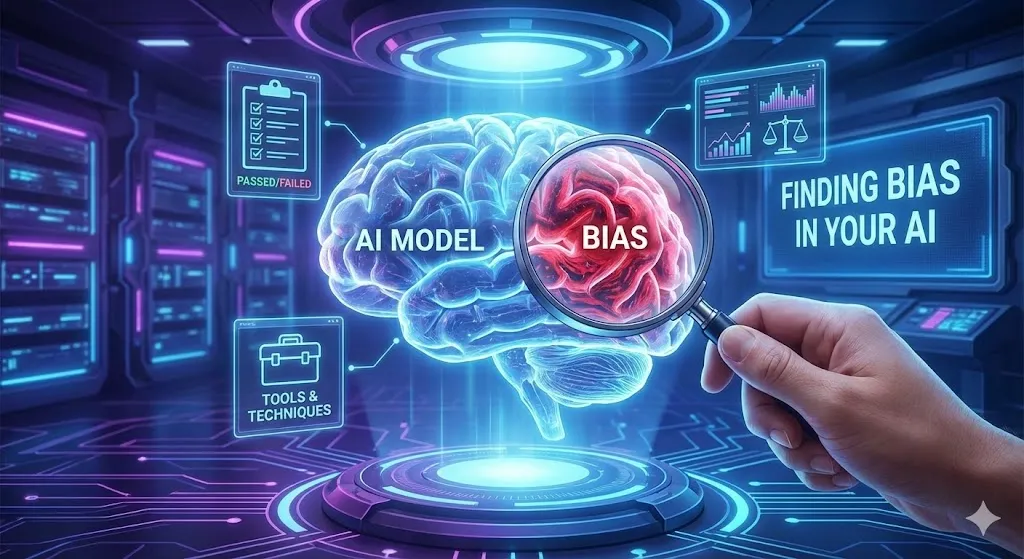
Finding Bias in Your AI: Tools, Techniques & Fairness Audits 2025

Finding Bias in Your AI: Tools, Techniques & Fairness Audits 2025 Your AI might be biased, and you wouldn’t even know it. This is something that keeps machine learning engineers up at night. Let me draw a picture. A big bank makes an algorithm for approving loans. It works very well. Quick, effective, and always the same. Then someone really looks into it and finds out that it is systematically denying credit to people from certain neighborhoods, even when their financial profiles are the same as those of people who are approved. Or think about Amazon’s tool for hiring people automatically. They trained it on hiring data from the past in 2014. The system figured out that most engineers were men, so it taught itself to give women’s resumes lower scores. Women who went to all-girls schools? Worse scores. These aren’t rare cases. If you’re not looking for bias, they’re normal. The truth is that AI bias isn’t just a problem for careless businesses; it happens to everyone. It’s built into how machine learning works. Your training data has biases from the past. Your algorithms make guesses. Your team has unspoken expectations about how the model should work. Bias doesn’t just hide; it gets worse on a large scale without proper auditing. This post will teach you the following: We’re going to show you how to find bias in your AI as if we were debugging code together. You’ll learn about the seven main kinds of bias that can get into systems. You’ll learn the exact tools and methods that professionals use to spot unfairness before it hurts anyone. We’ll look at companies that missed (and caught) bias in the real world. Also, I’ll show you a useful 7-step audit process that you can use. You’ll know how to check your AI models for fairness and inclusivity by the end. Not only will you learn how to find bias, but you’ll also learn why it’s important to check AI models for fairness and inclusivity. What does it mean for AI to be biased? It’s Not What You Think Before we talk about how to find bias, let’s make sure we know what it is. AI bias isn’t discrimination that a bad person wrote into the code on purpose. It’s an AI output error that happens when biased ideas get into the system. This is how it works: you put in trash and get out trash. But the trash isn’t obvious, and it comes out in large amounts. When bias happens: Your training data shows how discrimination has happened in the past. Your algorithms make quiet guesses about what matters. Your metrics don’t measure the right thing. The model learns based on what your team expects. You deploy without checking to see if it’s fair for all groups. The scary part? Most of the time, the model is “good” according to traditional accuracy standards. It is possible for a hiring algorithm to be 92% accurate. But if that 8% mistake mostly affects one group of people, you have a big fairness problem that isn’t obvious from the good performance numbers. That’s why we have bias audits. They make sure that your AI is fair, not just correct. The 7 Most Common Types of AI Bias and Where to Find Them It’s like learning how to read tells in poker to understand bias types. You’ll start to see patterns everywhere once you know what to look for. 1. Data Bias: The Main Issue Data bias is the most important type of AI bias. Your model will be skewed if your training data is not complete, not representative, or not accurate. A healthcare risk-prediction algorithm used on more than 200 million Americans was found to favor white patients over Black patients. Race wasn’t even one of the factors that the algorithm looked at. Instead, it used healthcare costs as a stand-in for race because Black patients had lower recorded costs even though their health conditions were the same. This was because of discrimination in the past. Data bias is hard to spot because it’s not usually done on purpose. Your data shows how the world really was, with all its unfairness. 2. Algorithmic Bias: The Math Isn’t Fair Algorithms can still be biased even when the data is clean, depending on how they weigh variables, prioritize outcomes, or model relationships. A recommendation engine that is trained to get people to interact with content more might unintentionally promote content that is divisive. An algorithm for credit scoring might give more weight to recent work history than job performance, which would hurt people who have switched jobs. The mathematician’s assumptions are built into the algorithm itself. 3. Selection Bias: Training on the Wrong Data When you train on data that doesn’t reflect real-life situations, you get selection bias. You’re making a hiring algorithm that only uses approved applicants? You forgot about the people who never got to apply. You can’t just ask people at an ice cream shop how much they like ice cream. You will, of course, get results that aren’t right. 4. Measurement Bias: Getting Data Wrong It’s not always the data that’s wrong; sometimes it’s how you got it. Did you use different methods to measure the results for each group? Use different tools? Check at different times? These small differences in collections turn into systematic mistakes that your model learns as patterns. 5. Confirmation Bias: Your Expectations Turn into Code People are developers and data scientists. We have things we want. Sometimes, on purpose or not, we make models that support what we already think. You pick the features that support your hypothesis. You label training data in a way that fits with what you think. You check results in ways that make them look good. And boom. Your model learns what you think, not what is true. 6. Automation Bias: Putting Too Much Faith in the Machine This one is more about how people act than how the AI

Finding Bias in Your AI: Tools, Techniques & Fairness Audits 2025 Read More »