Bing Info

Tech Insights & Digital Innovation
Header Mobile Fix
implementing-responsible-ai-from-day-one

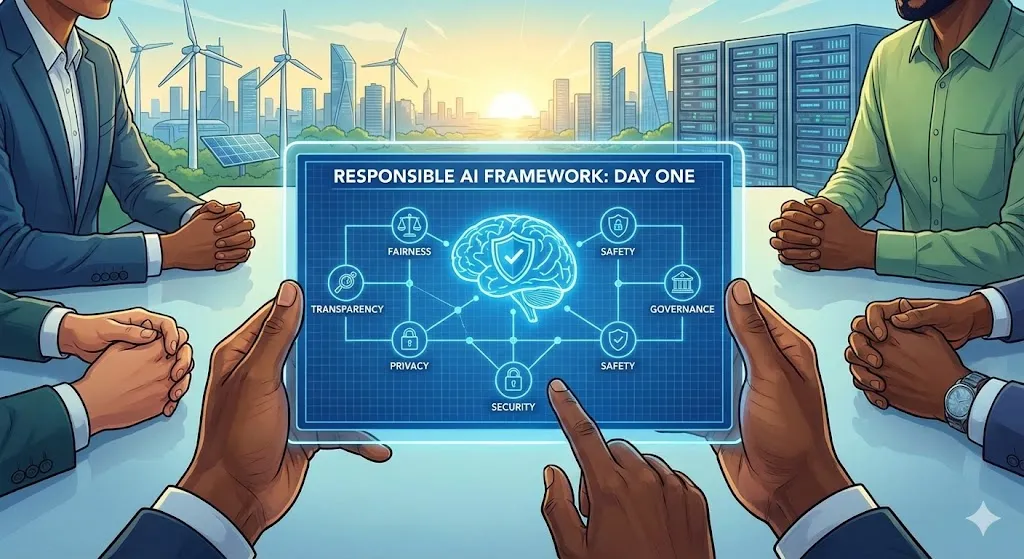
Implementing Responsible AI from Day One: A Comprehensive Framework for Building Trustworthy AI Systems

Implementing Responsible AI from Day One: A Comprehensive Framework for Building Trustworthy AI Systems A lot of companies want to employ AI solutions right soon, but they do it in a way that makes them uneasy: they build up AI systems first and then decide who is in control. We know this way of doing things is bad because it has cost us money, caused consumers lose faith in us, and gotten us in trouble with the police. The second choice is to employ AI properly from the beginning. This is the correct thing to do, and it also gives you an edge over your competition that speeds up deployment, decreases risk, and adds actual economic value. This shift is a huge step forward in how we construct AI. Smart organizations know that being responsible doesn’t stop them from moving forward. They don’t see it that way; they see it as the base for AI that will last and flourish. Building ethical AI from the bottom up can help you gain cleaner architectures, faster approvals, better alignment with stakeholders, and solutions that operate better in the real world. What does it mean for AI to be responsible? Not Just Following Orders Responsible AI includes creating, using, and running AI systems in ways that are in conformity with laws, morals, and social norms. It also means lowering the chance of getting hurt or having an accident. It’s not the same as compliance, although one possible outcome is compliance. When we talk about responsible AI, we mean that there are eight primary areas that work together to develop systems that people can trust: 1. Fairness Fairness makes guarantee that AI doesn’t make decisions that affect one group more than another. This entails looking at the training data to make sure it has a healthy mix of people from different backgrounds. It also requires utilizing statistical fairness criteria like demographic parity and equal opportunity, and evaluating models across different demographic groups on a regular basis to make sure they don’t discriminate. 2. Explainability Explainability is figuring out how AI systems make choices. Shapley values and LIME (Local Interpretable Model-agnostic Explanations) are two techniques to teach humans how AI makes choices. This provides them an opportunity to look over, fix, and make models better before they are used. 3. Privacy and Security Privacy and Security make ensuring that AI models and data are kept, used, and managed in the right way. This isn’t simply about writing code to save data. It also provides rules for who can access it, a safe place to keep models, and security from attacks that could destroy the system’s integrity. 4. Safety Safety is highly important when it comes to keeping people, communities, and the environment safe from things that shouldn’t happen. This involves having strong protections, comprehensive testing, rules for how to handle problems, and measures to make sure that people are in charge of making crucial decisions. 5. Human-in-the-Loop AI systems can make decisions that are far different from what people want. This keeps people in charge and stops AI from doing things that people can’t understand or control. 6. Veracity and Robustness Veracity and Robustness are adjectives that inform you how strong, accurate, and dependable a system is. This entails verifying sure the model is correct, dealing with edge circumstances, searching for model drift in production environments, and keeping an eye on performance to make sure it stays in line with what was planned. 7. Governance Governance makes sure that AI is produced and utilized in a way that is both legal and moral by setting rules, norms, and checks. Governance is anything that has to do with keeping records, making decisions, and addressing problems. 8. Transparency AI systems should be open about how they were built, where they acquired their data, how they work, and what they can and can’t do. When AI systems are open, people who care about them can choose whether or not to use them and how to do so. Key Takeaway: The Responsible AI Framework has eight basic parts. The Business Case for Responsibility: Why This Is Important Right Now We recognize that acting fast is vital. It’s really crucial to get goods to market promptly. Every day you wait could cost you money and offer your competitors an edge. Companies that apply ethical AI methods from the beginning, on the other hand, say they actually progress faster, not slower. They make better choices and have models that are ready for production and can be readily expanded. ROI and Performance Statistics The figures convey a powerful story. Companies who adopt advanced responsible AI methods claim they get a lot out of them: Benefit Category Percentage of Companies Reporting Gain Innovation & New Ideas 81% Efficiency & Less Rework 79% Worker Satisfaction 56% System Reliability & Customer Experience 55% Market Growth & Sales 54% Compliance Cost Savings 48% The most significant point is that research from the MIT Sloan Management Review and the Boston Consulting Group reveals that organizations who employ AI properly are three times more likely to see big benefits. those who have effective responsible AI governance say their profits have increased compared to those that don’t have it. It’s easy to understand how the ROI works: To avoid fees, you need to remain out of trouble with the law. The EU AI Act says that fines might be as high as €35 million or 7% of a company’s global yearly revenues. It also keeps you from having to recall models, go to court, or deal with problems at work. When systems are ready for an audit, it’s easier to make adjustments swiftly. This speeds things up and lowers the amount of rework, failures, and technical debt. Time-to-Market Acceleration speeds up deployment by cutting down on the number of approval loops, getting everyone on the same page faster, and making sure systems are ready for governance from the start. Brand and Trust Capital keep your business robust and

Implementing Responsible AI from Day One: A Comprehensive Framework for Building Trustworthy AI Systems Read More »

how-to-hack-an-ai-and-ho-to-protect-it

How to Hack an AI and How to Protect It

How to Hack an AI and How to Protect It We live in a time when AI makes vital decisions, like figuring out what’s wrong with someone and driving self-driving cars on the road. But there is a huge flaw in this technical promise: attacks from opponents. These complicated tactics can make even the most advanced AI systems fail in a huge way, and the changes are sometimes so minor that no one would notice them. In this article, I’ll talk about how adversarial attacks operate, how hackers really “hack” AI systems, and how we can keep them safe. The Rising Threat Landscape: Why Adversarial Attacks Matter As AI use has risen in various industries, so has the need to protect against adversarial AI attacks. A number of businesses reported they faced security issues with AI by the end of 2024. At the same time, a lot of significant organizations started using hundreds or even thousands of machine learning models in their work. This growth makes it much easier for attackers to find weak spots. Any model that users, data streams, or APIs can get to can be a point of failure. Analysts currently think that a lot of the cyberattacks against AI systems this decade will use adversarial examples, which are inputs that are meant to deceive AI algorithms. When a changed stop sign mislead a self-driving car or a medical imaging technology quietly misdiagnoses cancer due of slight modifications, we are no longer talking about abstract benchmarks but about safety, rules, responsibility, and public trust. Adversarial AI went from being a topic of interest in school to a big problem for cybersecurity. At the same time, weapons used in assaults have gotten better. Frameworks for producing adversarial examples, open-source attack tools, and even public GitHub repositories make it easy for those who don’t know anything about machine learning to get started. This is why adversarial AI cybersecurity is now a primary priority for security leaders, risk managers, and AI engineering teams. When I talk about adversarial attacks in machine learning, I mean trying to influence how an AI system works on purpose by using its learnt decision limits. In general, an adversarial attack makes small, well-planned changes to inputs (or training data, or the model itself) so that the model provides an incorrect or harmful output, while everything still looks normal to other people. In photo categorization, this often looks like tiny pixel-level noise that you can’t see but that pushes the model above a judgment threshold. In text systems, adversarial attacks could include prompts, special tokens, or secret instructions that tell a model to ignore its guardrails. In tabular or IoT data, these could be small changes to sensor values that make the prediction still possible but change it. Three reasons why these attacks are so strong: Non-linearity and high dimensionality: Deep networks work in high-dimensional feature spaces where even modest changes can have a huge effect on predictions. Overconfidence: Models might be highly sure that they are making false predictions when they see examples that are meant to trick them. Transferability: Adversarial examples generated for one model often work on other models that were trained on similar data, even if their topologies are different. These characteristics make adversarial attacks both beneficial and hard to find. Types of Adversarial Attacks To make sense of the threat environment, I put adversarial attacks into a few basic groupings. Each group has its own goals, assumptions, and technological methods. Evasion attacks (inference-time assaults): These are the simplest type of attack. An attacker makes inputs at inference time (after the model is deployed) that cause the model to misclassify or behave incorrectly. FGSM (Fast Gradient Sign Method): Adds a brief step in the direction that increases loss. PGD (Projected Gradient Descent): A powerful approach that repeatedly uses small FGSM-style steps. Carlini & Wagner (C&W): Attacks that use optimization to find the smallest adjustments. Data poisoning attacks: Transforms the attack from learning to training. An enemy puts bad samples into the training dataset, commonly by hacking into data pipelines, crowdsourcing labels, or open data intake. Model extraction (model stealing): The practice of trying to figure out how a private model works by asking a lot of questions about it. Attackers send requests to an API, get inputs and outputs, and then train a model that is similar to the target. Model inversion: An attacker tries to recreate important sections of the training data by looking at the model’s outputs. For vision models, this could mean putting together faces; for text models, acquiring sensitive strings like phone numbers. Generative AI and Large Language Models (LLMs): * Prompt injection: Providing inputs that cause it to ignore original instructions or break safety regulations. Jailbreaks & Data exfiltration: Getting the model to provide restricted content or sensitive data. These methods are no longer just in the lab; they are now in the real world. Researchers have shown that carefully made stickers, patches, or changes to things can trick vision models in the real world. For example, altered traffic signs that are mistaken for speed limits instead of stop signs. Case Studies: Real-World Impacts Case Study 1: Tesla Autopilot and Autonomous Driving Security specialists from Tencent Keen Security Lab undertook a rigorous investigation of Tesla’s Autopilot technology. They could make the windshield wipers function automatically or make the car misinterpret lanes by putting minor marks on the road. This could cause the car to go into oncoming traffic or off the road. Case Study 2: Medical Imaging Misclassification Studies have demonstrated that adversarial attacks on these models can consistently alter diagnoses with modifications that are virtually imperceptible. A harmless chest X-ray can be changed so that a model is sure that pneumonia is there, or vice versa, leading to delayed treatment and ethical issues. Case Study 3: The Chevrolet ChatGPT Prompt Injection Incident In 2024, a Chevrolet dealership put a ChatGPT-based assistant on its website. People quickly figured out that they could get the assistant to

How to Hack an AI and How to Protect It Read More »

explainable-ai-(xai)

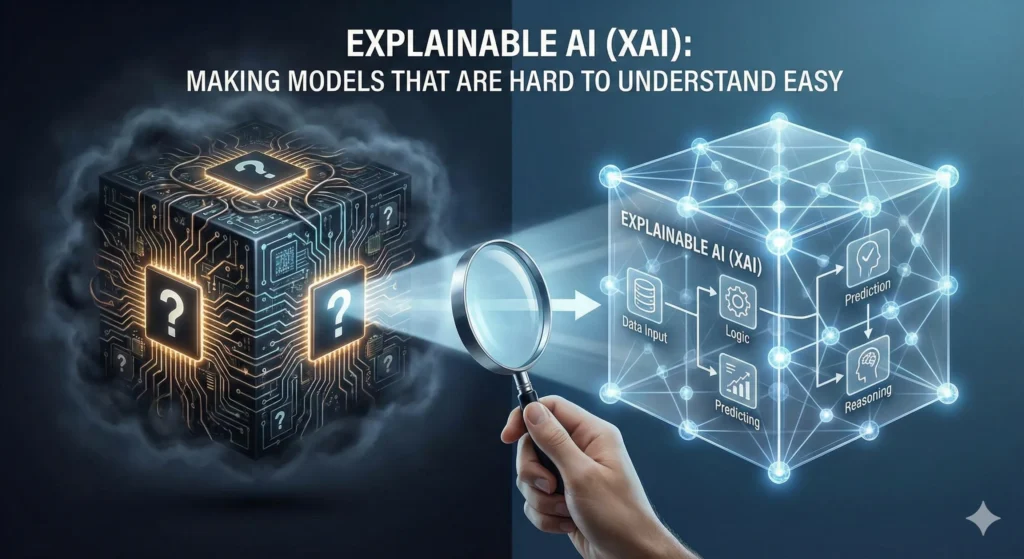
Explainable AI (XAI): Making Models That Are Hard to Understand Easy

Explainable AI (XAI): Making Models That Are Hard to Understand Easy AI makes some of the most important decisions that affect our lives without us even knowing it. AI is used by banks to decide whether or not to give out loans. AI helps hospitals figure out what diseases people have. Self-driving cars can make decisions on our roads in a flash. But the scary truth is that we don’t know why a lot of these systems did what they did. One of the biggest problems with AI right now is the black-box problem. I want to take you on a trip through the world of Explainable Artificial Intelligence (XAI), which is changing how we build, use, and trust AI systems. We’ll talk about why models are hard to understand, why it’s important for them to be open, and most importantly, how we can turn these strange black boxes into systems that people can trust and check. The Black-Box Problem: When Unclear Information Affects the Real World To understand how important XAI is, we need to know why complicated machine learning models turn into black boxes in the first place. When we train deep neural networks, gradient-boosted tree ensembles, or other complex architectures, they learn to find very small patterns in data—patterns that are so complex that it’s hard for people to explain them clearly. Think about a deep neural network that is made to sort medical pictures. There are dozens of layers in the network, and each layer could have millions of settings. Each parameter makes the final prediction a little bit better, but the way the parameters work together makes it very hard to make a decision. The model can find tumors with 98% accuracy, which is better than what radiologists can do in controlled studies. When we ask the doctor who uses this system, “Why did the AI flag this patient’s scan?” they often say, “I don’t know—the model didn’t tell us.” This lack of openness is a big problem for AI right now. More complicated models are better at finding nonlinear relationships and small interactions between features that simpler models can’t. But this very complexity makes it very hard to understand why they did what they did.  Image :Diagram comparing a traditional Black Box AI model versus an Explainable AI model. In the real world, the effects are very bad. Researchers who looked into COMPAS, an AI system used in criminal justice to figure out who is likely to commit crimes again, found that the algorithm was unfair to Black defendants. There were a lot more false positives for black defendants than for white defendants. The judges couldn’t figure out if the bias came from the model’s structure, the training data, or hidden interactions between features because the system was hard to see through. These differences would have been clear right away if XAI techniques had been used. Healthcare professionals are reluctant to follow AI suggestions when the reasoning behind them is not clear. Radiologists may not trust an AI’s tumor diagnosis if they can’t see which pixels were used to make it. This is the opposite of what the AI was supposed to do. Regulatory bodies now require businesses in finance to explain automated decisions that affect customers. Banks must tell people who apply for loans why they didn’t get them. AI systems that don’t explain how they work don’t meet these requirements, which makes them legally responsible. What does it mean to have “explainable AI”? It’s the link between things that are hard to understand and things that are easy to understand. Explainable Artificial Intelligence (XAI) is the field of study that tries to make the choices that AI systems make clear, understandable, and interpretable to people who care about them. But XAI is more than just putting explanations next to predictions. There are many parts to the plan, and they all work toward three goals that are all related: Interpretability is how easy it is for people to see how a machine learning model changes inputs into outputs. It’s easy to understand a linear regression model that guesses how much a house will cost. Each coefficient shows you how much the predicted price goes up or down when you add one more unit of a feature, like the number of bathrooms or the square footage. When a deep neural network makes the same prediction, we can’t see how each neuron changes the final output. Transparency, we mean how easy it is to see how data moves through a system and how inputs become outputs. In a decision tree, we can see all the rules and branches. It can be hard to understand how a neural network with millions of parameters made its choices. Trustworthiness, you need to do more than just understand. It also means having faith that a system works, follows moral rules, and makes choices that are fair. Even if a system is honest about being racist, that doesn’t mean you can trust it. But for trust to really grow, there needs to be openness so that everyone can see that systems are doing the right thing. We differentiate between two fundamental methodologies for attaining explainability. Intrinsic interpretability means that models are made so that people can understand them without having to explain them later. Linear regression, decision trees, and rule-based systems are all simple models that are easy to understand. Their structure shows how decisions are made. Post-hoc interpretability refers to the application of explanatory techniques on pre-trained black-box models to elucidate their decision-making processes subsequent to training completion. Two examples of this method are LIME and SHAP. They let us break down models that would be hard to understand if we didn’t have them. XAI: Making AI Clearer by Comparing Black-Box AI and Explainable AI The Fast Growth of XAI: How Businesses Are Using It and What the Market Is Doing There has never been a rise in the use and investment of XAI like this. In 2024,

Explainable AI (XAI): Making Models That Are Hard to Understand Easy Read More »

finding-bias

Finding Bias in Your AI: Tools, Techniques & Fairness Audits 2025

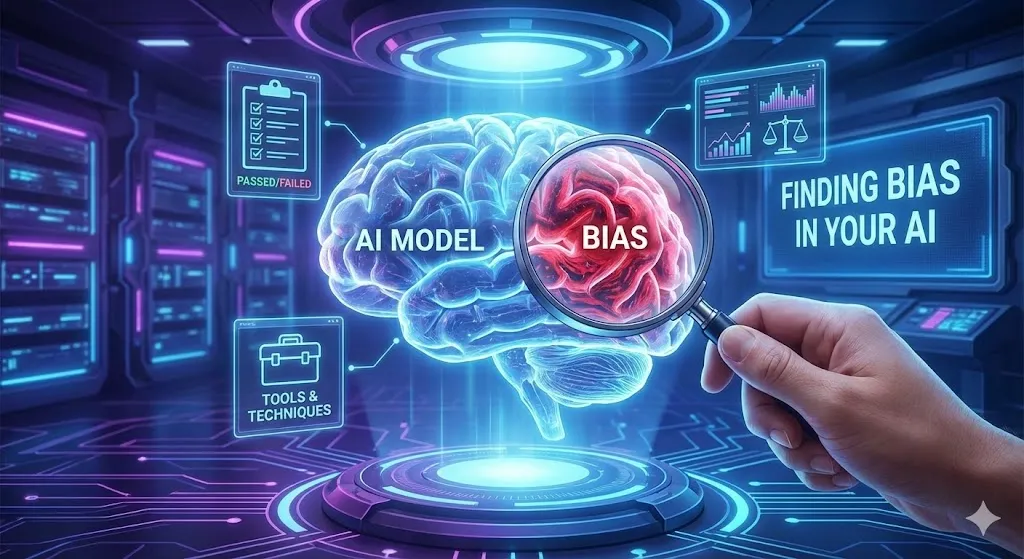
Finding Bias in Your AI: Tools, Techniques & Fairness Audits 2025 Your AI might be biased, and you wouldn’t even know it. This is something that keeps machine learning engineers up at night. Let me draw a picture. A big bank makes an algorithm for approving loans. It works very well. Quick, effective, and always the same. Then someone really looks into it and finds out that it is systematically denying credit to people from certain neighborhoods, even when their financial profiles are the same as those of people who are approved. Or think about Amazon’s tool for hiring people automatically. They trained it on hiring data from the past in 2014. The system figured out that most engineers were men, so it taught itself to give women’s resumes lower scores. Women who went to all-girls schools? Worse scores. These aren’t rare cases. If you’re not looking for bias, they’re normal. The truth is that AI bias isn’t just a problem for careless businesses; it happens to everyone. It’s built into how machine learning works. Your training data has biases from the past. Your algorithms make guesses. Your team has unspoken expectations about how the model should work. Bias doesn’t just hide; it gets worse on a large scale without proper auditing. This post will teach you the following: We’re going to show you how to find bias in your AI as if we were debugging code together. You’ll learn about the seven main kinds of bias that can get into systems. You’ll learn the exact tools and methods that professionals use to spot unfairness before it hurts anyone. We’ll look at companies that missed (and caught) bias in the real world. Also, I’ll show you a useful 7-step audit process that you can use. You’ll know how to check your AI models for fairness and inclusivity by the end. Not only will you learn how to find bias, but you’ll also learn why it’s important to check AI models for fairness and inclusivity. What does it mean for AI to be biased? It’s Not What You Think Before we talk about how to find bias, let’s make sure we know what it is. AI bias isn’t discrimination that a bad person wrote into the code on purpose. It’s an AI output error that happens when biased ideas get into the system. This is how it works: you put in trash and get out trash. But the trash isn’t obvious, and it comes out in large amounts. When bias happens: Your training data shows how discrimination has happened in the past. Your algorithms make quiet guesses about what matters. Your metrics don’t measure the right thing. The model learns based on what your team expects. You deploy without checking to see if it’s fair for all groups. The scary part? Most of the time, the model is “good” according to traditional accuracy standards. It is possible for a hiring algorithm to be 92% accurate. But if that 8% mistake mostly affects one group of people, you have a big fairness problem that isn’t obvious from the good performance numbers. That’s why we have bias audits. They make sure that your AI is fair, not just correct. The 7 Most Common Types of AI Bias and Where to Find Them It’s like learning how to read tells in poker to understand bias types. You’ll start to see patterns everywhere once you know what to look for. 1. Data Bias: The Main Issue Data bias is the most important type of AI bias. Your model will be skewed if your training data is not complete, not representative, or not accurate. A healthcare risk-prediction algorithm used on more than 200 million Americans was found to favor white patients over Black patients. Race wasn’t even one of the factors that the algorithm looked at. Instead, it used healthcare costs as a stand-in for race because Black patients had lower recorded costs even though their health conditions were the same. This was because of discrimination in the past. Data bias is hard to spot because it’s not usually done on purpose. Your data shows how the world really was, with all its unfairness. 2. Algorithmic Bias: The Math Isn’t Fair Algorithms can still be biased even when the data is clean, depending on how they weigh variables, prioritize outcomes, or model relationships. A recommendation engine that is trained to get people to interact with content more might unintentionally promote content that is divisive. An algorithm for credit scoring might give more weight to recent work history than job performance, which would hurt people who have switched jobs. The mathematician’s assumptions are built into the algorithm itself. 3. Selection Bias: Training on the Wrong Data When you train on data that doesn’t reflect real-life situations, you get selection bias. You’re making a hiring algorithm that only uses approved applicants? You forgot about the people who never got to apply. You can’t just ask people at an ice cream shop how much they like ice cream. You will, of course, get results that aren’t right. 4. Measurement Bias: Getting Data Wrong It’s not always the data that’s wrong; sometimes it’s how you got it. Did you use different methods to measure the results for each group? Use different tools? Check at different times? These small differences in collections turn into systematic mistakes that your model learns as patterns. 5. Confirmation Bias: Your Expectations Turn into Code People are developers and data scientists. We have things we want. Sometimes, on purpose or not, we make models that support what we already think. You pick the features that support your hypothesis. You label training data in a way that fits with what you think. You check results in ways that make them look good. And boom. Your model learns what you think, not what is true. 6. Automation Bias: Putting Too Much Faith in the Machine This one is more about how people act than how the AI

Finding Bias in Your AI: Tools, Techniques & Fairness Audits 2025 Read More »

dataops-for-ml

DataOps for ML: The AI Project’s Secret Weapon

DataOps for ML: The AI Project’s Secret Weapon The Beginning: The Dirty Truth About AI Projects That No One Talks About I want to be clear with you. For the past 12 years, I’ve been working on AI tools in the trenches, and I’ve seen great machine learning teams make models that never get used. The data scientists? The best talent. What are the algorithms? The best of the best. But those projects still ended up in a Jupyter notebook folder that no one remembers, where they are gathering digital dust. Here’s the gut punch: 95% of AI projects don’t really help businesses. That number comes from new research at MIT, and it didn’t blame complicated algorithms or not having enough computing power. No. It pointed straight to problems with data quality, broken pipelines, and the lack of proper data operations. Give it some thought. You could make the smartest machine learning model in the world, but if you give it bad data—like missing values, inconsistent formats, biased samples, or just plain old information—it’s useless. Imagine that you are an F1 engineer putting your heart and soul into a Ferrari engine, only to put it in a rusty shopping cart. That’s what happens when you don’t use DataOps for ML. DataOps isn’t the cool part of AI that gets a lot of attention at conferences and on LinkedIn. The pipelines, validation, monitoring, and collaboration that go on in the engine room are what really turn fragile experiments into production systems that make millions of dollars. And now that it’s December 2025 and AI is being used more and more in all kinds of businesses, ignoring DataOps is like building skyscrapers on sand. Who This Is For (And What You’ll Get Out of It) This is for data scientists who are tired of having to retrain models every time the data changes. Data engineers are having a hard time fixing pipelines by hand. ML leaders see 85% of projects fail to deploy. And business leaders who are confused about why their AI investments aren’t paying off. You will understand by the time you finish reading: How DataOps and MLOps turn AI that focuses on experiments into systems that are important to business. Real-life examples that show the ROI. A full 5-stage DataOps workflow with tools that will work in 2025. The hard problems teams have to deal with (and how to solve them). Trends in 2025 include pipelines powered by AI and DataOps that happen in real time. The reward? You’ll see the holes in the data that are ruining your projects and know how to fix them. Let’s get started. Image -“DataOps workflow pipeline showing five stages from data ingestion to monitoring” What is DataOps? Breaking Down the Basics of ML Success DataOps isn’t just a buzzword that people in Silicon Valley came up with. Let me put it this way: I’m getting coffee with you. DataOps is the heart of your AI project. It’s a set of tools, processes, and best practices that make sure data flows from messy sources like APIs, databases, logs, and user events to your ML models quickly, cleanly, and reliably every time. It uses DevOps principles like automation, continuous testing, working together, and making things better over time to manage data. The datasets that your models train on are owned by the data operations teams. They keep track of quality, lineage, versioning, and freshness. Your ML models would be learning from old news or broken files if you didn’t have them. Disaster. Here’s what DataOps really does in real life: Automated Pipelines: Data pipelines that run on their own without people having to watch over them all the time. Real-time Validation: Catches mistakes before they ruin your training data. Continuous Monitoring: Lets you know when data drift reaches production. Collaboration: Teams (data engineers, scientists, and analysts) all speak the same language. Version Control: See exactly what fed Model v2.3. “Everyone wants to do the model work, not the data work.” This quote from the ML community really hits home. Models get all the attention: cutting-edge transformers, hyperparameter tuning, and leaderboard rankings. Work with data? Fixing problems with CSV encoding at 2 AM. No one posts that on LinkedIn. But guess which one decides if your AI really ships? DataOps, MLOps, and AI ML DevOps: What’s the Difference? What are DataOps and MLOps? That’s a good question. People always get these mixed up. Image – “Difference Between DataOps, MLOps, and AI ML DevOps” MLOps stands for “Machine Learning Operations.” It focuses on the model’s lifecycle, which includes tracking experiments, training, versioning, deployment, A/B testing, and retraining when performance drops. Tools such as MLflow, Kubeflow, and Seldon. What is the goal of MLOps in AI projects? Get models from the notebook to production without fail. DataOps is short for Data Operations. It takes care of everything that happens before the model gets to the data, like ingestion, cleaning, transformation, validation, feature stores, and lineage tracking. Airflow, dbt, and Great Expectations are some of the tools. The combination is AI ML DevOps. DataOps sends MLOps pipelines clean, reliable data. They’re not competing; they’re working together. DataOps is the basis for solid MLOps. Which ML project is the best? The one that has both. If you don’t use DataOps, your MLOps will fall apart when the quality of your data drops. If you don’t use MLOps, your clean data will never turn into useful models. DataOps and MLops groups in the data science community agree that data is 80% of the work. If you don’t think about it, your AI dreams will die. Why the Quality of Your Data is Your Best Weapon (And How It Gets Ruined) Bad data quality costs companies $12.9 million a year in direct losses, like having to rewrite reports, losing sales, and making bad choices. That’s just the beginning. What are indirect costs? Lost chances, broken trust, and fines from regulators. The Silent Killers I’ve Seen Ruin Projects I’ve been through

DataOps for ML: The AI Project’s Secret Weapon Read More »

ai-governance

AI Governance Framework: Compliance, Ethics & Audit Trails | 2025-26 Guide

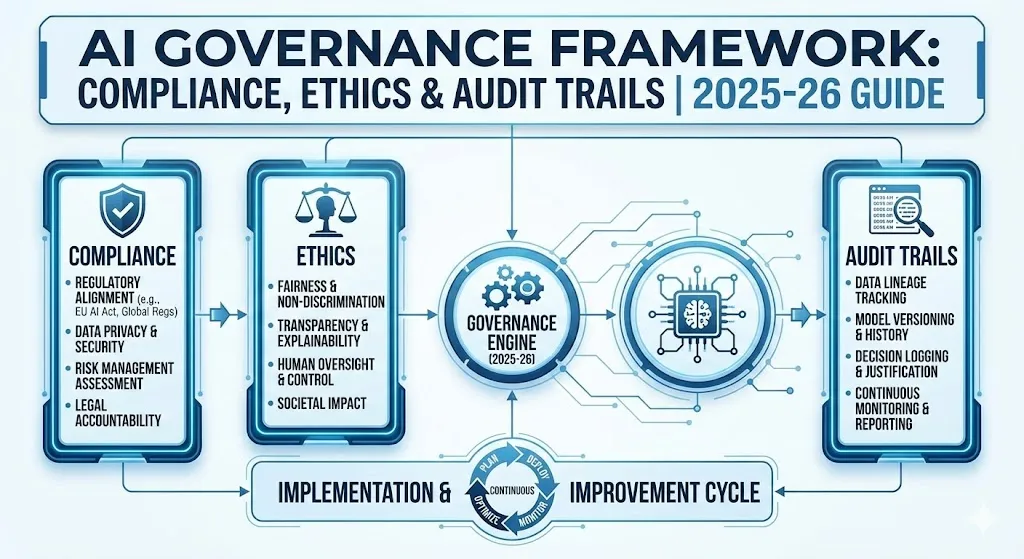
AI Governance Framework: Compliance, Ethics & Audit Trails | 2025-26 Guide The Silent Crisis in AI Adoption: An Introduction Your business just put a machine learning model in place to look at job applications. Two weeks later, you find out that it’s turning down qualified women applicants at twice the rate of men. Your executive team is in a panic. The law wants answers. People in charge are asking questions. And you know that there is no audit trail that shows how the algorithm made its choices, so you can’t prove what went wrong or why. This is not a made-up situation. Companies in all fields are facing a reckoning: they made AI systems without the right safety measures. They moved quickly and used a lot of them, but now they’re trying to figure out what their own algorithms really do. The technology isn’t the problem. It’s the lack of rules. You’re probably thinking about model accuracy, deployment speed, and cost if you’re building or using AI in your business. You might not be thinking about it, but you should be: governance. AI governance isn’t just a bunch of rules for the sake of rules. It’s the difference between new ideas that build trust and new ideas that break it. The infrastructure is what makes sure your AI is ethical, follows the rules, and is responsible. In this post, you’ll learn: We’re going to talk about what AI governance really means, why it matters more than you think, and how to make it a part of your business without slowing down innovation. You’ll learn about the main frameworks that experts use, such as the NIST, the EU AI Act, and India’s new guidelines. You’ll also learn how to spot bias before it hurts real people, how to keep audit trails that regulators expect, and most importantly, why many AI governance efforts fail quietly in organizations and how to avoid that trap. By the end, you’ll have useful ideas for how to put AI governance into practice in your setting. There’s something here for everyone, whether you’re a startup, a big business, or a government agency. 1. What is AI governance, and why is it more important than you might think? Because “AI governance” is used in different ways, let’s start with the basics. AI governance is the set of rules, policies, and structures that tell your company how to create, use, and oversee AI systems. It’s about making sure that AI works in a way that is ethical, open, and follows the rules, all while allowing for new ideas. You can think of it like the guardrails on a highway. You’re not stopping people from speeding; you’re making sure they don’t drive off a cliff. The stakes are high. According to a McKinsey survey, only 25% of businesses have actually put AI governance frameworks into place, even though 65% of them use AI for at least one important task. This means that about 40% of businesses are using AI without proper supervision. They’re working in a governance vacuum, and they may not even know how dangerous it is. This is important because: There is more and more pressure from regulators. The EU AI Act now requires high-risk AI systems to have audit trails. The SEC is looking closely at how financial companies use AI to make decisions. India just put out detailed rules for AI governance that are meant to protect people while also encouraging new ideas. If you can’t show that you have controls in place, your business could be fined a lot of money. When governance fails, trust goes down. Hiring algorithms that are not fair. Facial recognition systems that don’t work for people with darker skin tones. Credit-scoring systems that are unfair. These aren’t just one-time things; they’re patterns. When an AI system acts unethically, it hurts people’s trust in the technology as a whole. That makes it harder for you to hire good people, get customers, and run your business without having to worry about the rules all the time. In fact, governance is a competitive edge. Companies with mature AI governance can move faster because they have the right systems in place. They find problems early on. They don’t panic when rules change. They keep good workers because they trust the company’s commitment to doing the right thing. The main point is that AI governance isn’t just a box to check for compliance. That’s how you make AI that lasts and helps your business and society. 2. The Five Pillars of AI Ethics: Laying the Groundwork for AI That Is Responsible Ethics is the base, and governance is the framework. Without ethics, there can’t be any governance. There are five main parts to responsible AI, and they all depend on each other. Responsibility Someone has to take responsibility for the outcome. If your AI model makes a choice that hurts someone, regulators won’t accept “the algorithm decided.” They’ll want to know who gave the model the go-ahead. Who is keeping an eye on it? Who is to blame if it doesn’t work? To be accountable, you need to make sure that everyone in your organization knows what their role and duties are. It means that someone has the power to say no to a model if it doesn’t meet your moral standards. It means keeping track of everything so that you can find out who made decisions when questions come up—and they will. Clear and open People say that AI systems are like “black boxes.” You give them data, and they make a decision, but no one knows why. Transparency changes that. It means that your AI systems can tell you why they did what they did. The system tells you why your loan application was turned down. When a hiring algorithm flags a candidate, it writes down why. People and stakeholders can trust you more when you are open and honest. This is where explainable AI (XAI) comes in. It’s a group of

AI Governance Framework: Compliance, Ethics & Audit Trails | 2025-26 Guide Read More »

reproducibility-in-ml

Reproducibility in ML: Why Your Results Don’t Match | Best Practices 2025-26

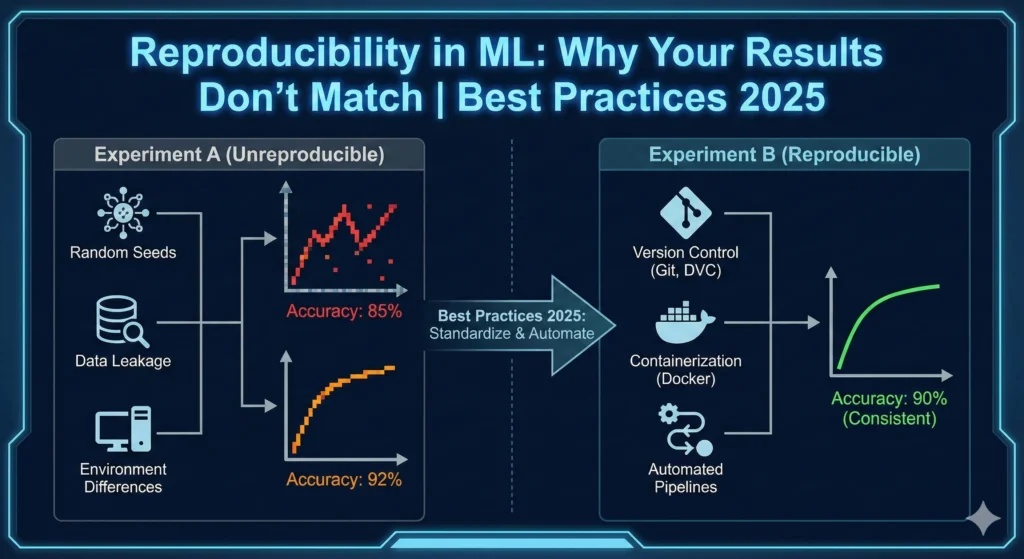
Reproducibility in ML: Why Your Results Don’t Match | Best Practices 2025-26 Introduction: The Unseen Problem in Your Study You spend three weeks carefully following the steps in a published paper. You get their dataset, set the same hyperparameters, and run their code. But something is wrong. What they said doesn’t match what you found. You mix things up. You try different seeds at random. You look at the versions in the library. Nothing. The accuracy drops by 5%. The F1 score changes in a way that isn’t normal. And then you realize with a sinking feeling that you just went through what millions of researchers are going through right now. This isn’t about being careless. It’s not about not being good at something. Welcome to the machine learning reproducibility crisis. Researchers who are very careful don’t always get the same results, and sometimes they can’t even get the same results from their own work from a month ago. The problem is that it is costing the whole field billions of dollars in wasted computing power, duplicated research, and broken trust. The worst part is? A lot of people don’t even know it’s happening. This post will show you: We’re going to talk about why ML doesn’t work (hint: it’s a lot more complicated than just forgetting a random seed), look at the real human and financial costs, go over some real-life examples of when it went wrong, and most importantly, show you exactly how to avoid becoming another statistic in this crisis. By the end, you’ll know not just the “why,” but also the “how”—the exact steps you can take to make your ML work reproducible. Part 1: What Is the Problem with Reproducibility? What Does It Mean to Be Able to Be Reproduced? Let’s start with the basics since this word is used a lot. In machine learning, reproducibility means that you get the same results every time you run the same algorithm on the same dataset in the same environment and with the same settings. A lot of people think that reproducibility and replicability are the same thing, but they are not. Consider it this way: Reproducibility: You should get the same results if you have the same code, data, and environment. Replicability: Means that you can use different data, methods, and settings and still get the same results. Things have to be able to be done again for science to work. You can’t learn from results that you can’t see. Levels of Reproducibility: From Description to Full Experimentation The framework for reproducibility above shows four ways that research can be reproduced. Most of the papers that have been published are either R1 (just a description) or R2 (code without any information about the data or the environment). R4, the highest level, needs everything: the full experimental setup, environments that can be repeated, all data, and documented dependencies. How bad is this? In 2016, Nature sent out a survey to more than 1,500 researchers. The results were very unexpected. More than 70% of the scientists said they had tried and failed to get the same results as another scientist. But here’s the kicker: more than half of them couldn’t even do the same experiments they had done weeks or months before. Nature 2016 Survey: How Researchers Handle Reproducibility This wasn’t just happening in one place. When the numbers were broken down by field, they stayed stubbornly high: 87% of chemists, 77% of biologists, 69% of physicists, and 67% of medical researchers all said they couldn’t reproduce their results. The term “reproducibility crisis” became very popular after Ali Rahimi’s controversial NeurIPS talk in 2017. In that talk, he said that ML research had become “alchemy”—lots of intuition, lots of luck, and not enough rigorous science. The speech got everyone in the community excited. Part 2: Why Your ML Results Don’t Make Sense The Real Culprits (It’s Not Just Random Seeds) Most people think that problems with reproducibility are simple. You only need to set a random seed, a numpy seed, and a torch seed to get started, right? Nope. That’s like believing that changing the oil will fix a broken transmission. Barrier #1: Not Keeping Track of Experiments (The Silent Killer) This is the worst thing that could happen. It is almost impossible to do experiments again if ML teams don’t write down their inputs and new decisions. Think about what happens in a normal ML process. You change the hyperparameter to see what happens. It doesn’t work. You change how quickly you learn. Not very good yet. You change how big the batch is. A little bit better. You change the function that activates it. That’s good enough. But you probably forgot to write this down: What version of TensorFlow or PyTorch you have The exact steps you took to get ready If you standardized or normalized the data, The ways you added more data What samples you used to train your model How you handled values that weren’t there If you chose any features These are all “silent” choices that your code makes, usually through default parameters in libraries. It’s easy to forget about them when you write up your method. But any one of them can have a big effect on your results. Only 6% of researchers at the best AI conferences make their code available to the public. That means that 94% of papers are at reproducibility level R1 or R2. This means that they only have descriptions and maybe some code, but not the whole experimental setup. Barrier #2: GPU Non-Determinism (The Hardware Betrayal) Even if you set all of the random seeds correctly, your GPU may still give you different results each time you run it. This should make you scared. Here’s why. Modern GPUs don’t care about order. Floating-point operations are important because of how computers round numbers and keep track of them. They make operations as fast as they can. When you use parallelization, you might get slightly different

Reproducibility in ML: Why Your Results Don’t Match | Best Practices 2025-26 Read More »

ml-models

How to Keep ML Models Accurate in Production by Building a Continuous Retraining Pipeline

How to Keep ML Models Accurate in Production by Building a Continuous Retraining Pipeline A lot of people don’t expect this: as soon as you put a machine learning model into production, it starts to get worse. Not right away, but soon. The information changes. People’s behaviour changes. The state of the market changes. The patterns that your model learned during training don’t matter as much anymore. This is known as model drift, and it’s like having a GPS that slowly stops working as roads change shape. It doesn’t matter how great the original route was. Most teams see model deployment as the end of the road. They celebrate, start the next project, and hope that everything goes well. Then, three months later, all of a sudden the predictions are wrong, the accuracy drops, and no one knows why. At that point, the damage has already been done. This is when continuous retraining comes into play. A continuous retraining pipeline is an automated system that keeps an eye on how well your model is doing, finds problems, and updates the model with new data—all without you having to do anything. Instead of a model that stays the same, think of it as a living, breathing system that keeps changing. We’ll show you how to build one from scratch in this post. We’ll talk about different ways to trigger things, real-life examples from companies like Uber and Netflix, how to put these ideas into action, and the tools that make it all happen. By the end, you’ll not only know what a continuous retraining pipeline is, but also why it is becoming an important part of any serious ML operation. First, let’s figure out what the real problem is that we’re trying to solve. What is model drift? (And Why It Ruins Your Weekend) Model drift happens when the connection between the data you put in and the output you expect changes over time. Does it sound abstract? Let me make it real. Think about making a loan approval model that learned from data from 2022. In the past, certain income levels and credit scores were good at predicting repayment. Today, things are different with the economy, interest rates are different, and what seemed like a good lending signal in 2022 might not mean anything now. Your model is still using the old logic, which means it keeps making worse and worse choices. You need to know about a few different kinds of drift: A four-quadrant infographic explaining different types of model drift with icons and definitions. Data Drift (Feature Drift): The way your input features are spread out changes. A good example is a model that recommends stores based on summer shopping habits that is now getting winter data. The ways people like to buy things are very different. The model sees patterns it doesn’t know and has trouble. Concept Drift: The way features relate to what you’re trying to predict changes completely. This is an example of concept drift in the loan example above. The features are still there, like income and credit scores, but their meanings have changed. Prediction Drift: The predictions your model makes start to change in how they are distributed. This often happens before accuracy really starts to drop, which can help find problems early. Label Drift: The distribution of the target variable changes. When fraudsters change their methods, a fraud detection model that was trained on past fraud patterns might not work as well. Here’s the deal: most teams only notice drift when it’s really bad. A continuous retraining pipeline finds it early and deals with it in a planned way. Comparing Different Ways to Retrain Models: Finding the Right Balance Between Performance, Cost, and Complexity Knowing What Triggers Your Retraining: Not All Timing Plans Are the Same When should your pipeline get a new training? This choice affects the whole structure of your building. There are three main ways to do it, each with its own pros and cons. Strategy Trigger Mechanism Pros Cons Best For 1. Scheduled Time-based (e.g., Weekly) Simple, predictable Can be wasteful or too slow Stable domains 2. Event-Based Drift metrics / Performance drop Efficient, responsive Complex monitoring needed, false positives Critical/High-cost systems 3. Hybrid Schedule + Event Triggers Balanced safety & efficiency Moderate complexity Most production ML (Uber, LinkedIn) Strategy 1: Retraining on a set schedule (time-based) The easiest way to do this is to retrain every Monday at 2 AM, every day, or every week. Not complicated, easy to understand, and easy to put into action. What’s the catch? You either retrain too often (wasting computer resources when nothing has changed) or not often enough (your model gets old). It’s like watering a plant on a set schedule, even if it doesn’t need water. Best for: business domains that are stable and where data changes in a predictable way, or when you’re just starting out. Strategy 2: Retraining that is based on events or changes Here, you set up monitoring to look for drift in your data, model predictions, or actual performance metrics. When drift goes over a certain level, BAM automatically starts retraining. Only train again when you need to. The good news? Much more effective. You’re not wasting time and money on unnecessary retraining. The bad thing? To do good drift detection, you need a complex monitoring system. You can also get false positives, which means that a one-time problem causes retraining even though nothing bad happened. Best for: systems with a lot of data, expensive computing environments, or models that are critical to the mission and can’t afford to have old models. Strategy 3: A mix of the two (recommended) This puts them together. You have a basic schedule (weekly retraining), but you also have event triggers that speed up retraining if drift is found. If drift happens on Tuesday, boom! Get the new model out before your scheduled Friday run. You still get the weekly refresh if everything goes well. Companies like

How to Keep ML Models Accurate in Production by Building a Continuous Retraining Pipeline Read More »

monitor-ml-models

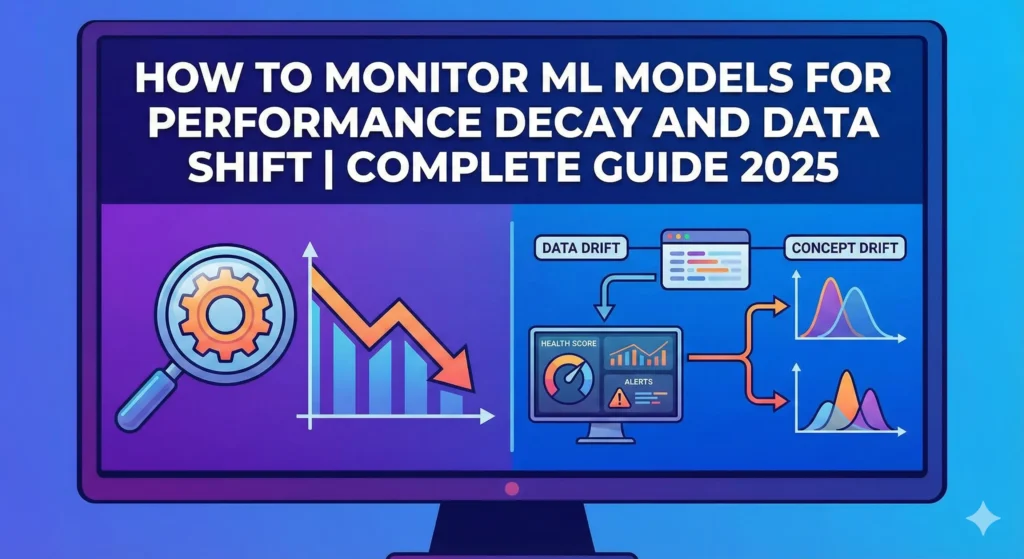
How to Monitor ML Models for Performance Decay and Data Shift | Complete Guide 2025

 How to Monitor ML Models for Performance Decay and Data Shift | Complete Guide 2025 1. Introduction: The Quiet Killer of ML Models in Production You build a machine learning model, test it thoroughly in your development environment, and then deploy it to production with confidence. The numbers look good. Your stakeholders are pleased. Three months later, your model’s accuracy drops by 15%, but no one notices until your business metrics start to fall. This is what 91% of ML teams have to deal with. MIT and Harvard research shows that almost all production machine learning models get worse over time. But most teams don’t have a way to find this degradation until it’s too late and it’s already doing damage. The uncomfortable truth is that your model isn’t the problem. Things changed in the world around it. The ground is always shifting under your models’ feet, whether it’s because customers are acting differently, the market is changing, or the data pipeline is corrupting new features. You’re flying blind if you don’t have a good monitoring system in place. While you’re busy adding the next shiny feature, your model quietly breaks. This guide tells you everything you need to know about keeping an eye on machine learning models that are in use. We’ll talk about data drift, concept drift, performance decay, how to find them, how to use Python, and the tools that really work. At the end, you’ll have a useful plan for keeping your models in good shape and protecting your business from hidden model failures. Let’s get to work. 2. Understanding Model Decay: Why Models That Are Perfect Don’t Work We need to know what’s really broken before we can talk about how to find problems. Model decay is when a machine learning model’s performance gets worse over time, even though it worked perfectly when it was first put into use. Your model is fine. The information it sees has changed. It doesn’t work the same way in production as it did during training. It’s like making a weather prediction model using data from the past ten years. That model works great for the next year. But by the third year, the weather patterns have changed a little. It’s not that your model is bad; it’s just that the climate it was trained on doesn’t exist anymore, so its predictions are less accurate. The Actual Cost of Model Decay Not paying attention to model decay is more than just a technical issue. It has a direct effect on your business. Researchers at MIT looked at 32 datasets from a number of industries and found that: 75% of businesses saw AI performance drop when they didn’t keep an eye on it. More than half said that AI mistakes cost them money. Error rates on new data go up 35% when models are not changed for six months or more. Some industries decay quickly (financial models break down in weeks), while others decay more slowly (image recognition stays stable for longer). Decay is very important in systems that find fraud. If an insurance company’s fraud model is based on past fraud patterns, it might not catch newer, more advanced ways of committing fraud. Your company has already paid out fake claims by the time you realise that it’s not catching fraud well. 3. What’s Really Going On: Concept Drift vs. Data Drift This is where most people get lost. They use the word “drift” in a lot of different ways. But there are actually different kinds of drift, and it’s important to know the difference because they need different fixes Data Drift (Shift in Covariates) When the input data distribution changes between training and production but the relationship between inputs and outputs stays the same, this is called data drift. Picture that you made a model that can guess how much a house will cost. There were 80% suburban houses and 20% urban houses in your training data. Your real estate company starts to focus more on urban listings six months into production. Now, 60% of the data you enter is about urban properties. Your model still knows how to guess prices. The model’s reasoning is still sound. But it’s getting a very different set of input data than it was trained on. That’s what data drift is. For example, a credit scoring model that was trained on data from 2019 to 2020 suddenly has to deal with job patterns from 2024. The unemployment rate rose in different ways, the income distribution changed, and the way people borrowed money changed. The model sees inputs it has never seen before during training. Concept Drift (Label Shift) It’s harder to deal with concept drift because you can’t see it in your data. It happens when the link between the inputs and the target variable changes, even if the input data distribution looks the same. A system for finding spam is a great example of this. Your model learnt how to tell the difference between spam and not spam by looking at how people spammed in 2022. But spammers got better. They are using new ways of writing, different sender addresses, and new ways of formatting. The input data may appear similar, but the definition of spam has fundamentally evolved. A model for insurance fraud that was trained on common fraud patterns suddenly has to deal with new ways of committing fraud. Codes for medical care change. Rules in the state change. New kinds of claims come up. The model still gets medical claims that look the same, but the patterns that show fraud have changed completely. Drift Type The Problem The Fix Data Drift Input distribution changes. Model might handle it, or might need retraining. Concept Drift The fundamental logic changes. Must retrain with new data The catch is that concept drift almost always means that the model needs to be retrained. Data drift might not. Your model might be able to handle different input distributions without having to be

How to Monitor ML Models for Performance Decay and Data Shift | Complete Guide 2025 Read More »