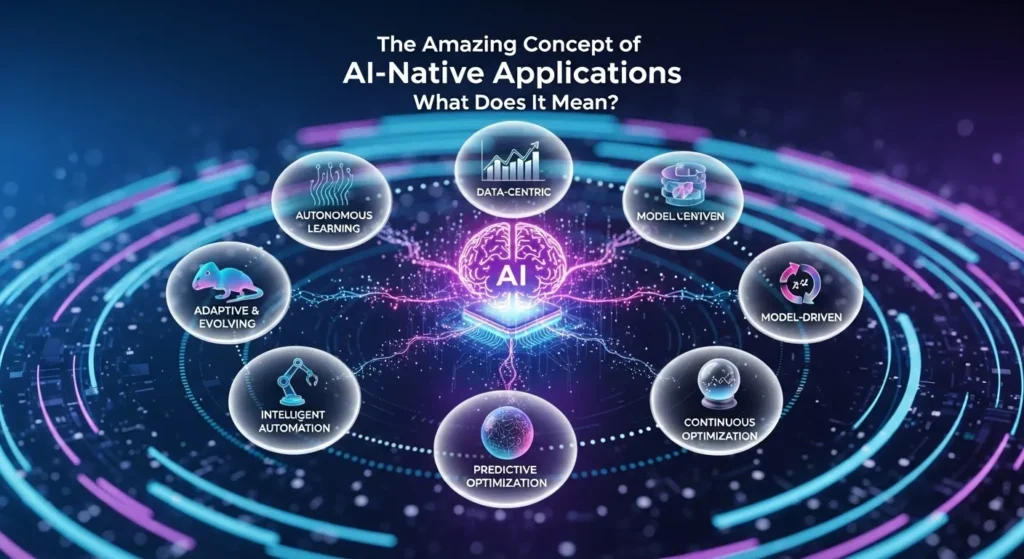
What Does It Mean for an App to Be “AI-Native”?
You’re not the only one who has heard the term “AI-native” and wondered if it’s just another tech buzzword. But here’s the thing: this idea is changing how we think about software, and it’s not just adding AI features to an app that already exists.
Let me break this down for you.
What’s the Big Deal with AI-Native?
Think about the apps you use the most. They probably just added AI features, like a chatbot here and some smart tips there. That’s great and all, but it’s not AI-native.
A program made for AI is very different. It’s not just an extra feature; AI is the main part. Imagine how different it would be to add modern features to an old house instead of building a new one that is made for how people live today. That’s the area we’re talking about.
AI isn’t just a part of the app; it’s what makes it work. That’s what makes it really AI-native. Without the AI, the app wouldn’t be there. As an example, take a look at Perplexity. There is no product without the AI. The AI writes its own answers to every question; there are no human writers.

AI-Native and AI-Enabled: They’re Not the Same
A lot of people get confused here, so let’s make it clear.
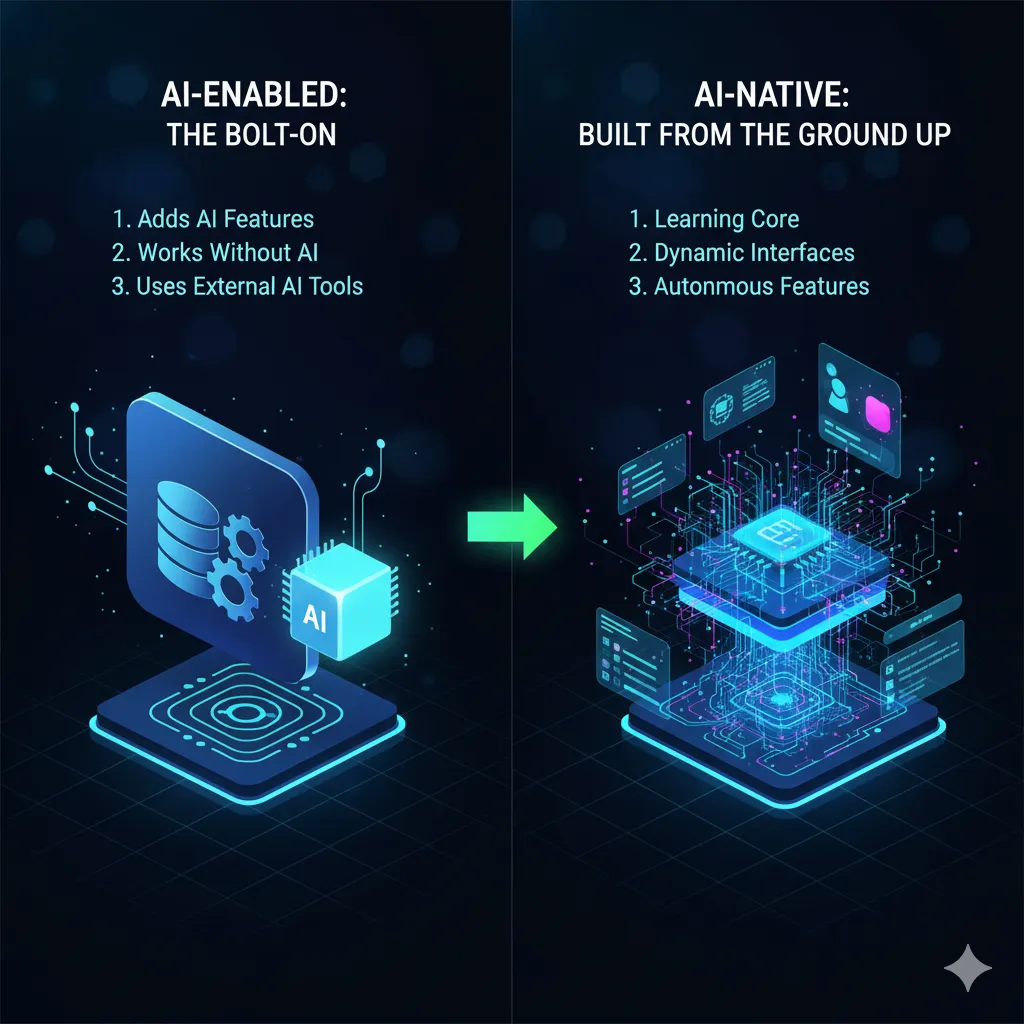
Apps that use AI (the “Bolt-On” way)
Apps that use AI are like regular apps that worked out and got better. You take something that already works and add AI to it to make it better. It’s not a revolution; it’s a change.
Characteristics:
Adding AI improves features that are already there.
The main product works well without AI.
Most of the time, it uses AI tools that other people made.
Changes happen slowly and with care.
AI-enabled means that companies like Shopify are using AI to make it easier to set up a store, and Duolingo is using AI to make lessons smarter. They are improving things that already work.
AI-Native Apps (Built from the Ground Up)
AI-native thinking is the “start from zero” way of thinking. The product exists because AI can do things that nothing else can.
What sets them apart:
Learning Core: The system learns and changes all the time based on real data.
Dynamic Interfaces: The UI changes to fit your needs, not a menu that stays the same.
Autonomous Features: The app does things for you without you having to ask.
Personalization at Scale: Each user has a different experience without having to do anything.
People are searching differently because of Perplexity, creative work is now available to everyone thanks to Midjourney, and Jasper is making brand voice bigger. All of these are made with AI. The machine is the AI, not the other way around.
Examples from Real Life That Make Sense
Let me show you how this works in the real world.
The Art Machine: Midjourney
With only 11 employees, Midjourney makes more than $200 million a year. Yes, you read that right: 11 people. How? When a user tells their AI to do something, it learns more about art. Every new image it makes makes the system better for everyone. Try that with real artists.
Perplexity: A Different Way to Look
Perplexity has fewer than 40 employees and 40 million users every month. It doesn’t show you ten blue links like Google does. Instead, it gives you answers to your questions that are unique to you. More people search, which leads to better answers, which brings in more people. It keeps going around and around.
Cursor AI: What the Developer Wants
Anysphere made Cursor AI, which was worth $2.6 billion and got $105 million in January 2025. Why? It’s not just a tool for finishing code; it’s an AI-powered code editor that learns from all of your code and makes suggestions for how to fix problems based on your specific situation.

The Structure That Makes It Work
You can’t build AI-native apps in the same way that you build regular apps. The whole stack is different.
The Main Parts
Unified Compute Infrastructure: You need hardware that can handle both regular processing and AI workloads at the same time. CPUs, GPUs, and DPUs should work together instead of fighting for resources.
AI Integration Across Layers: The intelligence isn’t stuck in one place. It’s in every part of the app, from how data moves around to how people use it.
Self-Improving Systems: Over time, static apps get old. AI-native apps learn from every interaction on their own. No need to do it by hand.
Processing in Real Time: People want answers right away. AI-native apps process everything on your device when they can, which speeds things up and keeps your data private.
The Data Game
People don’t talk about this enough: AI-native companies handle data in a different way from the start. They don’t add analytics after the fact. The whole system is supposed to always gather, analyze, and learn from data.
What are traditional companies? They usually have to deal with broken systems, which makes it hard to combine data before they can even think about AI.
Why Startups Are Going All In
The numbers are pretty insane. AI-native startups made more than $15 billion a year in May 2025. And here’s another thing: 47% of AI-native companies have reached a certain size and shown that their products work in the market. Only 13% of businesses that make AI-enabled products have done this.
The Unfair Advantages
Do you remember that Midjourney had 11 employees? They served millions without hiring anyone. That’s the secret. AI systems do the work of hundreds of people, and each person is in charge of one. All customer requests, quality checks, and technical support are handled automatically.
No extra work for custom experience: Traditional businesses have to choose between scaling and personalizing, which is not possible. Companies that are native to AI said “no” and did both. Perplexity gives each person a different answer to the same question every day, with millions of unique responses and no human writers.
Better Autopilot: Old-fashioned businesses still hold meetings to talk about what customers think, but AI-native businesses have already made and tested 50 changes based on how people actually act. Every day, not just every three months, things get better.
The AI can handle a million new customers without any problems, which means lower costs and higher margins. No problems with hiring or scaling. The money side of things is just very different.
The Mobile Revolution: AI-Powered Apps in Your Pocket
AI-native mobile apps are taking this idea even further. They are made with AI built right into them, so they work perfectly and seamlessly, like magic.
What Makes Mobile AI-Native Stand Out
On-Device Processing: These apps use your phone’s AI or Neural Engine to run complicated models right on your phone. Faster responses, more privacy, and less data sent to servers.
Adaptive Interfaces: The app changes as you use it. Not only does the content change, but the whole interface does too.
Built-in Intelligence: The AI isn’t an add-on; it can do things like recognize pictures and understand natural language. It’s the logic that runs the system.
The Business Case: Why This Matters to You
This change will affect you, no matter if you work for a big company, run a startup, or just like technology.
For Companies
Better Efficiency: AI-native apps do tasks that used to take hours on their own. Your team works on important tasks instead of doing the same thing over and over.
Faster, Better Decisions: With real-time data analysis, you’re not basing your choices on reports from last week. You’re doing something about what’s going on right now.
94% of business leaders believe that AI will be very important for success in the next five years. Companies that use AI from the start are setting the pace.
Cost Savings: One Asian telecom company saw its network operating costs drop by 40% after using AI-native principles. It took 60% less time to fix things.
For Users
Everything is customized for you; you don’t have to set preferences by hand. Every interaction is unique to you.
Apps that are faster and smarter: AI on your device means you can get answers right away, even when you’re not connected.
Better Results: AI-native apps give you results that are more relevant and accurate, no matter if you’re searching, making, or analyzing.
 The Problems That People Don’t Talk About
Let’s be honest: it’s not easy to make AI-native. There are real issues.
The Data’s Quality Is the Most Important Thing
The information you give your AI is what makes it work. If data isn’t properly managed and combined, AI models don’t work well. Companies have a hard time with data that isn’t consistent, is out of date, or is spread out across different departments.
The answer is? Data audits that are very thorough, data pipelines that work together, and making fake data to fill in the gaps.
The Problem with Talent
You need to know a lot about AI development, machine learning, and data science in order to make AI-native apps. How do you find and keep good workers? That is something that a lot of businesses have to deal with.
The most important thing for new businesses to figure out is how to get an AI engineer to leave a big tech company where they make $500,000 a year to work for your startup that is just getting started. You need to sell the opportunity, not just the cash.
Integration Headaches
Many businesses still use old IT systems that weren’t made to work with AI. AI use is slowed down or even stopped by old systems and data formats that don’t work together.
The answer is to look at your IT landscape, use modular architecture and APIs to make sure everything works together, and put scalable solutions first.
Management and Ethics
AI systems can find biases in data that aren’t obvious, which can lead to results that aren’t fair. Laws like GDPR and CCPA are always changing, so it’s important for technical and legal teams to keep an eye on things to make sure they are following the rules.
You need models that are easy to understand from the start, strong governance structures, and regular audits.
How to Build Apps That Are Native to AI
Okay, you think this is how things will be. What should we do now?
Start with the Right Frame of Mind
Don’t try to add AI to things that are already there. Instead, ask yourself, “What problems can this technology help me solve?” What problem was I working on before that I can now solve much better?
The Tech Stack That Works
Backend and Infrastructure:
Use Firebase or Supabase for databases and authentication that can grow as needed.
Google Vertex AI, AWS Bedrock, and Azure OpenAI are all cloud-native AI platforms.
How to Make AI:
Some examples of foundation models are OpenAI, Anthropic, and Google’s Gemini.
You can use Pinecone, Weaviate, and ChromaDB for semantic search.
Real-time processing includes things like Apache Kafka, Redis, and WebSockets.
Tools for Making:
Cursor for writing code that works with AI
n8n for managing and automating AI tasks
Linear for keeping track of projects
Best Practices in the Field
Start small and grow smart: Add more AI features as you need them. Don’t use AI to fix everything right away.
From the Beginning, Design for Intelligence: Make AI the main focus of your design rules. Tell us how AI will change the user experience, what data will be used to make decisions, and how the system will keep getting smarter.
Use feedback loops to automatically keep track of interactions and outcomes. The system should improve on its own, not because you have to do updates.
Don’t ever assume that the AI is always right. Test everything. Run the code, write tests, and make sure the logic is correct. A lot of AI-generated solutions work most of the time, but not when things get hard.
Include Explainability: Users should be able to understand why the AI made certain decisions. Being open builds trust.
 AI-Native Networking: How Infrastructure Has Changed
A lot of people don’t know this, but AI-native isn’t just for apps. It’s changing the whole layer of infrastructure.
AI-native networking means that networks were made to work with AI from the very beginning. These networks were made with AI in mind, not just as an extra.
What it makes possible:
Predictive Modeling: Figure out when traffic will be heavy or find weak spots in the network before they cause problems.
Self-Optimization: The network changes the route of traffic before it gets busy.
Proactive Maintenance: Find problems before they become problems and fix them.
Better Security: The network automatically puts security rules in place when it finds threats.
The Generation Gap: People Who Are AI-Native
There is another side to this: people who have AI in their lives from the time they are born.
Generation Alpha, which was born between 2010 and 2025, is the first generation to be fully AI-native. Gen Alpha is growing up in a world where AI assistants, machine learning, and automation are all normal. Millennials and Gen Z, on the other hand, saw AI change over time.
So what does this mean?
They don’t just use AI as a tool; they work with it as a cognitive partner.
They learn by talking to AI and making small changes to their work over time.
They want AI tutoring that is specific to what they need.
They use AI reasoning engines to help them figure things out.
By 2026, this generation will start going to college, and they will have integrated AI collaboration skills in their thinking and learning. Schools need to change the way they teach and what they teach.
What Will Happen After 2026
The speed at which AI-native is being used is going up. Here’s what’s going to happen.
Agentic AI Is Getting More Popular
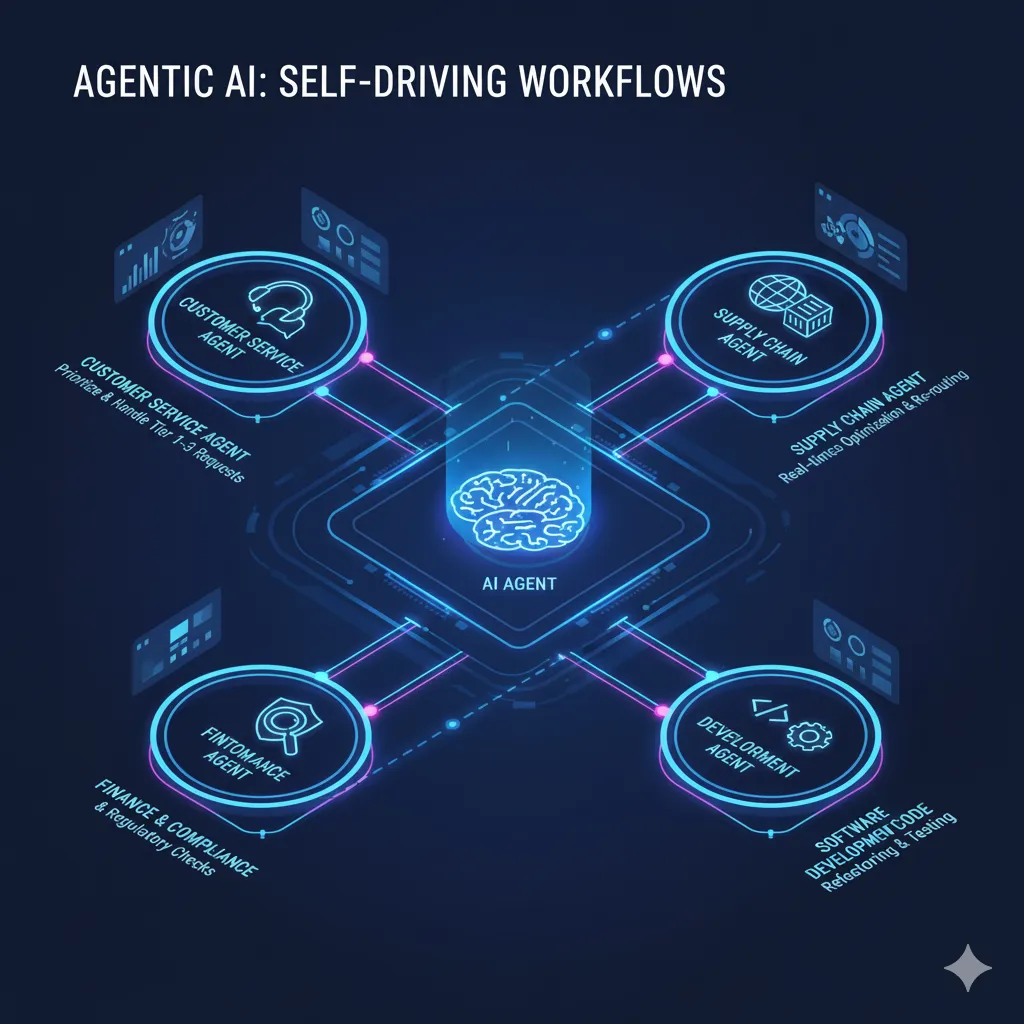
Gartner says that by 2026, 40% of business apps will have AI agents that are only good at certain things. That number will be less than 5% in 2025. These aren’t chatbots; they’re self-driving systems that handle every step of a workflow.
Think of customer service reps who can set their own priorities and handle requests, real-time supply chain agents who can make logistics better, or finance experts who can automatically check for compliance.
The Growth of Fake Content
Experts say that by 2026, computers could make up to 90% of all online content. AI will be able to create text, images, sound, and video.
What’s the problem? Making sure that real human voices don’t get lost in the sea of “AI slop.”
AI Is Now a Common Part of Healthcare
All healthcare CIOs plan to use AI by 2026, and 79% plan to use generative AI. AI-assisted imaging to find cancer early, predictive models to figure out when patients should be admitted, and virtual health assistants will all be common.
AI and Quantum Computing Work Together
Quantum computers with more than 100 logical qubits that can fix mistakes will start working on hard optimization problems that classical systems can’t solve. Early adopters in pharmaceuticals, finance, and logistics will get simulations and risk models that are faster.
The Investment Scene
The story is told by the money that goes to AI-native companies.
Market Size: The global AI market was worth $279.22 billion in 2024. It is expected to be worth $3,497.26 billion by 2033, with a compound annual growth rate (CAGR) of 31.5%.
Generative AI is now worth $44.89 billion, which is up from $29 billion in 2022. That’s a 54.7% increase in three years. By the end of 2025, it should be worth more than $66.62 billion.
Investment Boom: The total amount of money put into generative AI went up by 407% from 2022 to 2023, reaching $21.8 billion in 426 deals.
Success for Startups: AI-native startups raised $45 billion in 2024, which is 70% more than they did in 2023. In the first three months of 2025, 55% of new AI unicorns were in the health care field.
Steps to Take to Make the Change
So you’re all set to use AI. This is what you need to do.
Step 1: Check It Out
Take a look at what’s going on right now:
How simple is it for people to access your information?
What AI skills do we already know?
Do you have the right skills and knowledge?
Where would it be helpful to use AI-native methods right away?
Step 2: Begin with Small Things
Find the most important use cases and don’t try to do everything at once. Pick out some problems that AI can help with right away.
Use AI to quickly make the UI, content, and logic for your MVP. Cursor, Claude, and Gemini are some of the tools that can speed up development a lot.
Step 3: Make a Careful Plan for Your Growth
Make learning a habit by setting up feedback loops that keep track of interactions and automatically improve models.
Invest in infrastructure by building data pipelines, distributed processing, and cloud infrastructure that can grow.
Hire and train: Hire people who know AI or teach your current team new things.
Step 4: Watch What Happens and Make Changes As Needed.
Watch performance: Use monitoring tools to make sure that models are doing what they should.
Update governance: Make sure that AI has clear rules to follow when it makes decisions, is open, and doesn’t show bias.
The world of AI changes quickly, so keep learning. Things that work today might not work tomorrow.
The Past That No One Remembers
Let’s go back for a moment. What caused all of this?
In 1956, at the Dartmouth Conference, John McCarthy came up with the idea for AI. He coined the term “artificial intelligence” and posited that “every aspect of learning or any other characteristic of intelligence can, in principle, be precisely delineated to enable a machine to replicate it.”
The first time the Turing Test was mentioned was in Alan Turing’s 1950 paper “Computing Machinery and Intelligence.” Turing believed that machines could do much more than what they were first designed to do. This was a very smart idea for AI-native systems that can learn and grow.
Turing’s dream has come true for us today. AI isn’t just answering questions anymore. It’s also making choices, writing code, diagnosing diseases, and making art.
Why It’s Hard for Traditional Businesses
The truth is that most traditional businesses aren’t ready for AI-native.
Legacy Systems: Their infrastructure wasn’t built to process data in real time or learn all the time.
Silos in the Company: The business and tech teams don’t understand each other, which makes it harder to use AI.
Companies that don’t like risk: Traditional companies want things to stay the same and be predictable, but AI-native companies need to try new things and make them better.
Batch Mindset: They are used to getting updates and following structured programs, so they don’t have to change all the time.
That said, traditional businesses also have their pros, like systems that have worked in the past, pools of talented people, and trust from stakeholders. Many successful businesses use hybrid strategies to keep their core stable while also improving their AI skills in some areas.
The Human Element
We need to keep in mind that “AI-native” doesn’t mean “free of people.”
When working with AI, design for partnerships, not to replace people. Explain AI decisions clearly and let people change them if they want to.
Ethical Oversight: From the beginning, make sure the system is fair, open, and accountable.
Quality Control: Always look at what AI has done. You should never think that the AI is always right, even if the results make sense.
Continuous Improvement: To make AI better, pay attention to what people say. The best AI-native systems use both the speed of machines and the judgment of people.
Key Metrics
How do you know if AI-native is doing what you want? Keep an eye on these.
Time to Market: AI helps companies ship faster. If it still takes you a long time to add new features, something is wrong.
User Engagement: Personalization should make it clear how people use your app better.
Cost Per User: Adding customers over time should cost less, not more.
Model Performance: Always check how accurate, how long it takes, and how much resources it uses.
Revenue Per Employee: Companies that use AI make more money with fewer employees.
Applications for Certain Fields
Not everyone is AI-native. Different fields are using it in different ways.
Health Care
AI-assisted imaging to find cancer early, predictive models to figure out when patients will need to be admitted, and virtual health assistants to keep an eye on chronic conditions. By 2026, all healthcare CIOs plan to use AI.
Cash
Fraud detection that learns new ways to attack, portfolio optimization that changes in real time, and compliance automation that keeps up with new rules.
Store
Automated customer service, figuring out how much inventory is needed, changing prices based on demand, and making personalized suggestions for a lot of people. Every year, the use of AI in retail grows by 39%.
Doing Things
Predictive maintenance that keeps machines running, quality control that finds defects faster than people, and supply chain optimization that automatically fixes problems.
Getting Smarter
AI tutors that are available 24/7, personalized learning paths that change based on how well a student does, and automated grading that lets teachers spend more time with students.
Common Mistakes People Make
Learning from other people’s mistakes can help you save time and money.
Mistake 1: Not having a clear plan. You go from brainstorming to testing without setting success metrics or making sure everyone is on the same page.
Fix: Do structured discovery, make sure that AI opportunities fit with business goals, and make detailed plans for how to carry them out.
Mistake 2: Using data that is old, inconsistent, or biased to train models.
Fix: do thorough data audits, make fake data, and find bias in data pipelines that all work together.
Mistake 3: Not thinking about what happens in the real world: models that work well in labs but not in the real world.
Fix: Set up automated monitoring, simulate production conditions, stress test, and deploy pilot environments with people watching over them.
Mistake 4: Using only one AI model for everything instead of multiple models.
Fix: Customers should be able to see an average of 2.8 models for each product for the best performance.
Mistake 5: Not paying attention to governance: Starting AI without the right checks and balances, bias testing, or accountability systems.
Fix: Start with ethics, do regular audits, work with lawyers, and set up strong rules for how to run things.
The Truth About Competition
Companies that don’t start thinking like AI might fall behind.
According to Deloitte, 86% of IT leaders believe that their business will soon need generative AI. 78% of high-level executives believe that the benefits outweigh the risks.
But here’s the kicker: 85% of AI projects fail because the data is biased, the assumptions are wrong, and the teams don’t work together. You need more than just using technology to be successful. You need to plan ahead, do it right, and keep making it better.
What to Do Next
If you’re starting a new business or changing an old one, here’s what you need to do next:
If you’re a business owner, start with a specific problem that AI can solve better than anything else. Make MVPs quickly with modern tools. Change things based on what real people say. Start now, even if everything isn’t perfect yet.
For business leaders: Be honest about what you can do right now. Look for pilots that are worth a lot. Make teams that have people who know both business and technology. Start small, but think big.
For developers: Learn how to make apps that work with AI. Learn how to do prompt engineering well. Find out how to use basic models. Make sure that everything you make can get feedback.
Everyone: Keep asking questions. The AI landscape changes every week. Things that are cutting-edge today might be normal tomorrow. Keep learning, trying new things, and changing.
The Bottom Line
AI-native isn’t just a buzzword; it’s a new way to think about how software works.
It’s like having a smartphone and a rotary phone with a screen that you can touch. They can both make calls, but only one was made for the digital age.
Perplexity, Midjourney, Cursor, and Jasper are all doing well right now, but they aren’t just using AI. It is what they are made of. AI is the software that runs them, makes decisions for them, and helps them grow.
And the space is getting bigger. Companies that are AI-native are getting things done faster, serving more customers with fewer people, and making experiences that competitors who use AI can’t match.
The question isn’t whether or not you should go AI-native. It’s if you can afford it.
The End
The change we’re going through is as big as when computers went from being desktop to mobile. To stay relevant in 2012, businesses had to put mobile first. They will have to put AI first in 2025.
The good news is? There are now resources, frameworks, and tools that you can use. You don’t have to have a PhD to make apps that use AI. You should be able to see the big picture, be disciplined, and be willing to change your mind.
Start with little steps. Improve your ability to learn. Make something that AI can’t live without. That’s what it means to be AI-native.
People who think of intelligence as a base, not just a trait, will do well in life. The future is AI. And it’s already here.
FAQ’s
Q1: What is the main difference between apps that are AI-native and apps that are AI-enabled?
AI is what makes AI-native apps work. The app wouldn’t work without AI. AI-enabled apps make existing products work better by adding AI features to them. However, the main product works fine without AI. Making a Tesla is what it means to be AI-native, while putting sensors on a regular car is what it means to be AI-enabled.
Q2: Do I need a lot of information to build an AI-native app?
Not always. Transfer learning, synthetic data generation, and fine-tuning have all come a long way. Now, smaller businesses can make AI-native experiences without having to use data from big businesses. Instead of worrying about how much data you have, worry about how good it is. You can change pre-trained foundation models to fit your needs.
Q3: Is AI only for new businesses, or can old ones also use it?
Traditional businesses can become AI-native, but they have to change the way they do things. A lot of successful businesses use hybrid strategies, which means they keep their main business stable while adding AI-native skills in some areas. Start with high-value pilots, put together teams from different departments, and then grow slowly. Not just a tech upgrade, but a strategic priority for AI is the most important thing.
Q4: How much does it cost to make an AI-compatible app?
The costs vary a lot depending on how big and complicated the project is. Startups can make AI-native apps without spending a lot of money because there are easy-to-use APIs, open-source models, and cloud AI services. Start with a few focused skills and build on them in a smart way. Because they keep their costs low, many AI-native startups make a lot of money before they need to raise a lot of money.
Q5: What do businesses do wrong most often when they try to build AI-native?
The worst thing you can do is treat AI-native like regular software development. Companies rush to get things done without a clear plan, don’t pay attention to data quality problems, skip testing in production, and don’t follow the rules. To do well, you need to start with a good assessment, keep learning as you go, test a lot, and set up strong rules for how to act from the start.


Pingback: What is MLOps? Why Your AI Models Need a Doctor (Monitoring) - Bing Info